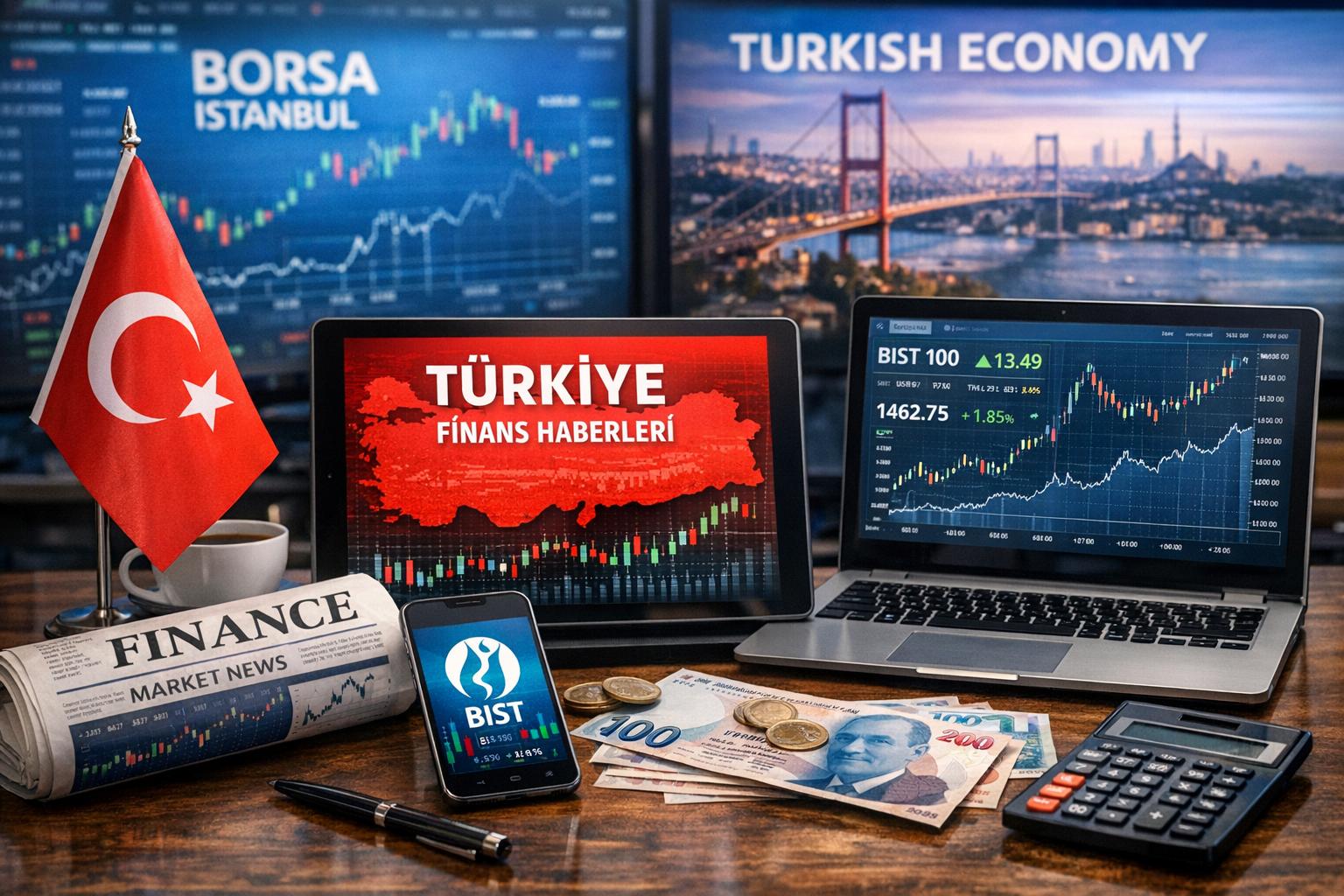
Finance media in Turkey has developed alongside the country’s evolving economic structure, capital markets, and regulatory framework. As Turkey shifted from a largely state-led economy in the mid-twentieth century to a more liberalized and globally integrated system after the 1980s, the demand for specialized financial reporting increased significantly. Today, financial journalism in Turkey covers banking, capital markets, macroeconomic policy, corporate governance, fintech, and international investment, serving both domestic and foreign audiences. The sector includes print newspapers, television channels, digital platforms, independent research outlets, and subscription-based analytical services that cater to professional investors.
The development of financial journalism reflects broader structural transformations within the Turkish economy. As financial markets deepened and the private sector expanded, economic information became increasingly relevant for households, entrepreneurs, portfolio managers, and policymakers. The expansion of capital flows, cross-border borrowing, and foreign direct investment further integrated Turkey into global financial networks, making timely and accurate reporting a functional necessity rather than a niche specialization.
Historical Development of Financial Journalism
The roots of financial reporting in Turkey can be traced to the early Republican period, when newspapers occasionally covered trade balances, agricultural output, and public finance. However, systematic economic journalism began to take shape after the liberalization reforms of the 1980s. Under Prime Minister Turgut Özal, economic policy shifted toward deregulation, financial liberalization, export-oriented growth, and currency convertibility. These reforms expanded the role of private enterprise and increased attention to macroeconomic policy, exchange rates, interest rates, and capital markets.
The establishment of the Istanbul Stock Exchange in 1985, now known as Borsa İstanbul, marked a structural turning point. Organized securities trading created ongoing demand for corporate disclosure, earnings coverage, and daily market analysis. Financial pages that had previously focused on commodity prices and fiscal announcements began incorporating equity research summaries, price tables, and commentary from brokerage houses. The introduction of private banks and foreign financial institutions further expanded the scope of reporting.
Economic volatility in the 1990s reinforced the importance of financial journalism. The currency and banking crises of 1994 and 2001 required continuous reporting on liquidity conditions, IMF programs, fiscal consolidation, and structural reforms. During these periods, finance media became a key source of interpretation for a public seeking clarification on inflation dynamics, banking sector restructuring, and currency stabilization measures. The relationship between journalism and macroeconomic policy analysis grew more institutionalized, with economists frequently appearing as commentators.
The post-2001 reform framework, including banking regulation and central bank independence reforms, created a more rules-based monetary environment. This institutionalization of policy mechanisms enhanced the analytical depth of financial reporting. Journalists devoted greater attention to policy credibility, inflation targets, and international reserve adequacy. Over time, specialized economic correspondents emerged within major outlets.
Print Media and Financial Newspapers
Print media has historically played a leading role in Turkey’s financial journalism ecosystem. Dedicated economic newspapers emerged as platforms for in-depth reporting on industry developments, export performance, production trends, and investment projects. Among the longstanding examples is Dünya, founded in 1981, which focused extensively on small and medium-sized enterprises, organized industrial zones, and regional chambers of commerce. Its reporting model emphasized connections between Anatolian industrial growth and national economic performance.
Ekonomim, formed more recently by experienced financial journalists, continues the tradition of structured macroeconomic coverage. The publication frequently examines decisions of the Central Bank of the Republic of Turkey (CBRT), fiscal policy adjustments, tax reforms, and sectoral performance in manufacturing, energy, logistics, and agriculture. By maintaining consistent attention to monetary policy communications, it serves both professional readers and export-oriented businesses.
Mainstream national dailies such as Hürriyet, Sabah, and Milliyet maintain business sections that summarize inflation releases, employment data, growth figures, and regulatory announcements. While these publications address a broader audience, their economy pages often rely on data provided by official institutions such as the Turkish Statistical Institute (TÜİK) and the CBRT. Print circulation has declined in line with global trends, but these newspapers retain influence through digital extensions.
The format of financial reporting in print traditionally combines quantitative data presentation with interpretative commentary. Tables showing bond yields, exchange rates, and stock index movements are accompanied by brief analytical notes from economists and brokerage strategists. This approach connects raw data releases to potential implications for households and businesses.
Television and Financial Broadcasting
Television has played a central role in disseminating real-time financial information. Dedicated business channels provide continuous market coverage during trading hours and scheduled programs focused on macroeconomic developments. One of the most prominent examples is Bloomberg HT, affiliated with Bloomberg. Since its establishment in 2010, Bloomberg HT has delivered live coverage of currency markets, equities, bonds, and commodities while hosting structured discussions with policymakers, academics, and private-sector executives.
Between 2000 and 2015, CNBC-e introduced audiences to a hybrid format that combined global economic news with domestic financial reporting. After ceasing operations, the space for specialized financial television was largely filled by Bloomberg HT and other channels integrating digital broadcasting strategies.
Television coverage typically intensifies around key events such as central bank rate decisions, inflation data releases, and major initial public offerings. Live broadcasts often feature panels of economists analyzing policy signals and assessing potential market responses. Exchange rate movements, particularly fluctuations of the Turkish lira against the US dollar and the euro, receive sustained attention given their relevance for trade, external debt servicing, and price stability.
Broadcasting institutions operate within regulatory guidelines established by the Radio and Television Supreme Council (RTÜK). Editorial lines may reflect ownership structures, but programming formats often emphasize neutrality through structured debate and reliance on published data.
Digital Transformation and Online Platforms
Digitalization has markedly reshaped financial journalism in Turkey. Online portals distribute market data instantaneously, reducing reliance on next-day print editions. Financial information providers such as Matriks supply professional trading platforms with integrated charting tools, algorithmic indicators, and historical databases. International platforms such as Investing.com maintain localized Turkish pages featuring economic calendars and real-time price feeds.
Traditional newspapers and television networks have expanded online operations, publishing breaking news alerts via mobile applications. Push notifications regarding inflation data or policy changes reach subscribers within seconds of official release. Subscription-based models offering premium research, special reports, and newsletters are gradually supplementing advertising revenue.
Social media platforms have become channels for disseminating economic interpretation. Economists, former central bank officials, portfolio managers, and academics share commentary through X and LinkedIn. While this decentralizes analytical production, it also introduces variability in methodological rigor. Readers must differentiate between data-based analysis and speculative views. Some outlets address this by embedding fact-checking mechanisms and referencing primary data from official sources.
Regulatory Environment
Financial journalism in Turkey operates within a multi-layered regulatory structure. The Capital Markets Board of Turkey (CMB) supervises securities markets and mandates disclosure standards for publicly traded companies. Corporate announcements are disseminated through the Public Disclosure Platform (KAP), which serves as an official repository. Journalists rely on these disclosures to ensure accuracy when reporting on earnings, dividend policies, or merger agreements.
The CBRT shapes the rhythm of financial reporting by adhering to scheduled communications, including Monetary Policy Committee statements and quarterly Inflation Reports. These documents provide forward guidance and statistical forecasts, forming the basis for subsequent media analysis. Transparent scheduling encourages synchronized coverage across outlets.
Digital publishing is subject to broader internet regulations that define responsibilities for content providers. Compliance requirements influence how financial analysis is archived, corrected, or updated. The interaction between media law and capital markets regulation seeks to balance market transparency with safeguards against market manipulation.
Ownership Structures and Media Groups
Ownership concentration is a defining characteristic of Turkey’s media environment. Several outlets belong to diversified conglomerates with investments across infrastructure, construction, telecommunications, energy, and finance. Such cross-sector holdings may shape editorial perspectives on fiscal expenditure, infrastructure financing, or banking regulations. Academic studies frequently examine correlations between corporate interests and economic framing within news coverage.
At the same time, smaller independent outlets and digital-native platforms attempt to differentiate themselves through analytical depth or investigative approaches to economic management. Market competition, audience segmentation, and digital subscription models diversify the ecosystem. The relationship between ownership and editorial independence remains a theme within media scholarship and policy discussion.
Coverage of Monetary Policy and Inflation
Inflation reporting occupies a central position in Turkish financial journalism. Monthly data published by TÜİK generate immediate headlines summarizing headline consumer inflation, producer price changes, and sectoral contributions. Outlets often compare reported figures with market expectations, contextualizing deviations and revising annual forecasts accordingly.
Monetary policy decisions by the CBRT typically result in extensive live coverage. Interest rate adjustments influence sovereign bond yields, interbank funding costs, and equity valuations. Analysts interpret policy language to identify future orientation, examining references to domestic demand, credit growth, or external financing conditions. Coverage also extends to reserve composition, swap arrangements, and macroprudential measures targeting credit expansion.
High-inflation periods broaden the focus to wage negotiations, housing costs, and food price dynamics. Financial journalism thus intersects with social policy debates on purchasing power and income distribution. Data visualization tools increasingly support these analyses, allowing readers to evaluate long-term inflation trends.
Capital Markets and Corporate Reporting
Borsa İstanbul has experienced rising retail participation in recent years. Initial public offerings often attract substantial individual investor demand, prompting extensive media coverage of subscription rates and post-listing performance. Financial journalists track sectoral dispersion among newly listed firms, including technology startups, renewable energy ventures, and logistics providers.
Banking institutions such as Ziraat Bankası, İşbank, Garanti BBVA, and Akbank receive particular attention due to their systemic importance. Quarterly earnings announcements are analyzed for net interest margins, asset quality indicators, and capital adequacy ratios. Corporate developments in aviation, automotive manufacturing, defense industries, and petrochemicals also feature prominently.
Coverage of environmental, social, and governance (ESG) factors has expanded. Sustainability-linked bonds, green financing instruments, and corporate carbon reduction strategies are increasingly reflected in financial reporting. This mirrors global investment trends and aligns with European Union regulatory influences, especially given Turkey’s customs union relationship.
Academic and Research Contributions
Academic institutions such as Koç University, Sabancı University, and Bilkent University contribute empirical research on monetary economics, fiscal sustainability, and financial stability. Working papers and conferences frequently feed into media discussions, particularly when evaluating structural reform proposals or assessing external vulnerability indicators.
The CBRT’s Inflation Report presentations combine econometric modeling with policy interpretation. Media analysis of these reports often focuses on growth forecasts, output gap assessments, and projections for the current account balance. Research institutes and independent economists publish supplementary evaluations to compare baseline scenarios with alternative assumptions.
International Perspective and Foreign Media
Given Turkey’s integration into global capital markets, international outlets maintain continuous coverage of economic developments. Agencies such as Reuters, Bloomberg, and the Financial Times report on sovereign credit ratings, Eurobond issuances, and geopolitical risk assessments. Their analysis often emphasizes foreign investor positioning and external financing needs.
Domestic media regularly reference assessments by rating agencies and multilateral institutions. Announcements from Moody’s, S&P Global Ratings, and Fitch Ratings influence bond yields and investor sentiment, generating prominent domestic headlines. The interaction between local and international coverage reinforces transparency but may also amplify volatility during sensitive periods.
Challenges Facing Finance Media
The sector faces structural challenges linked to advertising volatility, rising operational costs, and technological investment requirements. High inflation affects printing expenses and staff remuneration, while fluctuating economic cycles influence corporate advertising budgets. Digital adaptation demands expenditure on data infrastructure and cybersecurity.
The pace of information dissemination increases the risk of reporting inaccuracies, particularly in fast-moving currency markets. Maintaining professional standards requires reliance on verified data releases and clear distinctions between analysis and speculation. Complex political and economic dynamics necessitate careful language and methodological clarity when interpreting policy decisions.
Future Outlook
The trajectory of finance media in Turkey will likely continue to follow patterns of digital integration and specialization. Subscription-based research products and data-driven visualization tools may gain prominence as readers seek structured analysis rather than headline summaries. Artificial intelligence applications capable of processing large macroeconomic datasets may enhance reporting efficiency.
Growing retail investor participation and pension fund expansion indicate sustained demand for accessible financial education content. At the same time, institutional investors require granular sectoral analysis and risk assessment models. Balancing accessibility with analytical precision will remain central to editorial strategies.
Overall, finance media in Turkey reflects the country’s complex economic trajectory. Its transition from print-centered reporting to multi-platform digital analysis parallels broader shifts in economic governance and market participation. Despite operational constraints and regulatory considerations, the sector continues to function as a conduit between policymakers, financial markets, corporate actors, and the public, contributing to transparency and informed economic decision-making.