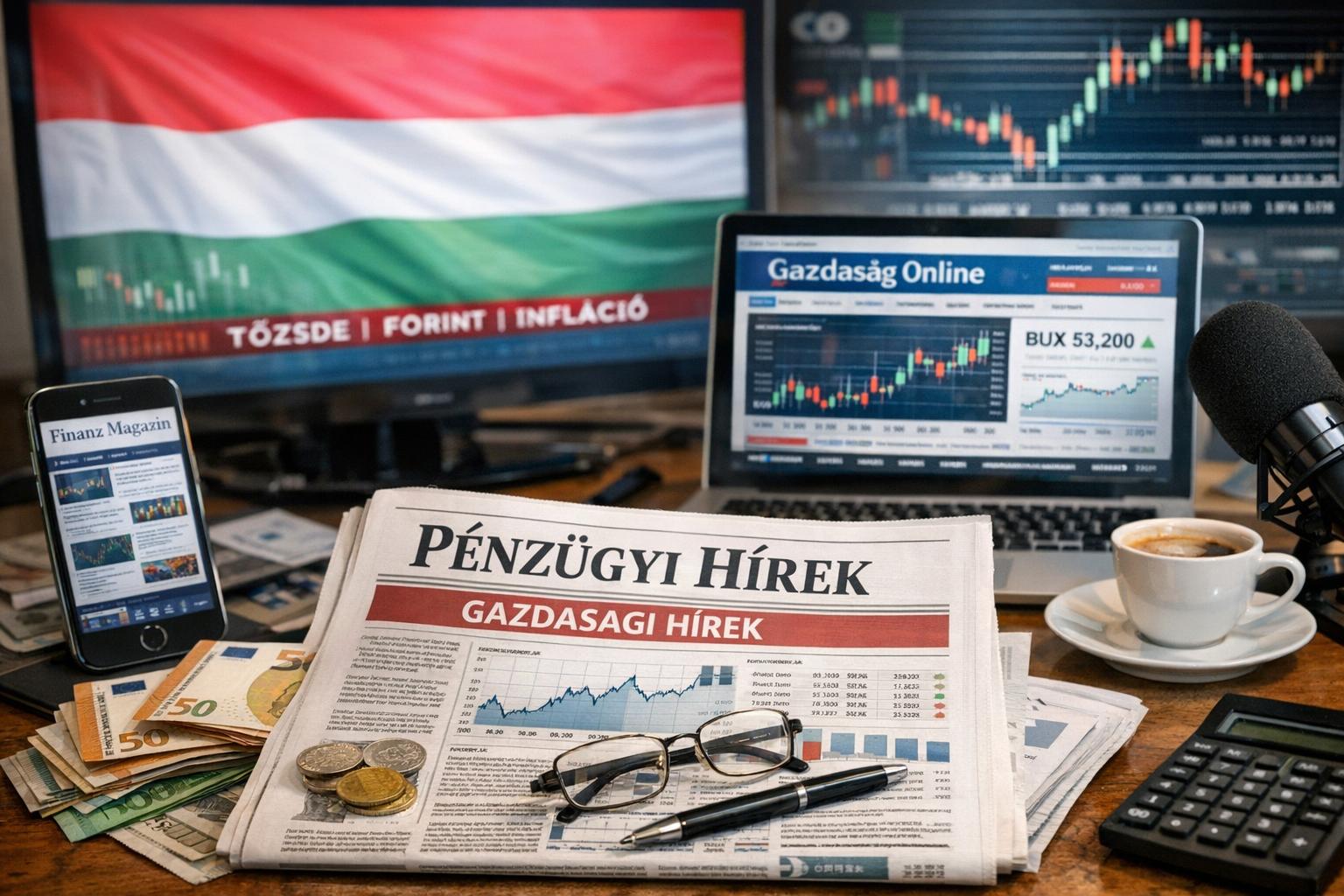
Finance media in Hungary occupies a distinct position within the country’s broader media landscape. It reflects the structure of the Hungarian economy, the regulatory framework governing financial markets, and the evolving consumption habits of readers and investors. Since the transition from a centrally planned economy to a market-based system in the early 1990s, Hungary has developed a financial press that serves retail investors, institutional actors, policymakers, and the general public. The sector includes print and digital publications, television and radio programs, professional newsletters, podcasts, and a growing number of online-only financial platforms that operate with highly specialized editorial teams.
The Hungarian financial press operates in an environment shaped by domestic economic cycles, European Union membership, and global capital market integration. As a medium-sized Central European economy with an open trade structure and a partially foreign-owned banking system, Hungary generates sustained demand for timely reporting on macroeconomic stability, exchange rate movements, sovereign debt trends, and corporate performance. Financial journalism therefore performs both a market-facing function and a public information role.
Historical Development of Financial Journalism in Hungary
Before 1989, Hungary’s media operated within a socialist framework where financial reporting largely concerned state planning targets, industrial output, and official statistical releases. Market-sensitive reporting on securities, corporate governance, or private investment activity did not exist in the manner seen in Western economies. The financial system itself was limited in scope, and the absence of capital markets reduced the demand for corporate performance analysis or investment commentary.
The political transformation of 1989–1990 created new institutional structures that required informed coverage. The re-establishment of the Budapest Stock Exchange (BSE) in 1990 marked a turning point. The emergence of private banks, brokerage firms, and foreign investors required transparent reporting on market developments. Financial journalists had to acquaint themselves with securities regulation, equity valuation, bond issuance, monetary policy tools, and cross-border investment flows.
During the 1990s, print business dailies and weeklies expanded their economic sections. Foreign media companies initially invested in Hungarian outlets, contributing professional standards and business models familiar from Western Europe. Publications began covering privatisation processes, foreign direct investment projects, and the listing of major companies on the BSE. Financial reporting evolved from descriptive summaries toward analytical interpretation of corporate earnings, monetary conditions, and fiscal policy.
Hungary’s accession to the European Union in 2004 deepened integration with continental financial structures. Reporting expanded to include EU budget negotiations, convergence criteria, single market regulations, and structural funds. Economic journalism became increasingly comparative, situating Hungary’s performance within a Central European and European Union context.
Key Print and Digital Publications
Világgazdaság
Világgazdaság remains one of the most established business and financial newspapers in Hungary. Originally founded in 1969, it transitioned through institutional and ownership changes after the political transformation. Today it operates both in print and digital formats, concentrating on domestic macroeconomic news, corporate developments, banking strategy, and policy analysis. Its digital portal, accessible at vg.hu, delivers continuous updates alongside subscription-based premium content.
The publication regularly features interviews with senior executives, ministers, and central bank officials. Sectoral analysis of energy, manufacturing, telecommunications, and pharmaceutical industries forms a recurring theme. Coverage also extends to European and global economic institutions whose policies influence Hungary’s export-oriented economy.
Portfolio.hu
Portfolio.hu, accessible at portfolio.hu, is widely regarded as a leading digital-native financial news platform in Hungary. Founded in 1999, it positioned itself at the intersection of real-time market data and professional analysis. Its editorial model combines rapid updates on equity indices, foreign exchange rates, and sovereign bond yields with in-depth analytical features.
The platform hosts conferences on banking, real estate, energy markets, and capital markets, extending its role beyond journalism into knowledge-based business services. English-language content broadens its reach among foreign investors monitoring Hungarian assets. Interactive charts, data visualizations, and scenario analysis give readers detailed perspectives on trends affecting the Hungarian forint and regional markets.
Napi.hu
Napi.hu, available at napi.hu, focuses on economic and corporate reporting aimed at professionals and informed general readers. It covers government budget measures, inflation developments, sector regulations, and consumer market trends. The publication frequently publishes explanatory articles clarifying the fiscal or monetary implications of regulatory adjustments.
Figyelő
Figyelő, historically one of the most influential business weeklies, contributed to analysis-oriented journalism during Hungary’s transition period. Its role in corporate profiling and executive interviews was prominent during the 1990s and early 2000s. While its market position has evolved over time, its legacy established standards for investigative economic reporting in Hungary.
International Media Presence
International financial media organizations regularly cover Hungarian developments, particularly during periods of exchange rate volatility or rating agency review. Publications such as the Financial Times, Bloomberg, Reuters, and The Wall Street Journal provide global context for Hungary’s sovereign debt assessments, central bank rate decisions, and political economy developments. Hungarian outlets frequently reference reporting from these international media sources when examining cross-border comparisons or investor sentiment shifts.
Television and Radio Coverage
Financial reporting on Hungarian television and radio is typically integrated into general news programming rather than delivered through dedicated business channels. The public broadcaster MTVA (mediaklikk.hu) includes economic segments within flagship news bulletins. Commercial broadcasters such as RTL and TV2 also report on fiscal measures, wage data, and inflation releases.
Coverage intensifies around significant events, including interest rate announcements by the Magyar Nemzeti Bank (MNB) (mnb.hu), publication of quarterly GDP results, or major corporate transactions. Interviews with analysts and academic economists supplement basic reporting. Radio programming similarly provides periodic market updates, particularly during morning news segments when exchange rate movements may affect business planning.
The Role of the Hungarian National Bank
The Magyar Nemzeti Bank acts as a central reference point for financial reporting. Monetary policy decisions, base rate changes, and inflation projections are reported extensively. Press conferences following rate-setting meetings receive detailed coverage, including analysis of forward guidance and communication tone.
The MNB’s regular publications, such as inflation reports and financial stability assessments, form key inputs for journalists. Data releases often lead to same-day analytical articles that interpret implications for mortgage pricing, corporate investment, and government borrowing costs. This dynamic makes central bank communication a structural driver of financial news cycles.
Ownership Structures and Media Concentration
Hungary’s media environment has experienced consolidation over the past two decades. Foreign media ownership, prominent in the early post-transition period, has declined as domestic investors acquired stakes in major outlets. In financial media, ownership structures can affect editorial resourcing and emphasis, particularly in investigative reporting concerning large corporations or public institutions.
Despite concentration trends, digital publishing platforms with smaller editorial teams have entered the market. Lower distribution costs enable niche providers to focus on data-driven reporting, sector-specific newsletters, or subscription-based research services. This diversification partially offsets the constraints faced by traditional print operations.
Regulatory Framework
Financial journalism in Hungary is governed by general media laws as well as financial market regulations that address market abuse, insider trading, and disclosure standards. The National Media and Infocommunications Authority (NMHH) (nmhh.hu) oversees compliance in the broader media sector. In parallel, financial supervisory activities under the MNB establish guidelines relevant to reporting on listed companies and securities markets.
European Union directives, including regulations concerning market abuse and transparency obligations, influence how price-sensitive information is disseminated. Journalists must distinguish between verified disclosures and speculative commentary, particularly when reporting on potential mergers, government bond issuance plans, or monetary interventions.
Coverage of Capital Markets
The relatively concentrated structure of the Budapest Stock Exchange shapes the scope of financial reporting. Blue-chip companies such as OTP Bank, MOL, Richter Gedeon, and Magyar Telekom account for a significant share of trading volume and market capitalisation. Quarterly earnings releases from these firms generate detailed previews and post-publication analysis.
Equity analysts’ recommendations are reported alongside adjustments in target prices and dividend forecasts. Media coverage also tracks retail investor participation, margin lending activity, and the performance of domestic mutual funds. Bond markets attract sustained attention given the scale of government borrowing and the importance of retail government bond programs.
Hungarian government securities marketed to households have expanded investor interest beyond professional circles. Financial journalism increasingly explains yield structures, maturity profiles, and inflation-linked bond terms in accessible language. Exchange rate fluctuations between the forint and the euro receive near-continuous monitoring, particularly during periods of interest rate divergence between Hungary and the euro area.
Macroeconomic Reporting
Macroeconomic coverage addresses GDP growth, budget deficits, inflation trends, current account balances, and employment figures. Inflation has drawn sustained scrutiny in periods of elevated consumer price growth. Journalists examine underlying drivers such as energy costs, food prices, wage dynamics, and tax adjustments.
Sovereign credit rating reviews by agencies such as Moody’s, S&P Global Ratings, and Fitch Ratings are major news events. Financial outlets evaluate how rating decisions influence borrowing costs and investor confidence. Comparative reporting situates Hungary’s fiscal metrics alongside those of Poland, the Czech Republic, Slovakia, and Romania.
Corporate and Banking Sector Coverage
The Hungarian banking system’s structure generates ongoing reporting. OTP Bank’s regional expansion strategy across Central and Eastern Europe receives particular attention. Coverage includes asset quality indicators, capital adequacy ratios, digital banking initiatives, and acquisitions in neighboring countries.
Beyond finance, multinational automotive manufacturers, battery producers, pharmaceutical exporters, and technology firms are frequent subjects. Hungary’s integration into European supply chains means that developments reported by outlets such as Reuters or Bloomberg often have direct implications for domestic factories and employment data, prompting follow-up coverage by Hungarian portals.
Audience and Readership Trends
Digitalisation has reshaped consumption patterns. Desktop readership has gradually given way to mobile access, with push notifications alerting subscribers to policy announcements or exchange rate movements. Newsletters summarising daily market developments have become standard features.
Subscription-based premium content is increasingly common. Readers pay for in-depth analysis, proprietary data, and sector research. Conferences organised by financial media outlets serve both as revenue sources and as forums for dialogue between policymakers and market participants. Podcasts and video briefings address audiences seeking concise explanations rather than long-form articles.
Financial Education and Public Literacy
Financial journalism contributes to raising economic literacy. Explanations of mortgage reference rates, changes in personal income taxation, and pension savings reforms help households make informed decisions. During volatile market conditions, explanatory articles provide context for interest rate adjustments or currency depreciation.
The MNB and educational institutions promote financial awareness initiatives, and media coverage amplifies these efforts. Guides to investment diversification, risk management, and savings products reflect the interconnectedness of journalism and public financial capability.
Technological Transformation
Automation and data analytics increasingly support newsroom operations. Real-time feeds supply exchange rate tables and index updates, allowing journalists to focus on interpretation rather than manual data compilation. Some outlets employ automated alert systems that generate preliminary earnings summaries, subsequently refined by human editors.
Social media platforms also influence distribution patterns. While they expand potential reach, they require editorial teams to address misinformation or speculative investment narratives circulating online. Maintaining credibility depends on verifying sources and clearly distinguishing fact from opinion.
International Integration
As a member of the European Union, Hungary is affected by decisions of the European Central Bank and EU fiscal authorities. Hungarian outlets regularly interpret ECB rate moves and discuss their indirect consequences for the forint and domestic liquidity conditions. Comparative articles reference analyses published by the Financial Times or macroeconomic commentary from the Wall Street Journal, placing Hungarian data within global discussions.
Foreign direct investment announcements, particularly in manufacturing and energy storage, are prominent news items. Media coverage often evaluates long-term employment implications, state subsidy commitments, and integration into European supply networks.
Outlook
The trajectory of finance media in Hungary is shaped by economic dynamics, digital adaptation, and regulatory developments. The limited size of the domestic capital market constrains scale, yet sustained public interest in inflation, exchange rates, and government bond yields ensures continued demand for financial reporting.
Outlets that combine data-driven analysis with accessible explanations are positioned to retain professional and retail audiences. As Hungary’s economy continues to interact closely with European and global markets, financial journalism remains a key mechanism through which investors, policymakers, and citizens interpret economic change. The sector’s evolution reflects the broader transformation of the Hungarian financial system and its integration into international markets.