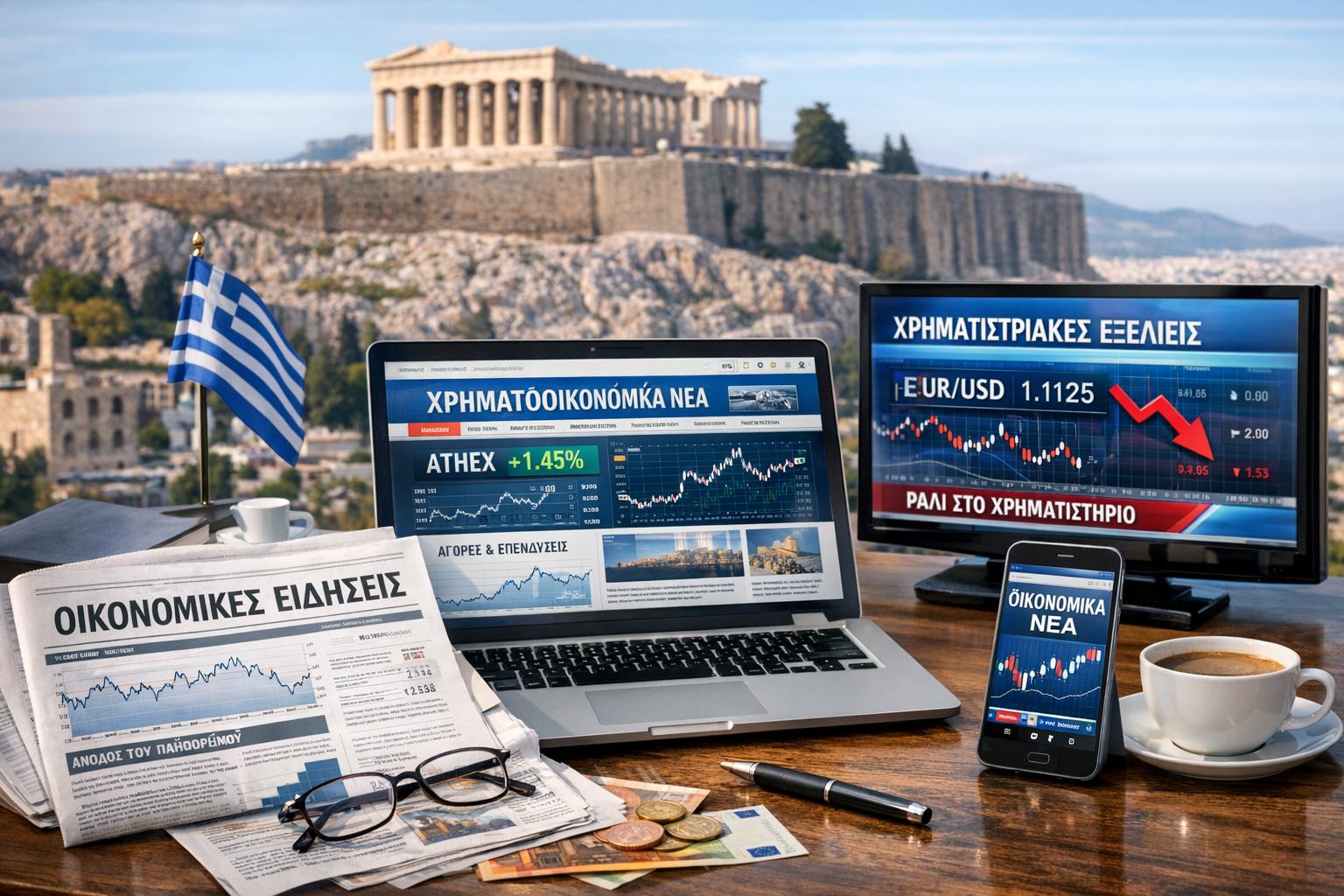
The landscape of finance media in Greece has evolved significantly over the past four decades, shaped by economic cycles, regulatory reforms, technological shifts, and the country’s position within the European Union. Greek financial journalism serves multiple audiences, including retail investors, institutional participants, entrepreneurs, policy professionals, and the broader public interested in economic developments. The sector encompasses print newspapers, specialized magazines, television and radio programming, digital native platforms, podcasts, and data-driven subscription services. Its structure reflects both Greece’s domestic market characteristics and broader European media trends.
Although the Greek media market is relatively small in European terms, financial journalism holds disproportionate influence due to the centrality of economic policy in public life. From monetary integration to fiscal consolidation and structural reform, the country’s economic trajectory has often required citizens and businesses to interpret complex policy decisions. Financial media has therefore operated not only as a reporting mechanism for markets, but as an intermediary translating institutional language into accessible analysis.
Historical Development of Financial Journalism in Greece
Modern financial journalism in Greece began to develop in the late twentieth century, particularly during the 1980s and 1990s, when the Athens Stock Exchange (ASE) experienced periods of intensified public participation. Economic liberalization, deregulation of banking services, and privatization initiatives expanded the domestic capital market. As listing activity grew and corporate disclosures became more standardized, demand increased for structured reporting on earnings, mergers, bond issuances, and state-owned enterprise reforms.
One of the central institutions in this development was Naftemporiki, founded in 1924. Originally focused heavily on shipping and trade, the newspaper gradually broadened its financial coverage to include equities, macroeconomic analysis, and international markets. By the 1990s, it had become a primary reference point for market professionals and corporate executives. Its emphasis on data tables, balance sheet summaries, and policy reporting distinguished it from general-interest publications.
The stock market boom culminating in 1999 marked a turning point. Retail participation surged as households entered the equity market in unprecedented numbers. Financial news expanded rapidly across print and broadcast formats. Dedicated market supplements were added to daily newspapers, publishing houses launched short-lived investment magazines, and television programs featured continuous ticker displays of share prices. This period highlighted both the potential reach of financial journalism and the risks associated with speculative coverage when investor literacy varies widely.
Following the market correction in the early 2000s, greater emphasis was placed on analytical depth. Journalists increasingly relied on official documentation from the Athens Stock Exchange and corporate filings. The adoption of International Financial Reporting Standards (IFRS) within the European Union introduced further technical complexity, necessitating more specialized expertise among reporters.
Greece’s entry into the euro area in 2001 further reshaped financial reporting. Coverage of domestic monetary policy gave way to regular analysis of decisions by the European Central Bank. Journalists began tracking Eurogroup meetings, European Commission fiscal assessments, and comparative deficit and debt indicators across member states. Financial journalism became more outward-looking, reflecting integration into European institutions and capital flows.
The Impact of the Sovereign Debt Crisis
The sovereign debt crisis that became apparent in 2009 transformed financial media in scale and responsibility. As Greece entered adjustment programs negotiated with the European Commission, the International Monetary Fund, and the ECB, economic policy dominated headlines across all media formats. Detailed explanations of fiscal targets, bond spreads, primary surpluses, and debt restructuring became routine elements of daily reporting.
Public interest in macroeconomic issues rose substantially. Concepts such as collective action clauses, private sector involvement, and bank recapitalization mechanisms entered mainstream discourse. Financial journalists frequently referenced updates from international outlets including the Financial Times, Reuters, and Bloomberg, integrating global market perspectives into domestic analysis. Greek publications monitored external commentary closely, as international coverage influenced bond yields and investor sentiment.
At the same time, media organizations faced financial strain. Advertising revenue contracted sharply as GDP declined. Circulation figures for print newspapers dropped, and operational costs were reduced through newsroom restructuring. These pressures accelerated the transition toward digital distribution, where lower fixed costs and instantaneous updates offered practical advantages.
The crisis also prompted more scrutiny of data accuracy. Official statistics released by ELSTAT and the Bank of Greece were subject to intensive examination. Journalists developed greater familiarity with statistical methodologies, fiscal accounting frameworks, and European reporting standards. The distinction between financial journalism and public policy analysis narrowed further during this period.
Major Print and Legacy Media Outlets
Naftemporiki continues to operate as one of Greece’s leading economic newspapers, combining print distribution with a comprehensive digital platform. Its coverage extends beyond capital markets to shipping, energy, infrastructure, and international trade. Real-time data services and newsletters complement traditional articles, reflecting hybridization between journalism and financial information services.
Another historically significant publication is Imerisia, which played an influential role in business reporting before suspending its print edition during the crisis. Greek general-interest newspapers such as Kathimerini and To Vima maintain substantial economic sections with dedicated correspondents covering banking, fiscal policy, entrepreneurship, and European affairs. Economic supplements often feature interviews with policymakers, central bank officials, and academic economists.
Shipping media represents a specialized subset. Given Greece’s position as a leading global shipping nation, dedicated outlets analyze freight rates, vessel financing structures, maritime insurance, and regulatory developments from the International Maritime Organization. Financial reporting in this segment often intersects with international credit markets and commodity trade flows.
Television and Radio Financial Coverage
Television remains an influential medium for broad economic communication. Broadcasters such as ERT, SKAI, and ANT1 include nightly economic segments summarizing domestic and international developments. These segments commonly address stock market performance, inflation statistics, government budget announcements, and corporate activity.
Dedicated financial television channels comparable to those operating in larger markets have not developed extensively in Greece, largely due to the country’s limited advertising base. However, televised roundtable discussions frequently feature academics and former policymakers interpreting European Commission assessments or ECB rate decisions. Such programming demonstrates how economic reporting has become integrated into general news discourse.
Radio contributes through short market bulletins and interview programs with analysts and business leaders. Although digital platforms attract greater engagement among younger demographics, radio retains relevance in regional markets and among commuting audiences.
Digital Transformation and Online Platforms
The most profound structural shift in Greek financial media has occurred online. Platforms such as Capital.gr, Euro2day.gr, and Bankingnews.gr provide real-time updates on equities, bonds, commodities, and foreign exchange. These websites combine breaking news with opinion columns and sector-specific reporting.
Revenue models typically integrate digital advertising, sponsored conferences, subscription-based premium content, and partnerships with data providers. Some outlets have introduced restricted-access analysis targeting professional investors. The organization of economic forums and summits has become a complementary activity, reinforcing editorial branding while generating sponsorship income.
Mobile accessibility has reshaped content presentation. Short-form alerts coexist with long-form investigative pieces. Interactive tools, including searchable databases of listed companies and archived financial statements, appeal to sophisticated readers seeking detailed information.
Social media platforms operate as distribution channels rather than primary content environments. Journalists use these networks to promote articles and engage with readers, but authoritative financial reporting continues to reside on proprietary websites where editorial oversight is clearer.
Regulatory and Ethical Framework
Financial journalism in Greece functions within a multilayered regulatory environment. The Hellenic Capital Market Commission supervises securities markets, while broader media regulation operates under national broadcasting and competition authorities. At the European level, frameworks such as the Market Abuse Regulation and MiFID II define boundaries concerning insider information, research dissemination, and conflicts of interest.
Journalists covering listed companies rely heavily on regulated information disclosures submitted to the Athens Stock Exchange. Careful distinction between editorial content and advertising is necessary, particularly when media organizations host sponsored business events or publish corporate interviews. Transparency regarding ownership and affiliations remains relevant given the integration of certain media groups with broader commercial activities.
Audience and Market Characteristics
The Greek financial media audience reflects the structure of the national economy. Large banks, insurance firms, shipping companies, publicly listed industrial groups, and professional services networks form a core readership. Retail investors constitute a smaller but responsive segment, particularly during periods of market volatility or high-profile privatizations.
Academic communities and research institutes contribute opinion articles and data interpretation. Universities in Athens and Thessaloniki, as well as independent think tanks, frequently collaborate with journalists through commentary and seminars. English-language sections on some platforms aim to inform foreign institutional investors evaluating infrastructure projects, tourism developments, and energy investments.
Because most reporting is conducted in Greek, international reach depends partly on citation by global wire services or partnerships with foreign publications. When major transactions occur, coverage by outlets such as the Wall Street Journal or the BBC Business section can amplify interest in Greek developments, often prompting reciprocal analysis within domestic media.
Data Journalism and Analytical Depth
Data journalism has expanded alongside improved public access to statistical releases. Regular reporting on inflation, employment, industrial production, and fiscal balances incorporates visualizations and historical comparisons. The Bank of Greece’s publications, including financial stability reports, are analyzed for indications of banking sector resilience and credit conditions.
Investigative reporting into banking recapitalizations, privatization contracts, and public procurement has emerged despite constrained newsroom resources. Collaboration between journalists, economists, and legal experts enhances the depth of such projects. Long-form digital formats and podcasts enable extended discussions beyond the limitations of printed column space.
The Role of Business Conferences and Events
Business conferences organized by financial media organizations form a visible component of Greece’s economic dialogue. Events bring together ministers, regulators, corporate executives, and investors. Themes often include renewable energy investments, logistics infrastructure, digital transformation strategies, and shipping finance trends. Proceedings from these conferences frequently generate follow-up articles, interviews, and policy analyses.
These gatherings also function as networking platforms, reflecting the interconnected nature of media, corporate leadership, and public administration. While sponsorship provides essential revenue, editorial credibility requires clear separation between conference promotion and independent reporting.
Emerging Trends and Future Outlook
Greece’s economic environment has stabilized compared to the crisis decade, yet financial journalism continues to address structural reform, capital market deepening, and foreign direct investment. The European Union’s Recovery and Resilience Facility channels significant funding into infrastructure and digital projects, increasing demand for specialized coverage of procurement processes and project finance structures.
Technological integration in newsrooms includes early adoption of automated earnings summaries and data scraping tools. Resource constraints limit large-scale investment in artificial intelligence systems, but incremental innovation continues. Subscription-based premium analysis may grow where niche expertise, such as maritime finance or renewable energy project evaluation, supports targeted readership.
The evolution of Greece’s capital markets, including potential expansion of corporate bond issuance and startup financing ecosystems, will influence content priorities. As transparency requirements increase under European regulation, opportunities for in-depth analytical journalism may expand correspondingly.
Conclusion
Finance media in Greece mirrors the country’s broader economic transformation. From the expansionary period of the late twentieth century through the sovereign debt crisis and into the current phase of stabilization and digital adaptation, financial journalism has continuously adjusted its structure and focus. Legacy newspapers coexist with dynamic online platforms, and broadcast media integrates economic analysis into mainstream programming.
Operating within European regulatory frameworks and serving a concentrated but influential audience, Greek financial media plays a central role in interpreting policy, monitoring markets, and facilitating communication between public institutions and private enterprise. Continued modernization of tools, diversification of revenue sources, and adherence to editorial standards will shape its capacity to support informed economic participation in the years ahead.