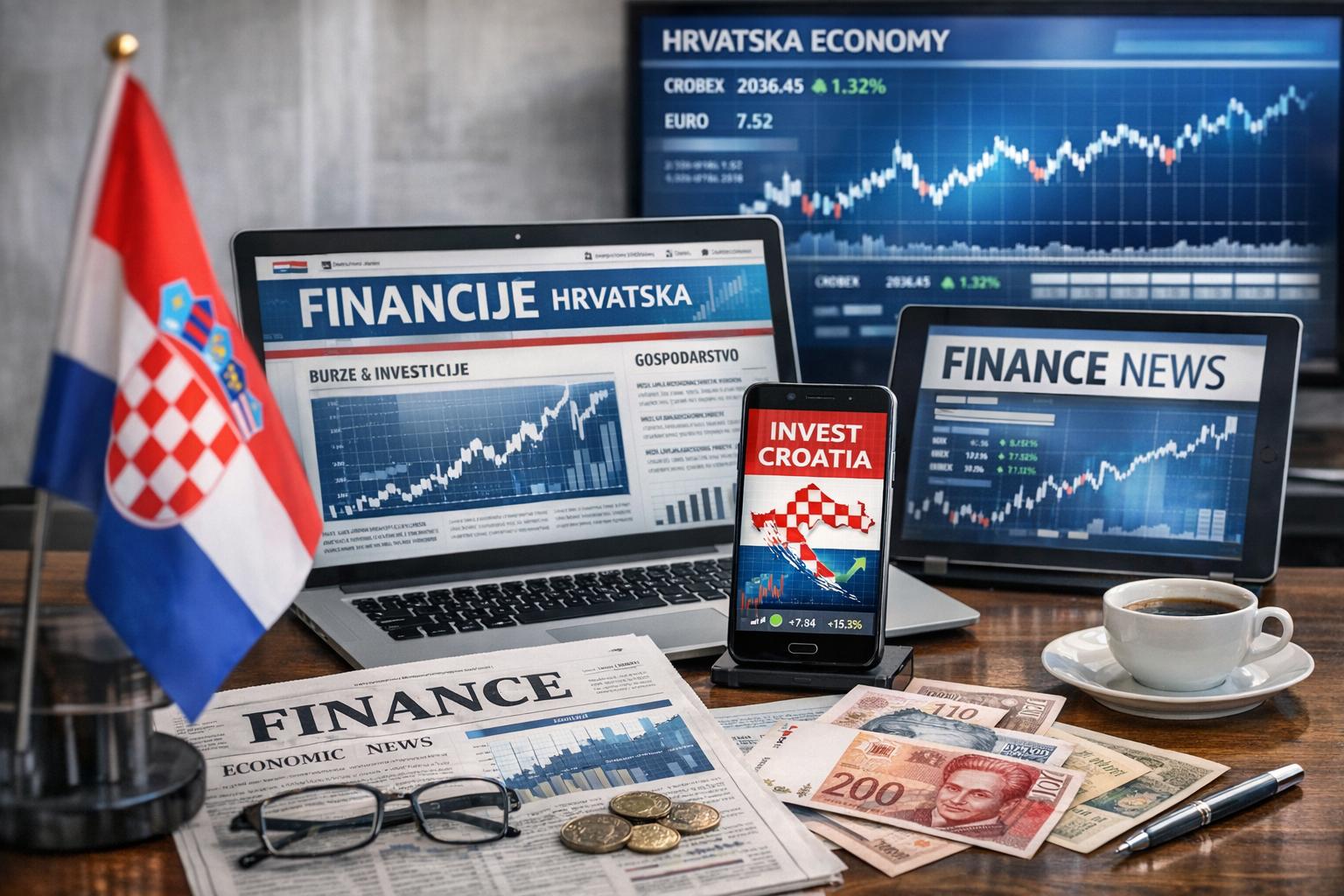
The financial media landscape in Croatia reflects the country’s broader economic development since independence in the early 1990s and its gradual integration into the European Union and global markets. As Croatia transitioned from a socialist system to a market-oriented economy, demand for accurate financial reporting, business analysis, and macroeconomic commentary steadily increased. Today, Croatia’s financial media includes specialized print and digital outlets, financial segments within mainstream media, business-focused television programming, and a growing number of online platforms that analyze markets, entrepreneurship, taxation, and regulation. Although the sector is relatively small compared to larger European markets, it plays a significant role in informing investors, entrepreneurs, policymakers, and the wider public.
Historical Development of Financial Journalism in Croatia
Financial journalism in Croatia developed in parallel with the country’s economic reforms during the 1990s. In the early years of statehood, media attention focused largely on political transformation and post-war reconstruction. Coverage of economic matters was frequently integrated into general news reporting rather than handled by specialized financial desks. State-owned enterprises, privatization processes, and stabilization efforts were reported primarily through political lenses, with limited analytical depth concerning capital markets or corporate governance.
As privatization progressed and the Zagreb Stock Exchange began to expand operations in the mid-to-late 1990s, interest in structured financial reporting grew. Journalists increasingly needed to interpret balance sheets, explain ownership restructuring, and follow newly listed companies. Basic market indicators, such as share prices and bond issuances, started appearing in newspapers with greater regularity.
The early 2000s saw a consolidation phase. Croatia experienced banking sector reforms, increased foreign direct investment, and preparations for accession negotiations with the European Union. During this period, media organizations began investing in specialized economic desks. Terminology such as fiscal deficit, current account balance, sovereign credit ratings, and central bank policy entered routine usage within national reporting.
Croatia’s accession to the European Union in 2013 was a structural milestone. Financial journalism expanded its scope to include European regulatory frameworks, cohesion policy, cross-border mergers, and capital mobility. The necessity of covering EU directives and structural funds encouraged journalists to develop stronger expertise in European institutional processes.
The adoption of the euro in January 2023 marked another significant turning point. Financial outlets dedicated extensive space to euro conversion procedures, inflation trends, pricing transparency, and alignment with the European Central Bank. Coverage shifted toward broader eurozone macroeconomic discussions, embedding Croatian financial reporting within continental debates.
Major Print and Digital Business Publications
Among Croatia’s most established business publications is Poslovni dnevnik, a daily newspaper dedicated to business and finance. Since its founding in 2004, it has positioned itself as a central source of corporate news, macroeconomic analysis, and sector reporting. The publication covers banking performance, capital market developments, taxation frameworks, tourism revenue, energy markets, and entrepreneurial initiatives. Alongside its print edition, its digital platform provides continuous updates, analysis, interviews with executives, and expert commentary.
Lider, a weekly business magazine, emphasizes management strategy, leadership, and corporate governance. Unlike daily newspapers that focus on immediate developments, Lider offers long-form reporting, data-supported features, and interviews with policymakers and industry leaders. It also organizes conferences and business forums, extending its role beyond traditional publishing and contributing to professional networking within Croatia’s economic community.
Mainstream newspapers also maintain strong economic sections. Jutarnji list, Večernji list, and Slobodna Dalmacija include coverage of budgetary policy, employment statistics, industrial production, tourism performance, and real estate markets. While their primary editorial focus remains general news, their broad circulation amplifies the reach of financial reporting.
Digital-first outlets play an increasingly prominent role. Portals such as Index.hr and Tportal publish real-time updates on economic and financial developments, often combining agency reports with original journalism. The speed of digital dissemination enables immediate reporting on stock market movements, central bank announcements, or corporate earnings releases.
This combination of specialized and general-interest media ensures broad distribution of economic information. Professional investors may rely on specialized publications, whereas small business owners and households frequently access financial news through mainstream digital portals.
Role of the Zagreb Stock Exchange
The Zagreb Stock Exchange (ZSE) remains central to domestic capital market reporting. Although Croatia’s equity market is modest in scale compared to exchanges in Frankfurt or Paris, it carries substantial national importance. Listed companies represent significant sectors of the economy, including tourism, food production, transportation, construction, and pharmaceuticals.
Financial media routinely report on movements in the CROBEX index, trading volumes, dividend announcements, and major transactions. Corporate disclosures and earnings announcements generate detailed analysis, often including commentary from brokerage analysts and academic economists.
Coverage extends beyond equities. Government bond issuances, municipal financing, and corporate debt placements are monitored as indicators of fiscal stability and corporate creditworthiness. When Croatia receives updates from international credit rating agencies, financial publications contextualize these assessments for domestic audiences.
Media attention intensifies during initial public offerings or significant ownership changes. Journalists provide background on company history, financial performance, and market implications. Such reporting contributes to capital market transparency and promotes investor awareness.
Banking Sector and Monetary Policy Reporting
Croatia’s banking sector is characterized by substantial foreign ownership, primarily from Austrian and Italian groups. Institutions such as subsidiaries of UniCredit and Erste Group operate alongside domestic financial entities. Reporting therefore frequently includes cross-border perspectives and regional performance comparisons.
The Croatian National Bank (Hrvatska narodna banka, HNB) plays a key role in setting regulatory standards and ensuring financial stability. Prior to euro adoption, its monetary interventions, exchange rate policies, and reserve requirements received continuous media scrutiny. Following entry into the eurozone, attention shifted toward decisions issued by the European Central Bank and the transmission of eurozone monetary policy to Croatian borrowers and savers.
Interest rate movements, mortgage lending trends, consumer credit growth, and deposit rates are standard subjects of reporting. During periods of heightened inflation across Europe, Croatian financial outlets contextualize domestic data within eurozone averages. Interviews with bank executives and independent economists provide interpretative commentary grounded in statistical indicators.
Television, Radio, and Multimedia Platforms
Financial topics are also integrated into broadcast journalism. The public broadcaster Hrvatska radiotelevizija (HRT) incorporates economic segments within news programs and produces specialized shows dedicated to business, agriculture, and entrepreneurship. Reporting includes interviews with government ministers, central bank officials, and corporate executives.
Commercial television stations complement public broadcasting by featuring discussions on investment projects, tourism forecasts, infrastructure development, and small enterprise financing. Radio programming, particularly regional stations, disseminates information relevant to agricultural producers and local entrepreneurs.
Although Croatia does not operate a continuous financial news channel comparable to international networks, integration of economic content across general programming ensures a consistent presence of business reporting within daily information cycles.
Entrepreneurship, Technology, and Startup Coverage
The rise of Croatia’s technology sector has influenced the orientation of financial journalism. Platforms such as Netokracija specialize in digital entrepreneurship, software development, venture capital, and innovation policy. These outlets often publish bilingual content to reach international investors and diaspora communities.
Coverage of startup funding rounds, accelerator programs, fintech development, and regional cooperation reflects the outward-looking character of Croatia’s technology ecosystem. Financial media increasingly analyze venture capital trends and the regulatory environment for digital services.
This niche reporting complements traditional business journalism. While established corporations remain central to economic coverage, startup-oriented platforms highlight emerging sectors, including gaming development, artificial intelligence, and renewable energy technologies.
Impact of European Union Membership
EU membership has introduced new reporting responsibilities. Cohesion and structural funds represent a substantial portion of public investment, especially in infrastructure and environmental projects. Financial media monitor absorption rates, procurement procedures, and compliance with European standards. By doing so, they contribute to transparency and public oversight.
Legislative harmonization requires journalists to interpret technical regulatory frameworks. Competition law, consumer protection directives, digital services legislation, and environmental compliance measures are translated into accessible analysis for domestic enterprises. Comparisons with other member states allow readers to assess Croatia’s relative performance within the Union.
The adoption of the euro deepened integration and expanded cross-border reporting. Macroeconomic commentary increasingly references European Commission forecasts and eurozone statistical releases. Croatian data is assessed alongside that of neighboring member states, reinforcing a comparative narrative within business journalism.
Challenges and Structural Constraints
The limited size of Croatia’s advertising market constrains revenue potential for specialized financial publications. Print circulation has declined in line with global trends, prompting cost restructuring and digital transition strategies. Subscription models, sponsored conferences, and targeted advertising increasingly support operational sustainability.
Maintaining editorial independence remains essential, particularly in a relatively concentrated corporate environment. Media organizations must balance commercial partnerships with investigative responsibilities. Transparency in ownership structures and adherence to professional standards are central to credibility.
Another challenge involves retaining specialized journalists. Financial reporting requires understanding of accounting standards, regulatory frameworks, and macroeconomic modeling. Continuous professional development is necessary to maintain analytical quality.
Financial Literacy and Public Engagement
Beyond reporting corporate developments, Croatian financial media contribute to public education. Articles addressing mortgage conditions, pension reform, tax obligations, and consumer protection enhance financial literacy. Explanatory journalism proved particularly relevant during euro conversion, when citizens required clear guidance regarding dual pricing and cash exchange procedures.
During the COVID-19 pandemic, business outlets tracked government support measures, sector-specific restrictions, and recovery projections. Accurate dissemination of policy changes enabled enterprises to navigate administrative requirements and financial planning challenges.
Academic economists and independent research institutes frequently collaborate with media organizations, providing empirical studies and commentary. This cooperation enhances analytical rigor while fostering informed public debate.
Digital Transformation and Emerging Trends
Technological innovation continues to reshape content production and distribution. Interactive graphics, podcasts, newsletters, and social media platforms enable targeted communication. Data journalism, including visualization of trade flows, fiscal balances, and demographic shifts, strengthens explanatory depth.
Subscription-based digital models may expand as audiences seek reliable interpretation of complex topics such as environmental, social, and governance (ESG) standards, renewable energy investment, and digital finance regulation. Croatian journalists increasingly monitor European climate policy, sustainable financing frameworks, and corporate disclosure obligations.
Cross-border collaboration within Central and Southeast Europe may further influence the sector. Regional reporting initiatives can broaden thematic scope while sharing investigative resources. English-language content aimed at foreign investors and institutional stakeholders may become more prominent as Croatia reinforces its position within the eurozone economy.
Overall, financial media in Croatia has evolved from limited economic coverage during the post-independence years to a structured ecosystem that encompasses specialized dailies, weekly magazines, digital platforms, broadcast programming, and niche innovation portals. Despite structural constraints linked to market size and revenue concentration, the sector remains integral to economic transparency. By systematically covering fiscal policy, corporate governance, capital markets, and European integration, Croatian financial journalism supports informed decision-making across both public institutions and private enterprise.