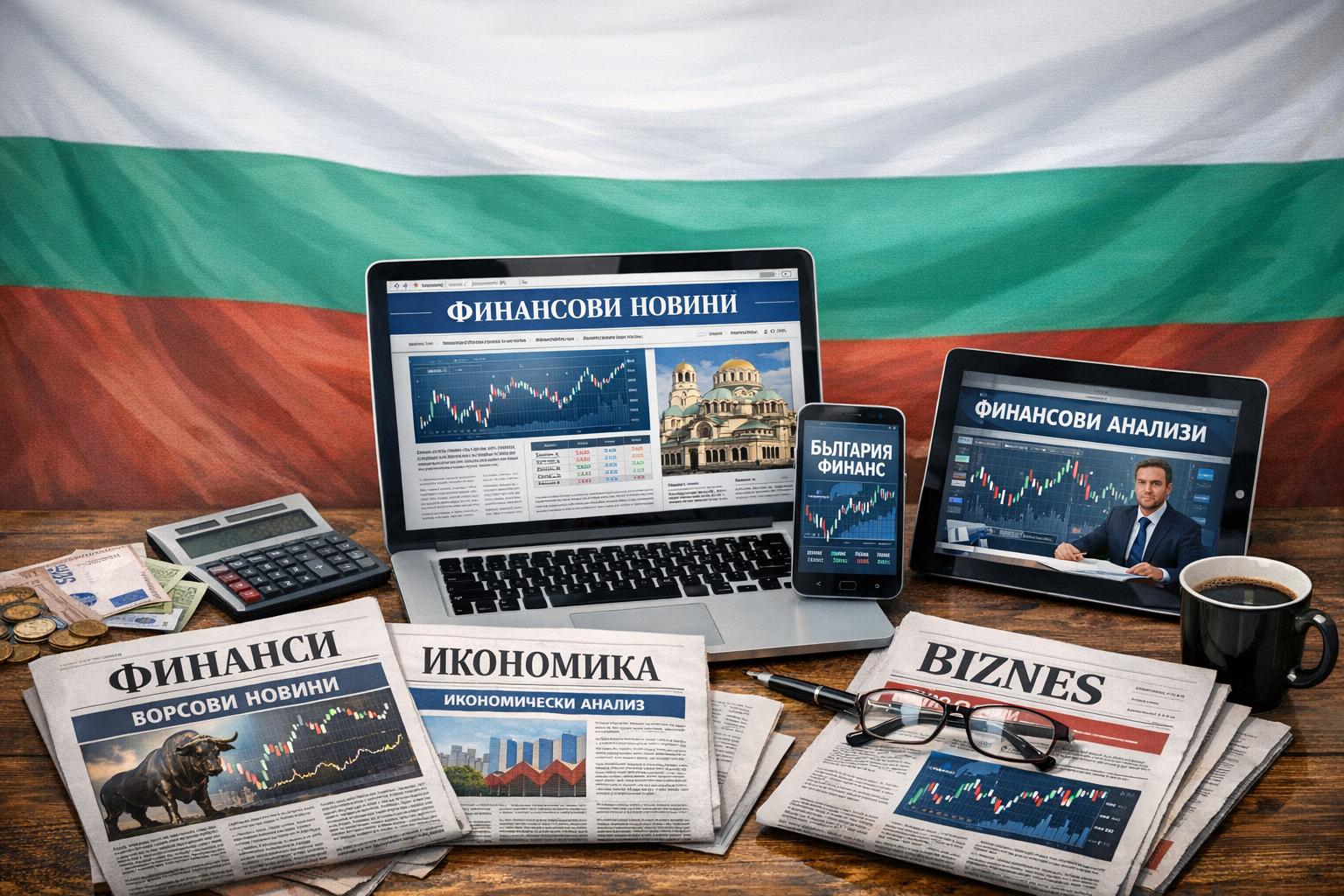
The development of finance media in Bulgaria reflects the broader transformation of the country’s economy since the early 1990s. As Bulgaria transitioned from a centrally planned system to a market-oriented economy, the need for reliable financial information became increasingly important for businesses, investors, policymakers, and households. Over the past three decades, a diverse ecosystem of print publications, television programs, digital platforms, and specialized news agencies has emerged to cover banking, capital markets, taxation, corporate developments, and personal finance.
Today, Bulgarian finance media operates in a complex environment shaped by European Union membership, regional economic dynamics, technological change, and shifting patterns of media consumption. Although the market is relatively small compared to Western Europe, it plays an important role in supporting transparency, investor confidence, and public understanding of economic policy. The interaction between national institutions, European authorities, and global markets has made financial reporting more interconnected and technically demanding than at any previous stage in Bulgaria’s modern history.
Historical Development of Finance Media in Bulgaria
During the socialist period prior to 1989, financial journalism in Bulgaria was limited in scope and closely aligned with state planning structures. Economic reporting primarily focused on production targets, trade within the Council for Mutual Economic Assistance (CMEA), and government-planned initiatives. Independent analysis of monetary policy, capital markets, or private enterprise did not exist in the modern sense. Newspapers and broadcasters functioned as instruments of policy communication rather than platforms for scrutiny or investigative research.
The political transformation after 1989 marked the beginning of structural economic change. Privatization, liberalization of prices, the restructuring of state-owned enterprises, and the emergence of commercial banks created demand for new forms of reporting. Economic instability during the early transition period, including the severe banking crisis and hyperinflation of 1996–1997, made financial information a matter of public urgency. Citizens sought clarity regarding savings, exchange rates, and government stabilization measures. Journalists were required to develop expertise rapidly as policies evolved and institutions were restructured.
The introduction of the currency board arrangement in 1997, which pegged the Bulgarian lev first to the German mark and later to the euro, increased the importance of transparent communication from the Bulgarian National Bank. Media coverage expanded to interpret monetary data, fiscal discipline, and public debt management. As financial stabilization progressed, the scope of reporting moved beyond crisis management toward long-term development, investment trends, and integration into European markets.
The early 2000s witnessed professionalization across the sector. Bulgaria’s negotiations for European Union accession required harmonization of financial regulations, banking supervision, and capital market standards. Journalists increasingly relied on European sources, legal texts, and comparative analysis. When Bulgaria joined the EU in 2007, financial reporting entered a new phase in which domestic developments were closely connected to regulatory frameworks designed in Brussels and Frankfurt.
Major Print and Online Financial Publications
Several publications have shaped the country’s financial media landscape in the post-transition period. Among the most prominent is Dnevnik, accessible at dnevnik.bg, which provides ongoing coverage of macroeconomic developments, fiscal policy debates, and corporate news. While not exclusively a financial newspaper, it maintains a steady focus on business and market issues and reaches an audience of professionals, entrepreneurs, and policymakers.
Capital, available at capital.bg, has developed a reputation for detailed reporting on corporate governance, mergers and acquisitions, technology investment, and regulatory reform. Its investigative articles often examine ownership structures and competitive dynamics within key sectors such as energy, telecommunications, and banking. Over time, Capital expanded from a print weekly into a multi-platform publisher that includes digital subscriptions, newsletters, podcasts, and industry events.
Other Bulgarian outlets contribute to financial reporting even if their coverage is broader in scope. 24 Chasa and Trud frequently report on tax policy changes, labor market data, and major infrastructure investments. Their readership extends to a wide segment of society, thereby connecting specialized economic developments to everyday concerns.
International media also influences the Bulgarian information environment. Publications such as the Financial Times, Reuters, and Bloomberg are widely cited by domestic journalists when covering cross-border capital flows, European monetary policy, and geopolitical developments affecting Southeast Europe. These global outlets supply benchmarks, comparative analysis, and breaking news that complement local perspectives.
Financial News Agencies and Institutional Sources
The Bulgarian News Agency (BTA), accessible at bta.bg, provides official announcements, economic statistics, and coverage of parliamentary proceedings. BTA acts as a primary distribution channel for statements issued by the Council of Ministers, the Ministry of Finance, and other public institutions. Financial journalists rely on these releases for accurate baseline information before offering contextual analysis.
The Bulgarian National Bank (BNB), through its website at bnb.bg, publishes monetary statistics, supervisory reports, and analyses of banking sector conditions. Similarly, the Ministry of Finance disseminates budgetary data and annual fiscal programs. The Bulgarian Stock Exchange (BSE), at bse-sofia.bg, provides disclosures from listed companies, trading volumes, and index performance data. These institutional sources form the backbone of financial journalism, ensuring that reporting is grounded in verifiable documentation.
Private portals aggregate this information and present it in accessible formats. Some focus on real-time updates from the capital markets, while others specialize in regulatory developments or industry-specific news. The interaction between official releases and independent commentary produces a layered media environment where raw data and interpretative reporting coexist.
Television and Radio Coverage of Financial Topics
Television remains a significant channel for economic communication. National broadcasters such as the Bulgarian National Television (BNT) and private networks including Nova Broadcasting Group incorporate business segments within their evening news programs. These segments address inflation trends, wage growth, pension adjustments, and developments in the energy sector. Interviews with economists and analysts accompany coverage of major policy announcements.
Although Bulgaria does not operate a dedicated twenty-four-hour financial news channel comparable to CNBC, televised discussions frequently reference global market conditions and decisions taken by the European Central Bank. During periods of volatility, such as banking sector stress in Europe or fluctuations in energy prices, financial explainers become more prominent within mainstream broadcasting.
Radio programming, particularly via the Bulgarian National Radio at bnr.bg, provides in-depth interviews and roundtable discussions. Radio formats often permit longer analytical exchanges than television, enabling economists and policymakers to clarify complex subjects such as debt issuance, euro adoption criteria, or structural reform strategies.
Digital Transformation and Data Journalism
The shift toward digital platforms has reshaped finance journalism in Bulgaria. Consumption patterns increasingly favor online articles, mobile applications, and social media distribution. News portals update economic statistics within minutes of release by Eurostat or the national statistical institute. Readers expect immediate interpretation alongside the raw data.
Digital transformation has also stimulated the adoption of data journalism. Interactive graphics illustrate budget deficits, inflation trajectories, and sectoral growth rates. Journalists analyze spreadsheets of corporate filings and public procurement contracts, often supported by visualization software. This approach enhances transparency by enabling audiences to engage directly with primary data rather than relying exclusively on narrative summaries.
However, the online environment has altered revenue structures. Advertising income is dispersed across global platforms such as Google and Facebook, reducing the resources available for local newsrooms. Subscription models, corporate partnerships, and ticketed conferences have emerged as alternative funding mechanisms. Business forums organized by publications create additional spaces for dialogue between entrepreneurs, regulators, and investors.
The Role of Finance Media in Capital Market Development
The Bulgarian capital market remains modest when compared with larger European exchanges. Nonetheless, financial journalism contributes to transparency by regularly reporting on public offerings, bond placements, and index movements. Analytical commentary contextualizes financial statements and earnings announcements, supporting informed decision-making.
Coverage of regulatory activity by the Financial Supervision Commission encourages accountability among market participants. By clarifying the implications of new disclosure requirements or supervisory actions, media outlets help maintain confidence among retail and institutional investors. Accurate explanations of prospectuses and risk factors are particularly important in a market where many participants may lack extensive prior investment experience.
As Bulgaria advances toward deeper integration within the euro area framework, reporting increasingly addresses convergence indicators, fiscal sustainability metrics, and coordination with European institutions. Journalists monitor assessments issued by the European Central Bank and the European Commission, interpreting their significance for domestic monetary arrangements.
Investigative Reporting in the Financial Sector
Investigative journalism represents a specialized dimension of finance media. Certain outlets examine banking practices, public procurement contracts, and the allocation of European structural funds. These investigations often depend on cross-border collaboration, particularly when tracing company ownership through multiple jurisdictions.
International networks and non-governmental organizations provide methodological support and comparative data. Investigative findings are sometimes cited by international media including The Guardian and The New York Times, demonstrating the interconnected character of financial scrutiny. Such cross-referencing increases the visibility of Bulgarian economic issues beyond national borders.
The sustainability of investigative work depends on editorial independence, legal expertise, and access to reliable documentation. While the domestic market presents financial constraints, collaborative models have strengthened the resilience of this segment of journalism.
Personal Finance and Consumer-Oriented Content
Growing attention to personal finance coverage reflects changes in household financial behavior. Mortgage lending, consumer credit conditions, and private pension schemes are recurring themes. Rising property prices in Sofia and other urban centers have intensified demand for clear explanations of interest rate adjustments and loan eligibility criteria.
Media reports frequently interpret statistics issued by the central bank, clarify tax reforms, and analyze wage growth in relation to inflation. Explanatory articles use examples and scenario analysis to illustrate how macroeconomic shifts affect individual budgets. Online calculators and step-by-step guides enable readers to estimate borrowing costs or savings returns under various assumptions.
This consumer-oriented focus supports financial literacy. By presenting practical implications rather than abstract metrics, journalism links policy decisions to everyday economic circumstances.
Regulatory Environment and Ethical Standards
The regulatory framework governing Bulgarian media encompasses freedom of expression protections, defamation laws, advertising standards, and transparency of ownership requirements. Financial reporting must also comply with European Union rules concerning market abuse and insider information. Journalists covering listed companies are expected to avoid disseminating unverified claims that might influence asset prices.
Editorial codes emphasize accuracy, attribution of sources, and separation between news content and sponsored material. Given the relatively concentrated advertising market, maintaining independence can present challenges. Transparent labeling of paid content and adherence to professional standards are essential to preserving credibility.
Training initiatives and partnerships with academic institutions contribute to the development of specialized expertise in accounting, macroeconomics, and financial law. Such technical knowledge supports responsible coverage of complex instruments and regulatory reforms.
Challenges and Structural Constraints
Finance media in Bulgaria operates within structural constraints related to market size, demographic trends, and competition from international platforms. Print circulation continues to decline as digital alternatives expand. Smaller audiences limit economies of scale, reducing the capacity for large investigative teams.
Recruitment and retention of qualified financial journalists represent another constraint. Professionals with advanced quantitative skills are often sought by banks, consulting firms, or multinational corporations. Media organizations must therefore balance compensation structures with budget realities.
The rapid dissemination of unverified information through social networks complicates the information environment. Established outlets reinforce fact-checking standards and rely on documented sources to distinguish professional journalism from speculation. Maintaining trust remains central to long-term sustainability.
Regional and European Context
Bulgaria’s geographic position at the intersection of Southeast Europe and the Black Sea region influences financial coverage. Trade corridors, energy transit projects, and foreign direct investment from neighboring countries generate recurring topics for analysis. Regional comparisons with Romania, Greece, and Serbia illustrate competitive positioning in areas such as taxation, labor costs, and industrial output.
European policy frameworks remain particularly influential. Fiscal coordination under EU rules, green transition funding, and digitalization initiatives shape domestic investment strategies. Bulgarian journalists monitor updates from Eurostat and the European Commission to evaluate compliance and opportunities for structural support.
This integration positions Bulgarian finance media within a broader European conversation. Domestic developments are regularly interpreted in relation to continental benchmarks and global economic cycles.
Outlook for Finance Media in Bulgaria
The future of finance media in Bulgaria will be influenced by continued technological innovation, regulatory harmonization, and macroeconomic change. Progress toward euro area membership will likely intensify examination of fiscal indicators, monetary coordination, and institutional readiness. Journalists will continue to translate technical convergence reports into accessible analysis.
Emerging technologies such as automated earnings summaries, artificial intelligence-assisted data processing, and advanced visualization tools may improve efficiency in routine reporting. At the same time, demand for contextual interpretation is unlikely to diminish. As financial products and regulatory obligations become more sophisticated, explanatory journalism will remain central.
Overall, finance media in Bulgaria functions as a foundational component of the country’s economic infrastructure. By providing verified information, analytical depth, and public scrutiny, it supports informed participation in markets and policy debates. Despite structural constraints associated with scale and revenue, the sector continues to adapt to digital realities while maintaining its role in strengthening transparency and accountability within the Bulgarian financial system.