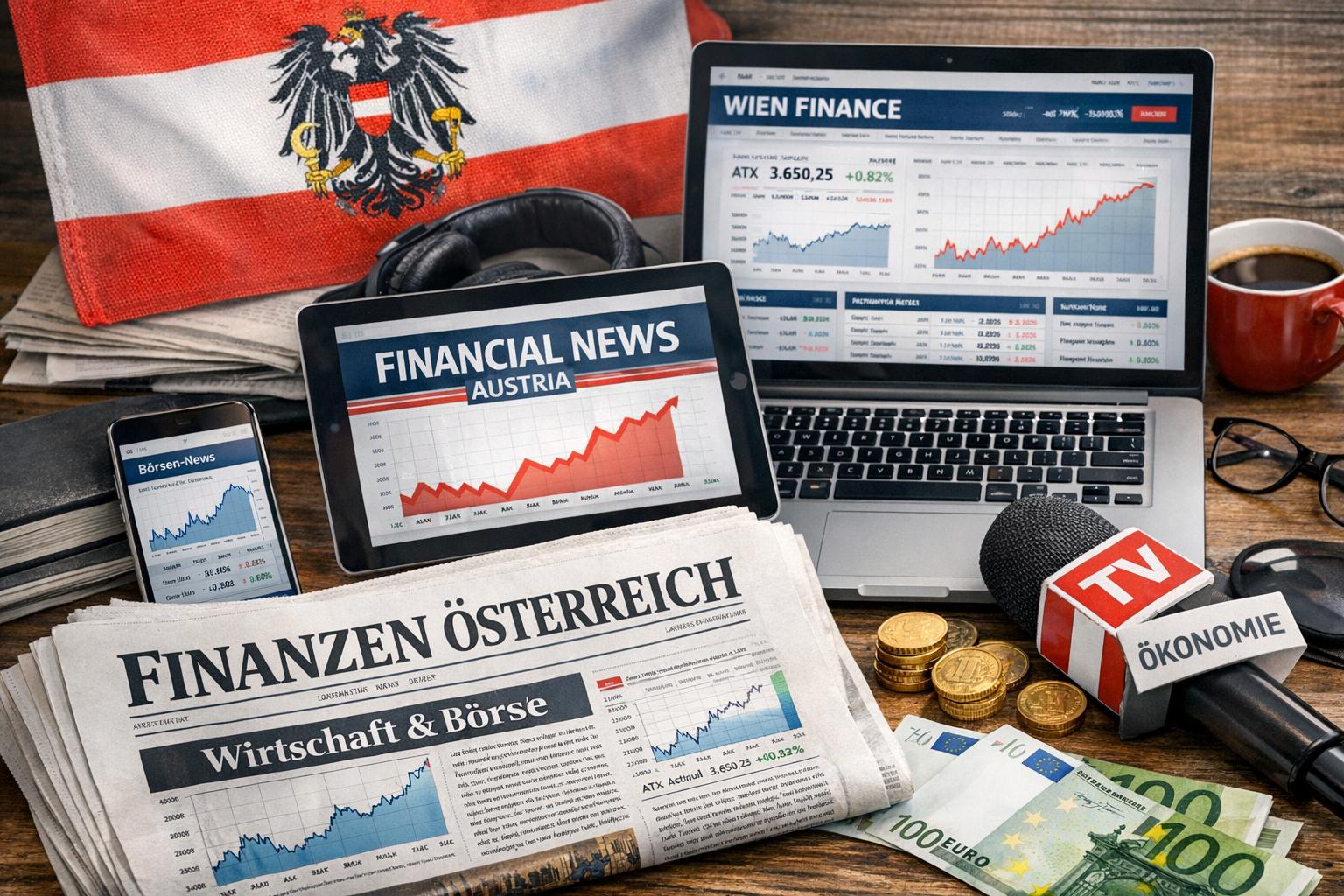
The media landscape covering finance in Austria reflects the country’s economic structure, regulatory environment, and political culture. Austria has a highly developed banking system, a strong tradition of social partnership between employers and labor organizations, and close economic ties to both Germany and Central and Eastern Europe. Financial journalism in Austria mirrors these characteristics by focusing not only on markets and corporate results but also on regulatory developments, monetary policy, fiscal decisions, and cross-border business activity. The sector includes daily newspapers, specialized financial publications, public and private broadcasters, digital platforms, and international outlets with Austrian coverage.
Compared with larger media markets such as Germany, France, or the United Kingdom, Austria’s financial media ecosystem is compact. However, it operates within a dense web of regional and EU-level institutions. Austrian companies are often listed or cross-listed in other European markets, Austrian banks maintain extensive operations in neighboring countries, and national regulatory developments are frequently linked to European directives. As a result, the tone and scope of financial journalism tend to extend beyond purely domestic concerns.
Historical Development of Financial Journalism in Austria
Financial reporting in Austria developed alongside the expansion of the country’s banking and industrial sectors in the late nineteenth and early twentieth centuries. Vienna emerged as a financial center during the Austro-Hungarian Empire, and newspapers at the time carried commodity prices, stock exchange information, and trade data. The Wiener Zeitung, founded in the eighteenth century, became an important channel for official notices and commercial disclosures, setting early standards for structured economic information.
The collapse of the empire after the First World War and the economic instability of the interwar period limited the scale and consistency of financial journalism. Hyperinflation and currency reform created public demand for economic reporting, yet media institutions themselves were subject to political and financial volatility. During the period of National Socialist rule between 1938 and 1945, media independence was eliminated, and financial coverage was integrated into state propaganda structures.
After 1945, Austria reconstructed its political and media systems. A pluralistic press re-emerged, supported by party-affiliated and independent publishers. With economic stabilization and the gradual development of the “social market” model, reporting shifted toward structural issues such as industrial recovery, export performance, and the rebuilding of the banking system. Over the subsequent decades, dedicated business desks became institutionalized within major newsrooms.
Austria’s accession to the European Union in 1995 and participation in the Eurozone from 1999 marked a decisive transformation. Journalists increasingly covered European Central Bank decisions, convergence criteria, and fiscal coordination mechanisms. Events such as the introduction of euro banknotes in 2002 required explanatory reporting aimed at consumers and businesses alike. The global financial crisis of 2008–2009 and the subsequent European sovereign debt crisis further intensified scrutiny of banks, capital adequacy, and cross-border exposures.
Major Daily Newspapers with Financial Coverage
Several national newspapers dominate the Austrian print and digital market, each maintaining business and finance sections that vary in scope and analytical depth. Among the most influential is Die Presse, which combines traditional broadsheet presentation with detailed economic analysis. Its business section addresses corporate governance, energy policy, taxation reforms, and European economic developments. Interviews with executives and policymakers are commonly used to contextualize quarterly results or regulatory reforms. The newspaper’s official website is available at Die Presse.
Der Standard is widely regarded for its investigative orientation and its structured online discussion forums. Its economic coverage frequently addresses digital transformation, competition policy, and sustainability regulation. The publication places emphasis on European legislation and the implications of EU directives for Austrian companies. Its digital edition, accessible at Der Standard, allows for continuous updates during trading hours and has become central to its readership strategy.
Kurier provides national and regional reporting with a concise business segment that focuses on consumer finance, small and medium-sized enterprises, and industrial production. Its coverage often reflects the concerns of Austria’s export-oriented manufacturers and the tourism sector. Its online portal can be found at Kurier.
The high-circulation tabloid Kronen Zeitung, available at Kronen Zeitung, allocates limited space to specialized market analysis but addresses economic issues affecting households. Topics such as inflation trends, pension adjustments, and labor law amendments are framed in a way that emphasizes their social implications. Although not a primary source for institutional investors, it plays a significant role in shaping public perception of economic policy.
Specialized Business Publications
Beyond general-interest newspapers, Austria maintains several specialized publications dedicated to business and investment reporting. Trend, accessible at Trend, is among the most recognized business magazines in the country. It publishes corporate rankings, sectoral studies, and executive interviews. Its annual lists of leading companies and managers are frequently referenced by other media outlets.
Gewinn, available at Gewinn, focuses more directly on personal finance, equity markets, real estate, and tax optimization. The publication addresses retail investors and business owners seeking structured analysis of investment products and pension planning. In an environment characterized by prolonged low interest rates followed by tighter monetary policy, such coverage has gained broader relevance.
Börse Express, operating digitally at Börse Express, concentrates on the Vienna Stock Exchange and international capital markets. It provides corporate announcements, index developments, and commentary on earnings seasons. Its format is designed for readers requiring frequent updates during market hours.
Broadcast Media and Financial Reporting
The Austrian Broadcasting Corporation, ORF (Österreichischer Rundfunk), occupies a central position in audiovisual financial journalism. As a public service broadcaster, ORF integrates economic segments into its primary news programs on television and radio. Budget negotiations, inflation data releases, and employment statistics are systematically covered. The broadcaster’s corporate site, ORF, hosts written summaries and video archives that complement broadcast material.
Private broadcasters contribute to headline-oriented financial updates, particularly regarding consumer-related economic developments. Talk formats occasionally host economists or industry representatives to discuss labor agreements or fiscal reforms. Radio remains relevant for commuters, providing brief stock exchange summaries, traffic-related economic updates, and currency information.
The Vienna Stock Exchange and Market Data
The Vienna Stock Exchange (Wiener Börse), accessible at Wiener Börse, functions as the focal point for Austrian capital market reporting. Although its market capitalization is modest compared to Frankfurt or Paris, the exchange lists leading Austrian corporations and serves as a gateway to Central and Eastern European securities.
The ATX index, which tracks major Austrian companies, is reported daily across print, broadcast, and digital media. Earnings releases, dividend policies, and merger announcements are analyzed with particular attention to cross-border revenue exposure. Due to Austria’s economic integration with Germany, movements in the DAX are frequently referenced as contextual indicators.
Financial media increasingly examine environmental, social, and governance (ESG) disclosures. EU taxonomy rules and sustainability reporting standards have generated demand for explanatory journalism. Austrian institutional investors, including pension funds and insurance companies, are required to align reporting practices with EU frameworks, creating further reporting depth.
Digital Transformation of Austrian Financial Media
The shift toward digital distribution has altered newsroom workflows and revenue models. Most major newspapers have implemented subscription systems that differentiate between freely accessible news and premium analytical content. Real-time reporting during trading sessions has gained importance, as has multimedia integration through charts, podcasts, and interactive data tools.
Independent newsletters and specialist blogs have emerged, focusing on Austrian equities, macroeconomic modeling, and startup financing. Social media platforms are used to distribute breaking headlines, though established outlets remain cautious regarding verification standards. Podcasts featuring economists, venture capital investors, and academic researchers have broadened the range of accessible commentary.
Coverage of Banking and Financial Institutions
The Austrian banking sector occupies a prominent role in domestic reporting. Institutions such as Erste Group, Raiffeisen Bank International, and UniCredit Bank Austria are regularly analyzed in relation to profitability, capital buffers, and regional exposure. Because these banks maintain subsidiaries throughout Central and Eastern Europe, economic or political developments in those markets frequently shape coverage.
The Austrian Financial Market Authority (FMA), accessible at FMA, and the European Central Bank’s supervisory framework are integral to reporting structures. Regulatory announcements concerning capital requirements, anti-money laundering enforcement, or consumer protection rules generate follow-up analysis across multiple platforms.
Macroeconomic Reporting and Policy Analysis
Macroeconomic coverage encompasses inflation trends, gross domestic product data, industrial output, and unemployment rates. The publication of statistics by Statistik Austria and forecasts by the Oesterreichische Nationalbank (OeNB), available at OeNB, structures the editorial calendar. Although Austria does not set independent monetary policy within the Eurozone, reporting frequently explains European Central Bank decisions and their transmission to domestic credit markets.
The federal budget process attracts sustained attention. Journalists analyze projected deficits, debt trajectories, and compliance with EU fiscal parameters. Austria’s institutionalized social partnership system means that wage negotiations between employer groups and trade unions also receive detailed examination, particularly in periods of elevated inflation.
Real Estate and Housing Market Coverage
Real estate constitutes a recurrent theme in Austrian financial journalism. Vienna’s regulated rental market, combined with significant public housing stock, creates a distinctive policy environment. Media outlets evaluate property price trends, mortgage lending standards, and construction sector performance. International investment flows into urban development projects are also scrutinized, particularly when zoning reforms or infrastructure plans are proposed.
Rising interest rates have intensified reporting on mortgage affordability and household debt levels. Coverage typically incorporates input from developers, tenant associations, banking representatives, and academic housing economists.
Fintech and Startup Reporting
Austria’s startup ecosystem, concentrated in Vienna and supported by regional hubs in Graz and Linz, has expanded steadily. Financial media cover venture capital rounds, digital banking initiatives, and regulatory sandbox frameworks. Fintech companies operating under EU passporting rights illustrate the interconnected nature of the Austrian and broader European markets.
University spin-offs and public funding programs are frequently examined, reflecting Austria’s emphasis on applied research and medium-sized enterprises. Although the domestic market is limited in scale, cross-border expansion into Central and Eastern Europe offers recurring reporting themes.
International Influences and Cross-Border Reporting
Due to economic proximity and linguistic ties, German media have substantial readership among Austrian professionals. Publications such as Handelsblatt and the Frankfurter Allgemeine Zeitung are commonly cited in Austrian reporting. International outlets including the Financial Times and Reuters influence coverage of global monetary policy and commodity markets.
Developments such as interest rate decisions by the U.S. Federal Reserve or changes in Chinese industrial demand are contextualized through their impact on Austrian exports, energy prices, and tourism receipts. This outward-oriented perspective reinforces the structural link between domestic reporting and global economic cycles.
Regulation and Media Environment
Austrian press law provides for media freedom while imposing obligations relating to accuracy and source transparency. Financial reporting operates within the framework of EU market abuse regulations, which define how price-sensitive information is disclosed. Journalists interact closely with corporate communications departments to ensure compliance with embargo times and ad hoc release standards.
Publicly listed companies must adhere to strict reporting calendars, shaping the rhythm of financial news production. Earnings seasons generate concentrated waves of coverage, while regulatory consultations and parliamentary debates create longer analytical cycles.
Challenges and Future Developments
Austrian financial media face structural adjustments tied to declining print circulation and evolving advertising markets. Subscription-based digital access models have become central to sustaining investigative capacity. Maintaining specialized expertise in accounting, banking regulation, and macroeconomic modeling remains essential in a comparatively small media market.
At the same time, economic developments such as inflation volatility, demographic aging, and energy transition policies have broadened public interest in financial subjects. ESG compliance, digital assets, and sustainable finance frameworks are likely to remain prominent in editorial planning. As EU legislation continues to evolve, Austrian outlets will remain closely aligned with European institutions and cross-border developments.
Overall, finance media in Austria combine domestic economic analysis with strong European integration and increasing digital specialization. Despite operating within a relatively small national market, Austrian financial journalism demonstrates structural depth and institutional continuity, reflecting the stability and interconnectedness of the country’s economic framework.