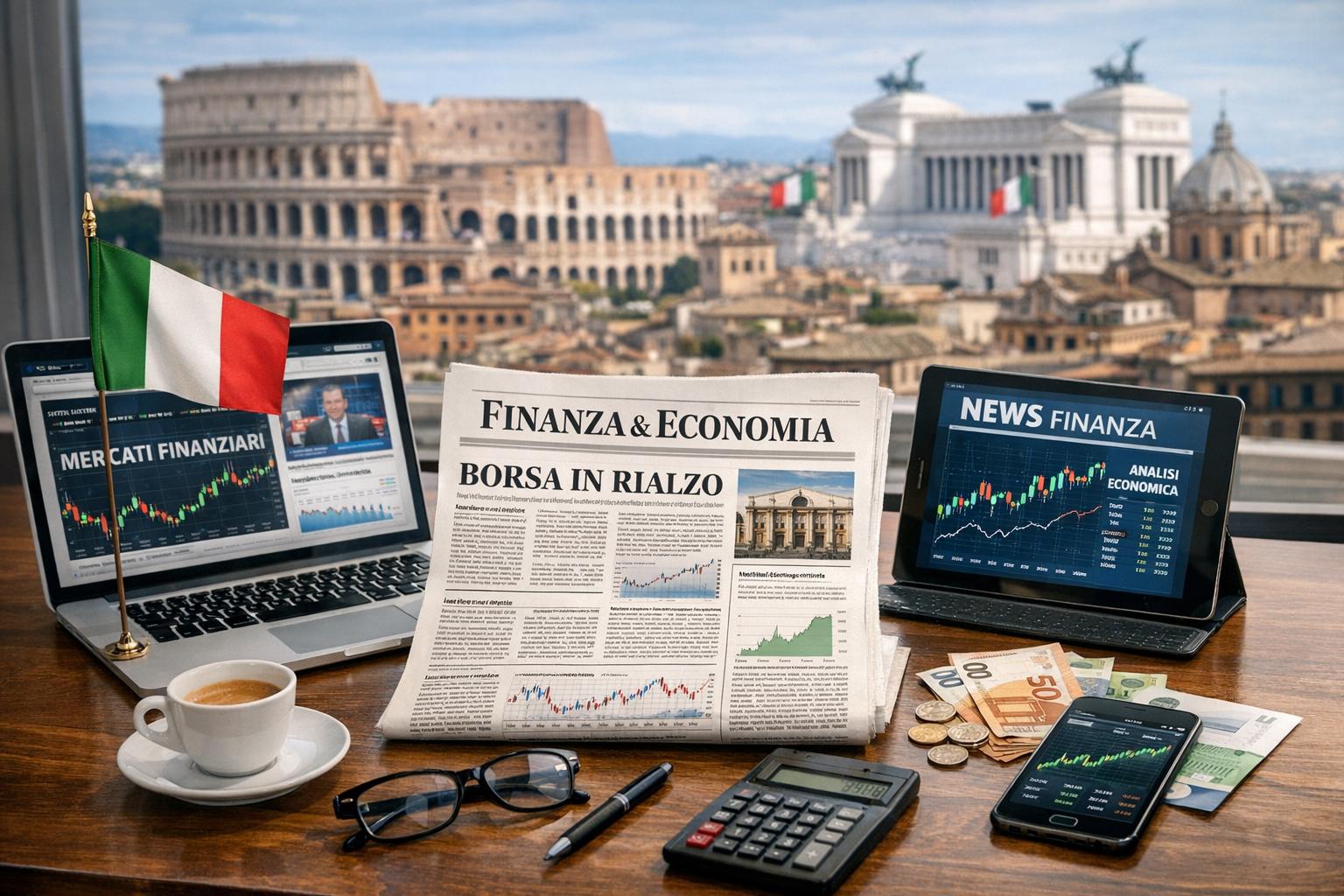
Finance media in Italy operates within a complex ecosystem shaped by national economic structures, regional industrial strengths, regulatory frameworks, and the broader European financial environment. Italy’s position as the third-largest economy in the euro area has contributed to a diverse and historically rich financial press. Over more than a century, a combination of specialized newspapers, generalist outlets with developed economic sections, broadcast programming, and digital-native platforms has shaped how financial information is produced, distributed, and interpreted. The sector reflects structural characteristics of the Italian economy, including the prominence of small and medium-sized enterprises (SMEs), influential banking groups, public debt dynamics, export-driven manufacturing districts, and comparatively high household savings rates.
Financial journalism in Italy serves several overlapping audiences. It informs institutional investors and corporate decision-makers, supports compliance professionals and legal advisors navigating regulatory change, and increasingly addresses retail savers responding to inflation, pension reforms, and investment diversification. As economic policymaking has become more integrated at the European level, domestic outlets have also expanded their attention to supranational institutions, particularly the European Central Bank and the European Commission.
Historical Development of Financial Journalism in Italy
The evolution of financial journalism in Italy parallels the country’s economic modernization. During the late nineteenth and early twentieth centuries, financial reporting was often limited to trade bulletins and specialized circulars linked to chambers of commerce or industrial associations. As Italy industrialized, particularly in northern regions such as Lombardy and Piedmont, demand for structured economic reporting expanded alongside the growth of banking institutions and joint-stock companies.
The establishment of Il Sole in 1865 marked an early milestone in professional economic reporting. Initially focused on commercial law and economic affairs, the publication later merged with 24 Ore in 1965, creating Il Sole 24 Ore, now widely regarded as Italy’s leading financial newspaper. The merger reflected increasing specialization in business journalism and the consolidation of professional information services needed by a rapidly modernizing economy. The official website of the newspaper is available at Il Sole 24 Ore.
During the post-war period, particularly through the 1950s and 1960s, Italy experienced rapid industrial expansion often described as the Italian economic miracle. Industrial production surged, urbanization accelerated, and large state-owned companies played a strategic role in energy, infrastructure, and heavy industry. As economic policy debates intensified around labor relations, inflation management, and fiscal intervention, appetite for economic reporting increased. National newspapers expanded economic desks, and the public broadcaster RAI incorporated structured financial reporting within its news programming.
By the late twentieth century, financial journalism had become institutionalized. Editorial teams developed sector-specific expertise in banking, taxation, industrial policy, and European integration. University programs and professional training in economic reporting reinforced methodological rigor, especially regarding the interpretation of budget documents, central bank communications, and corporate financial statements.
Major Print Publications
Il Sole 24 Ore
Il Sole 24 Ore remains the central reference point for financial media in Italy. Owned by Confindustria, the principal association representing Italian manufacturing and service companies, it primarily targets professionals, entrepreneurs, policymakers, consultants, and investors. Its content spans macroeconomic analysis, tax law interpretation, corporate governance practices, European Union directives, and global financial markets.
A distinguishing feature of the newspaper is its detailed treatment of fiscal legislation. Italy’s tax framework is characterized by frequent amendments and layered regulations. Businesses and individuals rely on explanatory articles that interpret parliamentary measures, decrees, and administrative circulars. This specialization creates a bridge between legislative development and practical implementation.
Beyond the daily print edition, Il Sole 24 Ore operates a comprehensive digital platform with subscription-based access. It also publishes thematic supplements focused on real estate, technology, public administration, and international markets. Conferences, professional training events, and data services form additional components of its business model, reinforcing its position as both a media outlet and a provider of professional information.
Milano Finanza
Milano Finanza, published by Class Editori, concentrates on capital markets, asset management, insurance, and private banking. Its editorial perspective is closely linked to Milan, Italy’s primary financial center and home of Borsa Italiana. The publication’s website can be accessed at Milano Finanza.
Coverage frequently includes detailed examination of listed companies, investor relations developments, fund performance rankings, mergers and acquisitions, and corporate restructurings. Reporting often incorporates balance sheet analysis and commentary from institutional investors. This market-oriented approach complements the more policy-focused emphasis sometimes associated with other publications.
Economic Sections of General Newspapers
Italy’s major generalist newspapers maintain influential economic sections that contribute significantly to public understanding of financial matters. Corriere della Sera (Corriere della Sera), La Repubblica (La Repubblica), and La Stampa (La Stampa) regularly publish analysis on fiscal policy, labor market reform, industrial strategy, and European monetary developments.
These outlets serve broader audiences but play a critical role in translating complex economic policy into accessible narratives. Government budget laws, pension adjustments, inflation data, and European Central Bank decisions are integrated into political reporting. The intersection between economics and domestic politics is particularly visible during coalition negotiations and annual budget approvals, when fiscal projections and European fiscal rules are central public concerns.
Broadcast and Television Coverage
Television and radio remain significant channels for financial information in Italy. The public broadcaster RAI (RAI) includes economic analysis within daily news bulletins and produces specialized programs addressing employment figures, public finance, and international trade developments. Economists, academic researchers, and representatives from trade unions or business associations frequently appear as commentators.
On the private broadcasting side, Class CNBC (Class CNBC) represents the most prominent specialized financial television channel. Through its partnership with CNBC, it offers live market data, interviews with corporate executives, and coverage of global macroeconomic trends. Programming often connects developments on Wall Street and other international markets to their implications for Italian equities and bond spreads.
Radio programming supplements televised reporting. Business-oriented segments appear within broader talk shows, particularly during discussions of fiscal reforms, tax amnesties, pension restructuring, and economic growth forecasts. These segments tend to emphasize explanatory analysis rather than rapid market updates.
Digital Transformation and Online Platforms
The digital transformation of Italian finance media accelerated following the 2008 global financial crisis and subsequent eurozone sovereign debt crisis. Declining print circulation prompted investment in subscription-based digital platforms. Major publishers implemented paywalls and tiered subscription models, offering premium content, archival access, and professional tools.
Digital-native outlets have emerged to focus on innovation, start-ups, venture capital, and personal finance. These platforms frequently combine written articles with podcasts, webinars, and newsletters distributed through email and social media. Coverage areas include fintech partnerships, digital payments infrastructure, cybersecurity strategies, and cryptocurrency regulation within European frameworks.
Audience analytics increasingly influence editorial decisions. Real-time engagement data informs headline structure and publication timing. However, established outlets maintain long-form investigative reporting, particularly in areas such as corporate governance, public procurement, and financial misconduct allegations. Balancing rapid digital publication with verification standards remains a structural concern across the industry.
The Role of the Banking Sector
Italy’s banking sector exerts considerable influence over financial reporting priorities. Major institutions such as Intesa Sanpaolo and UniCredit, due to their systemic relevance, receive extensive coverage concerning capital adequacy, profitability, credit quality, and cross-border expansion. Media attention also focuses on consolidation trends among medium-sized banks and cooperative institutions.
During the European sovereign debt crisis, financial outlets tracked movements in government bond yields and the BTP-Bund spread, a benchmark indicator of perceived sovereign risk relative to Germany. Reporting during that period highlighted the interconnectedness between banking stability and government debt sustainability within the euro area framework.
Banking foundations, asset managers, and institutional investors frequently sponsor conferences and research initiatives reported by finance media. Editorial transparency policies generally require clear separation between sponsored events and independent reporting.
Coverage of Public Debt and Fiscal Policy
Italy’s public debt-to-GDP ratio remains a consistent focal point in financial journalism. Annual budget negotiations are examined in detail, with attention to deficit projections, growth assumptions, tax credits, and expenditure allocations. Compliance with European fiscal rules and discussions about reform of the Stability and Growth Pact receive prominent placement.
Financial newspapers often publish explanatory guides when new fiscal measures are introduced. These guides outline implications for SMEs, self-employed professionals, employees, and property owners. Given the technical complexity of Italian tax law, analytical pieces frequently reference official documents and parliamentary drafts to clarify implementation timelines.
Market reactions to fiscal announcements form part of daily reporting. Changes in sovereign yields, equity index movements, and credit rating agency statements are analyzed in relation to policy announcements and macroeconomic forecasts.
SMEs and Industrial Reporting
Italy’s economic landscape is characterized by networks of small and medium-sized enterprises embedded within regional industrial districts. Financial media devote substantial coverage to export performance, generational transitions in family-owned firms, innovation capacity, and access to bank financing.
Regional reporting from Lombardy, Veneto, Emilia-Romagna, and Piedmont highlights sector-specific developments in machinery, automotive components, fashion, furniture, and agri-food production. Trade fairs and export statistics are closely monitored indicators of industrial health.
This emphasis on SME activity distinguishes Italian financial journalism from media systems primarily oriented around large multinational corporations. Even when reporting on FTSE MIB-listed companies, contextual analysis often addresses supplier networks and regional economic ecosystems.
Regulation and Oversight
Financial media in Italy operate under a regulatory environment that includes oversight from the Commissione Nazionale per le Società e la Borsa (CONSOB) (CONSOB) for market-related matters. Professional accreditation is governed by the Ordine dei Giornalisti, which establishes ethical guidelines for reporting accuracy and source verification.
At the European level, the Market Abuse Regulation (MAR) establishes standards regarding insider information and the disclosure of price-sensitive data. Financial journalists must exercise caution when handling confidential corporate announcements or government measures capable of influencing markets. Larger media organizations maintain compliance procedures to ensure adherence to these frameworks.
Fintech, Sustainability, and Innovation Coverage
The expansion of fintech enterprises and digital payment systems has broadened the thematic scope of financial journalism. Reporting tracks regulatory sandboxes introduced by supervisory authorities, venture capital investments, and partnerships between traditional banks and technology companies.
Sustainability considerations have also become increasingly prominent. Environmental, social, and governance (ESG) criteria are integrated into asset management analysis, influenced by European disclosure regulations such as the Sustainable Finance Disclosure Regulation (SFDR). Pension funds and insurance companies are evaluated based on transparency, portfolio composition, and alignment with climate transition objectives.
Coverage of renewable energy financing, green bonds, and infrastructure investment reflects Italy’s participation in European recovery initiatives. The National Recovery and Resilience Plan, funded partly through EU-level borrowing mechanisms, has generated sustained reporting on public procurement processes and investment milestones.
Audience, Literacy, and Subscription Models
The primary audience of specialized finance media consists of professionals including accountants, lawyers, corporate executives, and institutional investors. Subscription pricing structures reflect this orientation, often combining digital access with professional databases and event participation.
At the same time, personal finance content is expanding in response to inflationary pressures and demographic aging. Articles addressing mortgage rate fluctuations, retirement savings strategies, and inflation-protected bonds aim to improve financial literacy. Podcasts and newsletters offer accessible explanations without requiring technical expertise.
To sustain operations amid declining print advertising revenues, media groups increasingly diversify revenue streams. Educational seminars, data analytics services, and thematic conferences complement subscription income. This hybrid model reflects broader structural adjustments across European media markets.
Interaction with European and Global Media Networks
Italian financial journalism operates within interconnected global information systems. Partnerships with international agencies such as Reuters, Bloomberg, and CNBC provide access to real-time market data and cross-border reporting. Italian correspondents analyze decisions from the European Central Bank and international institutions in light of domestic implications.
This international integration coexists with a national editorial emphasis on Italian fiscal reform, SME competitiveness, banking consolidation, and regulatory adjustments. The ability to contextualize global developments for domestic audiences remains a defining characteristic of the sector.
Structural Challenges and Prospects
Financial journalism in Italy confronts structural challenges common to global media industries. Print readership continues to decline, intensifying reliance on digital revenues. Competition from free online sources exerts pressure on price differentiation and content exclusivity. The rapid dissemination of unverified financial commentary through social media platforms adds complexity to information ecosystems.
Questions regarding financial literacy and public engagement persist. While household wealth remains substantial compared to several European peers, surveys indicate uneven understanding of risk diversification and long-term investment planning. Media organizations respond by incorporating educational material and explanatory series to address these gaps.
Editorial independence and ownership concentration remain areas of ongoing discussion. Transparency in advertising practices and clear labeling of sponsored content are regularly emphasized to preserve credibility. Professional standards and compliance frameworks aim to mitigate conflicts of interest, particularly in market-sensitive reporting.
Conclusion
Finance media in Italy constitutes a structured and historically grounded segment of the national press system. Anchored by specialized publications such as Il Sole 24 Ore and Milano Finanza, reinforced by generalist newspapers and broadcast networks, and increasingly shaped by digital platforms, the sector mirrors the institutional features of the Italian economy.
Coverage extends across public debt management, banking stability, SME performance, European monetary policy, capital markets innovation, and sustainability transitions. As Italy continues to navigate demographic change, fiscal reform, technological transformation, and European integration, financial journalism remains central to interpreting quantitative data, regulatory developments, and market dynamics.
The sector’s long-term trajectory will depend on its capacity to balance analytical depth with digital accessibility, uphold regulatory compliance, and maintain editorial credibility within a competitive global information environment.