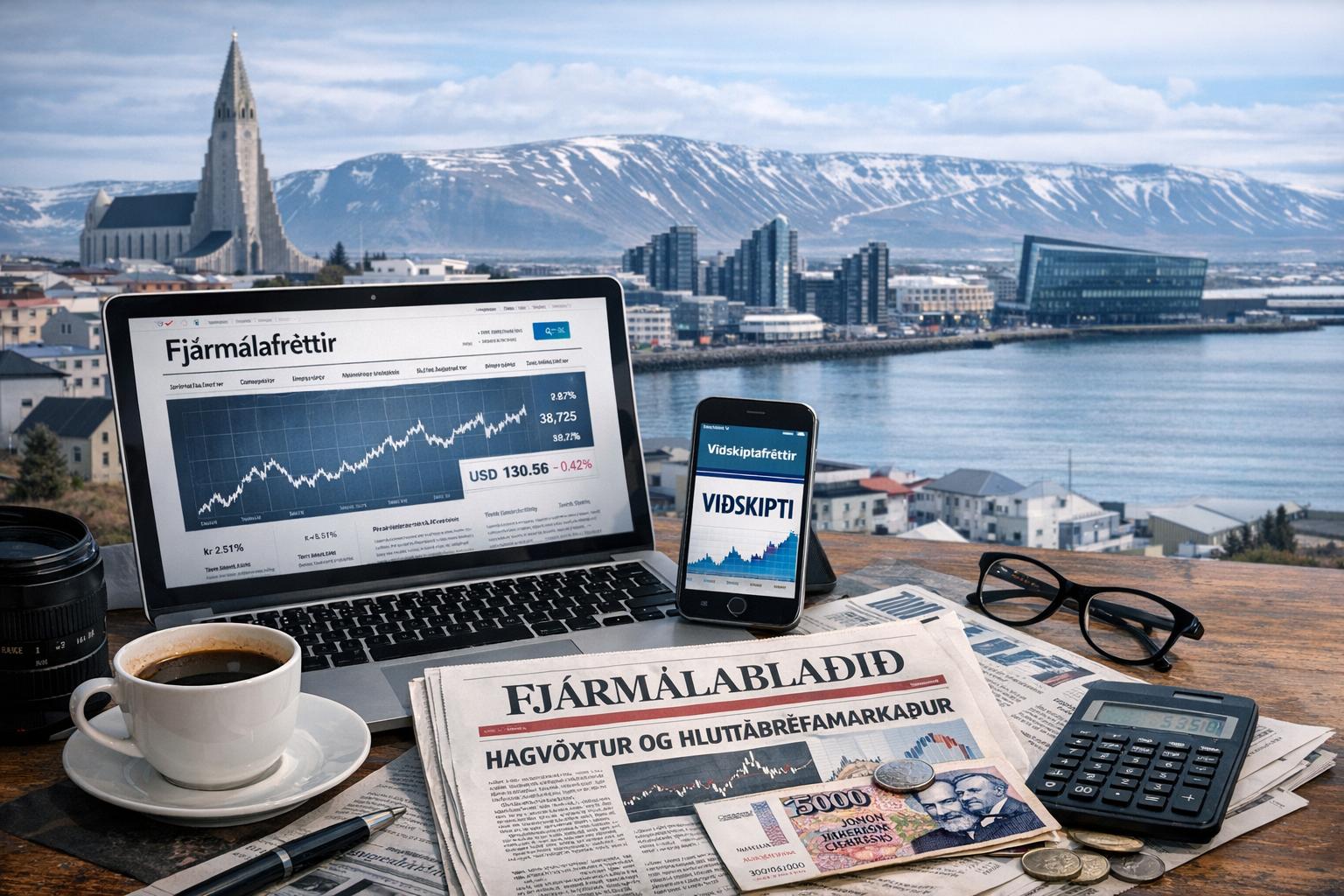
The structure of finance media in Iceland reflects the country’s small population, concentrated banking system, and high level of digital adoption. With a population of under 400,000 people, Iceland does not support a large number of specialized financial publications in the way larger economies do. Instead, financial coverage is integrated into mainstream news organizations, business-focused outlets, and industry publications. The evolution of financial media in Iceland has been shaped by deregulation in the 1990s, the expansion and collapse of the banking sector in 2008, and subsequent regulatory reform and transparency efforts.
Despite its size, Iceland maintains a media environment that is structurally comparable to those of other European states in terms of institutional separation between public broadcasting, private media companies, and digital-native platforms. Financial journalism is embedded across these categories, reflecting the interconnectedness of politics, fisheries, energy, tourism, and banking within the national economy. Because economic developments quickly affect a large share of households and businesses, financial reporting occupies a visible place in public debate.
Structure of the Icelandic Media Market
Iceland has a compact but diverse media landscape. Major daily newspapers, online news platforms, public broadcasting services, and a limited number of specialized business outlets constitute the core of the country’s media system. The largest general news providers include RÚV (Ríkisútvarpið), the national public broadcaster; Morgunblaðið, one of the country’s oldest daily newspapers; and digital-native platforms such as Vísir and DV. These organizations operate primarily in Icelandic, though some provide limited English-language coverage for international readers.
RÚV functions under a public service mandate and is financed through a combination of public funding and limited commercial revenue. Morgunblaðið operates as a privately owned newspaper with both print and digital editions. Vísir and DV are primarily digital platforms, emphasizing speed and accessibility. Financial reporting appears within each of these outlets through dedicated business desks or economic correspondents.
Unlike larger economies that sustain daily financial newspapers comparable to Financial Times or The Wall Street Journal, Iceland integrates financial news into general reporting. Separate business editions exist in weekly or supplemental formats rather than as fully independent daily publications. The small advertising market encourages consolidation of editorial resources, and journalists frequently cover overlapping beats that include economics, public finance, and regulatory affairs.
Historical Development of Financial Reporting
The liberalization of Iceland’s financial sector during the 1990s marked a turning point for domestic business journalism. Deregulation, privatization of state-owned banks, and capital account liberalization led to the rapid international expansion of Icelandic financial institutions. Media coverage increasingly focused on foreign acquisitions, bond issuances, stock listings, and the growing complexity of domestic financial instruments.
In the early 2000s, Iceland’s banking sector expanded significantly beyond the country’s GDP. Financial reporting expanded in response, covering cross-border investments in Europe and North America. Journalists were required to interpret developments that extended far beyond domestic markets, prompting closer collaboration with international news agencies such as Reuters and Bloomberg.
The 2008 financial crisis fundamentally transformed Icelandic financial journalism. In October 2008, the country’s three largest commercial banks collapsed within a short period. The impact was immediate and systemic. Domestic media shifted much of their attention to explaining liquidity shortages, currency depreciation, capital controls, and negotiations with international creditors. The International Monetary Fund stabilization program became a frequent subject of reporting, and legal proceedings related to banking practices were covered extensively.
This period strengthened expectations of accountability. Investigative reporting gained prominence, and long-form analysis became more common. Media outlets examined issues of risk concentration, regulatory failure, and corporate governance. Trust in financial institutions became a recurring theme in public discourse, and the media environment responded with sustained scrutiny.
Key Finance Media Outlets
Iceland does not maintain a daily standalone financial newspaper comparable to those found in larger economies. However, certain outlets and supplements are recognized for their concentration on economic and financial matters.
Morgunblaðið and Viðskiptablaðið
Morgunblaðið remains a central venue for economic reporting. It publishes Viðskiptablaðið, a weekly business-focused publication that concentrates specifically on finance, capital markets, and corporate developments. Viðskiptablaðið provides coverage of earnings reports, stock market movements on the Nasdaq Iceland exchange, mergers and acquisitions, and executive interviews. It also monitors activity in fisheries, renewable energy, tourism investment, and technology ventures.
The publication frequently analyzes policy decisions made by the Central Bank of Iceland (Seðlabanki Íslands). Interest rate changes, inflation forecasts, and macroprudential measures receive detailed scrutiny, often accompanied by data charts and commentary from economists in academia and the private sector.
RÚV
As the public broadcaster, RÚV plays a broad role in disseminating financial information. Its online portal and television news programs regularly report on fiscal policy, government budgets, labor agreements, and economic forecasts. During monetary policy announcements, RÚV often provides live coverage and follow-up discussions with analysts.
Investigative units within RÚV have addressed questions of financial misconduct, offshore asset holdings, and regulatory supervision. The broadcaster collaborates at times with international investigative networks, reflecting Iceland’s participation in cross-border reporting initiatives.
Digital Platforms
Digital-native platforms have gained influence due to Iceland’s high internet penetration. Vísir and DV maintain business sections that publish daily updates on company performance, housing prices, interest rate developments, and consumer finance topics. These outlets provide rapid reaction coverage, often drawing on press releases, exchange data, and official statistics.
Paid subscription models have expanded, particularly for outlets offering in-depth analysis. Metered access and premium content tiers support investigative projects and retain specialized journalists with financial expertise.
The Role of Nasdaq Iceland
Nasdaq Iceland is central to domestic capital market reporting. Though small compared to major European exchanges, it lists key banks, insurance firms, seafood exporters, real estate companies, and investment holding entities. Media coverage emphasizes quarterly results, dividend announcements, bond auctions, and share price trends.
Pension funds play an outsized role in Icelandic financial markets. The national pension system holds assets equivalent to a substantial share of GDP, and pension funds are among the largest institutional investors in the country. Financial media routinely analyze their allocation strategies, governance frameworks, and foreign investment activity. Because pension fund performance directly influences household retirement security, reporting in this area carries wide public interest.
Coverage of Monetary Policy and Inflation
Iceland’s independent currency, the Icelandic króna, contributes to exchange rate volatility and comparatively higher inflation than that of euro area countries. As a result, commentary on interest rate decisions and inflation reports occupies a prominent place in financial journalism. When the Central Bank adjusts policy rates, media outlets analyze impacts on mortgage costs, savings rates, exchange rate stability, and business financing conditions.
Inflation measurement receives detailed attention. Journalists examine housing price indices, food import costs, wage settlements, and energy prices. Because many households hold indexed or variable-rate mortgages, fluctuations in the consumer price index have direct financial implications. Explanatory reporting often accompanies statistical releases, providing graphical breakdowns and contextual interpretation.
Comparisons with monetary policy decisions of the European Central Bank and the U.S. Federal Reserve are common. Icelandic financial media assess global interest rate trends and their potential effects on currency valuation and capital flows.
Investigative Financial Journalism
Post-crisis Iceland has maintained a comparatively strong tradition of investigative journalism. Financial investigations frequently intersect with political coverage due to the interconnected structure of business and public policy. Reporting on offshore accounts, beneficial ownership structures, and procurement practices has shaped public understanding of corporate governance standards.
Icelandic journalists participated in international collaborations such as the Panama Papers investigation led by the International Consortium of Investigative Journalists (ICIJ). Domestic coverage of these findings had political consequences, illustrating the influence of cross-border investigative networks on national debate.
Fishing quotas and resource allocation policies generate sustained media scrutiny. The fisheries sector remains central to Iceland’s export economy, and questions concerning quota concentration, ownership transparency, and taxation are regularly addressed in financial news sections.
Trade Publications and Industry Media
In addition to mainstream outlets, several industries maintain trade-specific publications. Fisheries associations distribute reports on export performance and sustainability certification. Energy companies, particularly those involved in geothermal and hydroelectric production, publish updates on infrastructure investment and pricing agreements.
The tourism sector, which has expanded significantly since the early 2010s, supports its own professional media channels. These address visitor volume trends, airline capacity, hotel development, and currency impacts on inbound travel. Although narrower in scope, trade publications contribute data and sectoral expertise that are frequently cited by general financial journalists.
Academic and Policy Contributions
Academic institutions and policy bodies contribute extensively to Iceland’s financial discourse. The Central Bank of Iceland publishes monetary bulletins and financial stability reports that are summarized by national media. The Ministry of Finance and Economic Affairs releases fiscal projections and macroeconomic forecasts that become focal points for analytical commentary.
Economists from the University of Iceland and other institutions regularly appear in interviews and public forums. Given the limited size of the country, professional networks often overlap, and subject-matter experts are widely recognized by audiences.
Regulation, Ownership, and Transparency
Iceland ranks highly in international press freedom assessments compiled by organizations such as Reporters Without Borders. Legal frameworks protect journalistic inquiry, including financial reporting. However, ownership concentration within a small market occasionally prompts debate about editorial independence and potential conflicts of interest.
Media ownership disclosures and ethical guidelines are recurring topics within industry discussions. Because the corporate community is limited in size, journalists frequently navigate professional relationships that are more personal than in larger markets. Maintaining transparent editorial standards is therefore a structural priority.
Digital Transformation and Audience Behavior
Iceland’s high broadband penetration and mobile connectivity shape the distribution of financial content. Real-time market updates, live blogs during central bank announcements, and push notifications are common features. Financial podcasts have expanded in popularity, targeting professional audiences as well as the general public.
Data journalism techniques, including interactive inflation charts and housing price maps, have become integral to explanatory reporting. Following the 2008 crisis, financial literacy gained prominence as a public policy objective. Media outlets increasingly emphasize clarity when presenting technical subjects such as bond yields, macroprudential buffers, or indexed loan mechanisms.
International Integration
As an export-oriented economy reliant on fisheries, aluminum, and tourism, Iceland closely monitors global market conditions. Financial media regularly report on commodity price fluctuations, airline capacity trends, and developments within European and North American markets. Partnerships with international agencies ensure timely access to global economic updates.
Exchange rate movements of the Icelandic króna remain a recurring theme. Analysts assess impacts on import prices, export competitiveness, and sovereign credit ratings issued by agencies such as S&P Global Ratings and Moody’s.
Challenges and Future Outlook
The limited scale of Iceland’s market constrains advertising revenue and newsroom staffing levels. At the same time, financial systems continue to grow in complexity, requiring technical expertise. Subscription models and diversified digital products are expected to remain important for sustainability.
Emerging topics such as climate finance, sustainable investment standards, and environmental reporting are gaining prominence. Iceland’s renewable energy profile creates opportunities for specialized coverage of green bonds and carbon markets. Reporting on financial technology, digital payments, and cryptocurrency regulation has also expanded as global interest in these areas increases.
Climate risk assessment, foreign direct investment flows, and evolving European regulatory frameworks will likely shape the next phase of financial journalism. Iceland’s experience with capital controls between 2008 and 2017 continues to inform analysis of cross-border capital management and macroeconomic resilience.
Conclusion
Finance media in Iceland operates within the structural constraints and benefits of a small, digitally integrated society. Although it lacks large standalone financial newspapers, it maintains comprehensive coverage through mainstream outlets, specialized supplements, and digital platforms. Reporting encompasses banking, monetary policy, fisheries, energy markets, pension fund activity, and international economic developments.
The legacy of the 2008 financial collapse continues to influence editorial priorities, reinforcing emphasis on transparency, governance, and accountability. As digital tools evolve and economic challenges shift, Icelandic financial journalism remains closely aligned with public policy debates and corporate oversight. Within its scale limitations, it performs a central function in informing markets and supporting economic literacy across the country.