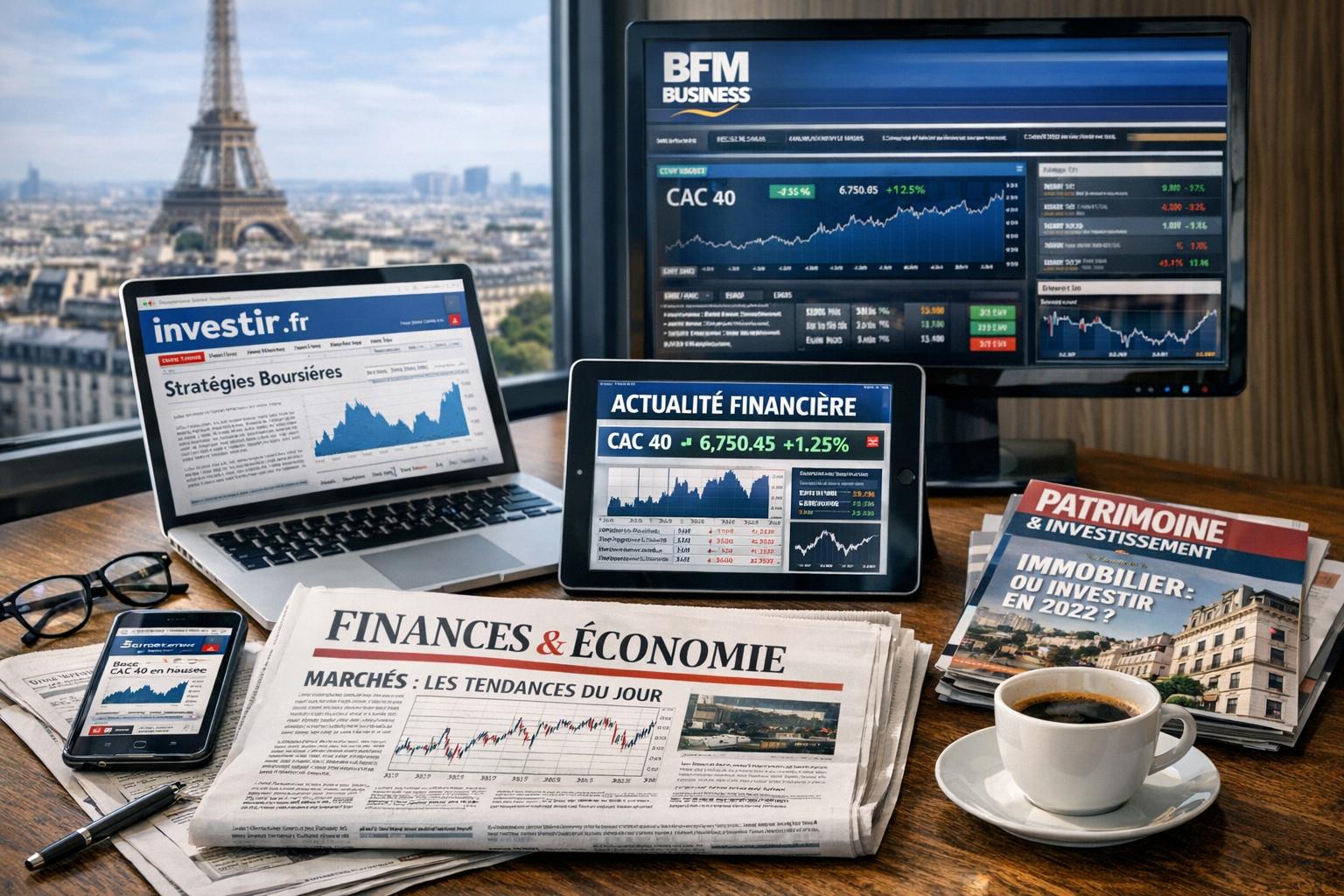
The financial media landscape in France has evolved over more than a century, reflecting the country’s economic development, regulatory traditions, and intellectual culture. It encompasses daily newspapers with dedicated market sections, specialized print magazines, digital-only outlets, radio programs, television channels, newsletters, podcasts, and professional data services. Together, these platforms inform households, investors, executives, policymakers, and academics about markets, public finances, corporate activity, and global economic trends. While France does not have as many large-scale financial publications as the United States or the United Kingdom, it maintains a dense and influential ecosystem supported by established journalism traditions and significant public and private sector engagement in economic affairs.
Historical Development of Financial Journalism in France
Financial journalism in France developed alongside the expansion of industrial capitalism during the nineteenth century. The rise of the Paris Bourse as a central marketplace for sovereign bonds, railway shares, mining ventures, banks, and colonial enterprises generated demand for reliable pricing information and corporate announcements. Publications such as La Cote Desfossés, founded in the nineteenth century, became essential references for investors who required structured listings of securities and summary data about listed issuers. Early financial publications functioned primarily as information bulletins, with limited interpretative analysis.
The professionalization of journalism in the late nineteenth and early twentieth centuries gradually influenced financial coverage. Newspapers began separating economic reporting from general commercial notices. As France industrialized and developed national champions in sectors such as steel, automotive manufacturing, banking, and energy, readers sought insight into industrial output, trade volumes, and tariff policy. This broadened the scope of business reporting beyond stock quotations.
After the Second World War, France adopted a model marked by strong state intervention, economic planning, and the nationalization of key industries, including banks and energy providers. Financial journalism during this period reflected institutional realities. Coverage of public enterprises, state budgets, and five-year plans occupied a central place in newspapers. Economic reporters needed familiarity with public administration structures as much as with capital markets. Debates around productivity, reconstruction financing, industrial modernization, and social welfare reforms were frequent themes.
The liberalization reforms of the 1980s constituted a decisive turning point. Privatizations, the deregulation of financial markets, and the modernization of the Paris stock exchange structure transformed the information needs of readers. The increasing internationalization of French corporations and integration into European capital markets required journalists to analyze mergers, cross-border transactions, derivatives markets, and European Community directives. The creation of Euronext and the consolidation of exchanges into transnational entities further expanded the scope of coverage.
Major Print Publications
The most prominent dedicated financial newspaper in France is Les Echos (lesechos.fr), founded in 1908. Over the decades it has become the leading daily newspaper specializing in business and economic affairs. Since 2007 it has been owned by the luxury goods group LVMH, yet it maintains a newsroom structure designed to preserve editorial independence. Les Echos publishes market updates, corporate earnings analysis, macroeconomic reporting, technological developments, legal commentary, and sectoral studies. Its readership consists primarily of executives, civil servants, institutional investors, entrepreneurs, and financial professionals.
Another influential publication is La Tribune (latribune.fr). Historically a print newspaper, it transitioned to a predominantly digital format during the 2010s. La Tribune focuses extensively on innovation policy, regional economic development, energy transition, infrastructure financing, and public procurement. It organizes conferences and thematic events throughout France, strengthening its role as a forum for debates on industrial strategy and entrepreneurship.
Financial and economic coverage is also embedded within general national newspapers. Le Monde (lemonde.fr) maintains a dedicated economic section that addresses fiscal policy, corporate governance, inequality, globalization, and European monetary affairs. Le Figaro (lefigaro.fr) and Libération (liberation.fr) similarly devote space to markets, taxation, real estate, and labor economics. These newspapers integrate financial developments into broader political and social reporting, reflecting the interconnectedness of economics and public policy in French public debate.
Weekly magazines such as Challenges and other business-oriented periodicals provide longer-form analysis. They publish executive interviews, sector rankings, and corporate investigations. Although print circulation numbers have declined over recent decades, digital subscriptions and online articles have preserved their visibility. Their investigative features often shape discussion among policymakers and executives.
Professional Data Services and News Agencies
In addition to newspapers, professional information services are integral to the French financial media environment. The international news agency Agence France-Presse (AFP) (afp.com) distributes economic and financial news globally in multiple languages. AFP journalists cover market movements, macroeconomic indicators, monetary policy, and corporate transactions, providing dispatches used by domestic and foreign media outlets.
Global financial information providers such as Bloomberg and Reuters maintain extensive bureaus in Paris, reporting on French companies and European institutions. While these services cater primarily to professional terminals and institutional clients, their reporting influences domestic outlets and shapes international perceptions of the French economy. French-language financial portals also integrate wire service material alongside original reporting, reinforcing the interconnected nature of financial information flows.
Digital Transformation and Subscription Models
The transition to digital distribution has significantly altered revenue structures. Traditional newspapers implemented subscription-based digital access to offset declining print advertising revenue. Les Echos, Le Monde, and Le Figaro operate metered or tiered paywalls, offering a mix of free articles and premium subscriber-only content. Real-time market data, in-depth investigations, and archive access are typically reserved for paying readers.
Digital publishing allows continuous updates during trading hours, particularly when markets react to central bank announcements or geopolitical developments. Journalists now compete not only with domestic peers but also with international financial websites that provide English-language coverage accessible to French professionals. The speed advantage of digital platforms requires robust editorial processes to verify information under tight deadlines.
Digital-native outlets have carved out specialized niches. Several French platforms focus on technology startups, venture capital fundraising, and digital policy regulation. These publications align with the expansion of France’s technology ecosystem, especially in Paris and regional innovation hubs such as Lyon and Nantes. Coverage extends to artificial intelligence investment, fintech licensing, cybersecurity firms, and public funding initiatives administered through agencies like Bpifrance.
Television and Radio Coverage
Television remains a central channel for disseminating economic information to a broad audience. BFM TV (bfmtv.com) provides continuous news programming that includes market updates and interviews with economic policymakers. Its affiliate channel, BFM Business (bfmtv.com/economie), specializes in business and financial news, broadcasting discussions on equity markets, real estate trends, entrepreneurship, and regulatory changes.
BFM Business operates across both television and radio formats, illustrating cross-platform integration within French media groups. Morning segments often coincide with the opening of European stock exchanges, while evening debates analyze policy decisions from Paris, Frankfurt, or Brussels. Market strategists, asset managers, and corporate executives regularly appear to provide commentary.
Public broadcasters contribute to economic literacy through explanatory programming. France Inter and France Culture, part of the public radio group Radio France, air segments analyzing inflation figures, labor market data, and fiscal reforms. These programs emphasize clarity and contextualization, translating statistical indicators into practical implications for listeners.
The Role of the State and Regulation
France’s regulatory architecture shapes financial journalism in both direct and indirect ways. The Autorité des marchés financiers (AMF) (amf-france.org) oversees securities markets, investment firms, and listed companies. It publishes regulatory updates, enforcement decisions, and investor warnings that frequently serve as the basis for news articles. Journalists monitor AMF communications closely, particularly regarding sanctions or changes to disclosure requirements.
At the European level, directives from the European Commission and supervisory actions by the European Central Bank influence reporting on monetary policy and banking stability. French outlets maintain correspondents in Brussels and Frankfurt to track these developments. Coverage of ECB press conferences is immediate and detailed, reflecting the impact of interest rate decisions on French borrowers and savers.
Media ownership is subject to competition law and audiovisual oversight. Concentration of ownership among industrial groups has prompted public debate about editorial independence. Financial newspapers respond by adopting internal charters and governance mechanisms intended to protect journalistic autonomy. Press subsidies, distributed under criteria established by the French state, support certain publications to preserve diversity within the media landscape.
Coverage of Financial Markets and the CAC 40
The performance of the CAC 40 index remains a core element of daily reporting. Journalists analyze fluctuations in share prices of major companies such as TotalEnergies, L’Oréal, Airbus, and BNP Paribas. Earnings announcements generate detailed commentary on revenue growth, operating margins, capital expenditure, and dividend policies. Analysts’ forecasts and consensus estimates are routinely cited to contextualize results.
Bond markets and sovereign debt metrics receive parallel attention. France’s public debt ratio and credit ratings from international agencies influence investor perception and fiscal debate. Coverage includes discussions of yield spreads relative to German Bunds, an indicator of market confidence within the euro area framework.
Public Finance and Economic Policy
Budget proposals, pension reforms, and taxation adjustments constitute substantial portions of financial reporting. Newspapers analyze draft finance laws presented by the Ministry of Economy and Finance, assessing projected deficits, growth assumptions, and expenditure controls. Think tanks and university economists frequently contribute opinion articles debating fiscal sustainability and social equity.
The Banque de France (banque-france.fr) plays a pivotal role by publishing economic forecasts and financial stability assessments. Journalists interpret these publications, situating them within broader euro area dynamics. Inflation projections, business climate surveys, and household savings statistics are incorporated into daily reporting.
Personal Finance and Wealth Management
Personal finance journalism addresses regulated savings accounts such as the Livret A, life insurance contracts known as assurance-vie, retirement savings plans, and property investments. Because these instruments benefit from specific tax treatments and regulatory frameworks, explanatory reporting is essential. Media outlets provide simulations, interviews with financial advisers, and scenario analyses to clarify potential returns and risks.
The emergence of online brokerage platforms has introduced new retail investors to equities and exchange-traded funds. Financial outlets respond with educational content covering asset allocation, volatility management, and long-term investment principles. During periods of market turbulence, readership for these guides increases, highlighting the pedagogical function of financial journalism.
Investigative Reporting and Corporate Governance
Investigative reporting examines executive remuneration, shareholder activism, environmental compliance, and financial transparency. French journalists have participated in cross-border investigations addressing offshore structures and tax optimization practices. Such collaborations often rely on data analysis and coordination with international partners.
Corporate governance reforms, including gender representation requirements on boards, are closely monitored. Media coverage tracks compliance rates and shareholder voting outcomes during annual general meetings. Reporting may influence public perception and shareholder engagement by clarifying complex governance mechanisms.
Emerging Trends and Technological Change
Artificial intelligence and data journalism increasingly shape newsroom practices. Automated systems generate earnings summaries or market alerts, allowing journalists to focus on interpretative analysis. Data visualization tools help illustrate debt trajectories, climate risk exposure, or sectoral employment trends. Podcasts and video interviews provide additional channels for disseminating specialized knowledge.
Environmental, social, and governance (ESG) criteria now occupy prominent positions within financial pages. Regulatory developments concerning sustainable finance disclosure, carbon pricing, and green bond issuance receive sustained attention. French corporations’ commitments to emissions reduction are analyzed within the context of European climate objectives.
Challenges and Competitive Pressures
French financial media face competition from international outlets such as the Financial Times and the Wall Street Journal, both widely read among multinational executives operating in France. Domestic publications differentiate themselves through detailed knowledge of French regulatory frameworks, language accessibility, and localized sourcing.
Revenue diversification is an ongoing priority. Conferences, executive forums, branded research reports, and educational programs complement subscription income. Maintaining editorial credibility while organizing sponsored events requires transparent disclosure practices and careful separation between commercial and editorial functions.
Conclusion
Financial media in France integrate established print institutions, digital innovation, broadcast journalism, and professional data services. From the early days of stock listings at the Paris Bourse to contemporary multimedia platforms covering European monetary policy and technology investment, the sector reflects the structural evolution of the French economy. Newspapers such as Les Echos and La Tribune, general dailies including Le Monde, audiovisual platforms like BFM Business, and public institutions such as the AMF and Banque de France collectively shape an information ecosystem that connects markets, policymakers, and citizens.
As capital markets become more integrated and digital communication accelerates information flows, French financial journalism continues to adapt. Its core functions remain consistent: reporting verified facts, analyzing economic policy, scrutinizing corporate conduct, and explaining financial mechanisms to a broad readership. Within a European and global context marked by rapid transformation, the French financial media sector retains a distinct identity grounded in analytical rigor, regulatory awareness, and engagement with the country’s economic institutions.