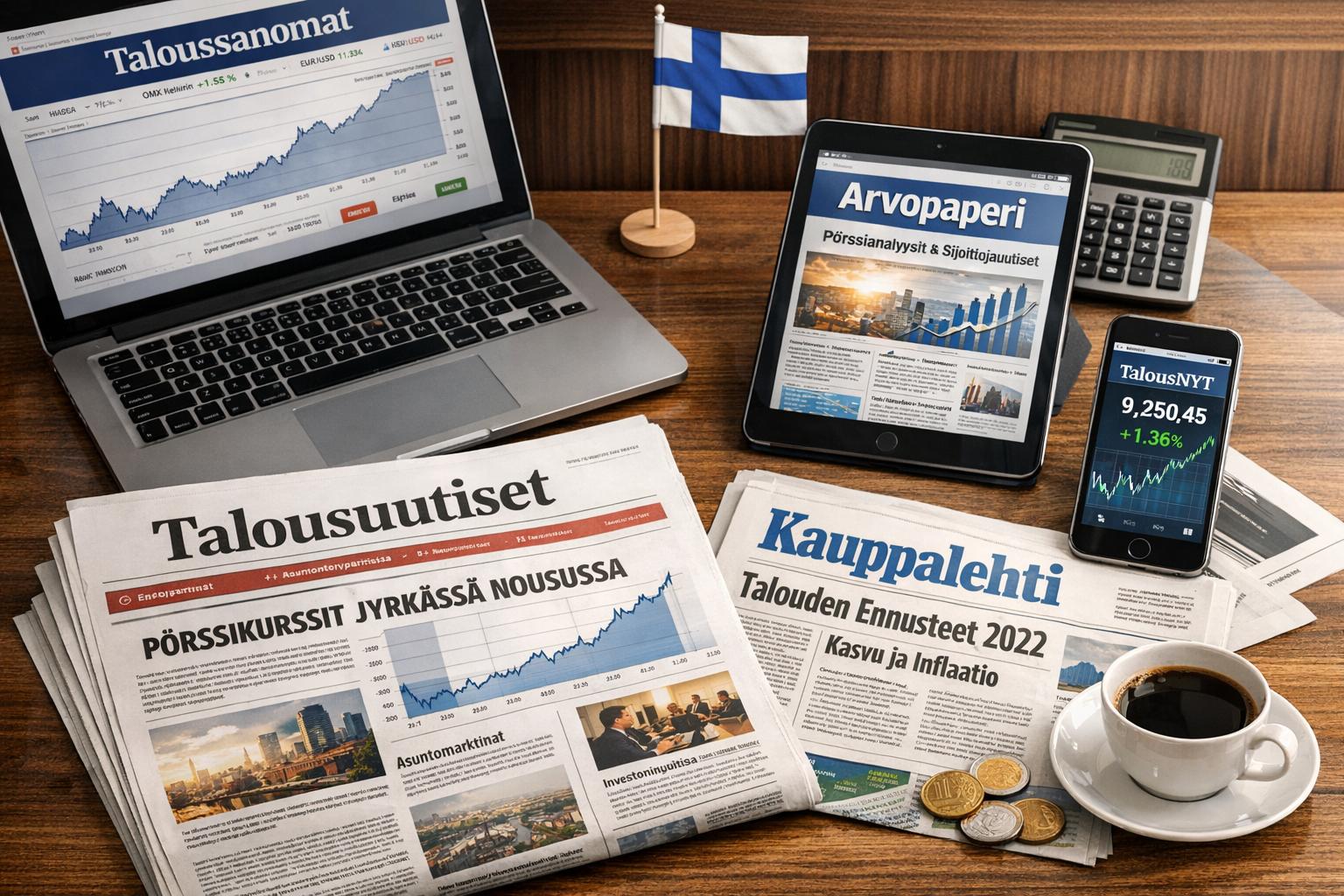
Finland has a highly developed media environment supported by strong institutions, high levels of education, and a long tradition of press freedom. Within this environment, finance media in Finland plays a significant role in shaping public understanding of economic policy, capital markets, personal finance, entrepreneurship, and global financial developments. The sector reflects the broader characteristics of Finnish society: transparency, technological innovation, and a balance between public service and commercial interests. Finance journalism in Finland spans print newspapers, digital platforms, public broadcasting, specialized industry publications, and a growing ecosystem of podcasts and newsletters.
The Finnish audience for financial journalism includes institutional investors, retail traders, entrepreneurs, public officials, academics, and economically engaged citizens. Because the country has a relatively small population but a highly internationalized economy, domestic financial reporting frequently intersects with global developments. Media organizations therefore combine coverage of local companies and policy decisions with systematic monitoring of the European Union, the euro area, and major global markets.
Historical Development of Financial Journalism in Finland
The roots of financial journalism in Finland can be traced back to the 19th century, when newspapers began reporting on trade, industrialization, and agricultural markets. At the time, Finland was an autonomous Grand Duchy under the Russian Empire. Commercial reporting initially focused on commodity prices, shipping activity, timber exports, and agricultural yields. As literacy rates improved and industrialization accelerated, economic news gradually became a permanent feature in major publications.
In the late 19th and early 20th centuries, Finland saw the emergence of industrial conglomerates in forestry, paper, and metal industries. Newspapers began to publish structured financial tables, company announcements, and analysis of export markets. This period marked the shift from occasional trade bulletins to systematic economic reporting. The growth of joint-stock companies also increased demand for reliable corporate disclosure and press coverage.
Following independence in 1917, Finland experienced civil conflict, global economic downturns, and reconstruction after the Second World War. These phases created heightened demand for information about inflation, government borrowing, reparations payments, and industrial rebuilding. Economic reporting gradually became more specialized. Journalists developed knowledge in banking, fiscal policy, and international trade, mirroring the increasing complexity of the Finnish economy.
From the 1960s to the 1980s, Finland pursued a mixed economic model characterized by strong state involvement, centralized wage negotiations, and regulated financial markets. During this period, financial reporting often centered on industrial policy, labor agreements, and relations with the Soviet Union. The liberalization of financial markets in the 1980s expanded the scope of capital market reporting. As credit expanded and financial instruments became more sophisticated, media coverage adapted accordingly.
The severe banking crisis of the early 1990s marked a structural turning point. Finland experienced a deep recession, bank failures, and significant state intervention to stabilize the financial system. Media attention intensified around banking regulation, fiscal consolidation, and monetary reform. The experience underscored the societal importance of accurate financial reporting and reinforced public interest in macroeconomic stability. After joining the European Union in 1995 and later adopting the euro, the range of topics covered by financial journalists expanded to include European Central Bank policy, EU fiscal rules, and integration within global capital markets.
Major Financial News Outlets
Kauppalehti
Kauppalehti, founded in 1898, is Finland’s most prominent dedicated financial newspaper. Over more than a century, it has transitioned from a traditional print outlet to a comprehensive digital platform with real-time news services, market data, and subscription-based analytical content. Its editorial emphasis includes stock market developments, corporate governance, mergers and acquisitions, macroeconomic indicators, and entrepreneurship.
Kauppalehti closely follows companies listed on Nasdaq Helsinki and tracks Finnish multinational corporations operating abroad. Coverage often includes earnings previews, analyst interviews, and commentary on regulatory developments. The publication also provides investment-oriented content aimed at private investors, including dividend analysis, sector outlooks, and taxation guidance.
The outlet is part of a broader Nordic media structure, which allows cross-border reporting on Scandinavian business trends. Its digital transformation has included paywalled premium analysis, newsletters, podcasts, and investor tools. Despite competition from global English-language outlets, Kauppalehti retains a competitive advantage through detailed local knowledge and Finnish-language reporting tailored to domestic regulatory structures.
Helsingin Sanomat
Helsingin Sanomat, Finland’s largest daily newspaper, maintains an influential business and economics section. While it covers general news, politics, culture, and international affairs, its economic reporting is central to its editorial mission. The paper addresses public finances, tax reforms, labor market negotiations, technological transformation, and corporate responsibility.
Given Finland’s export dependence, Helsingin Sanomat frequently analyzes trade flows, industrial competitiveness, and geopolitical developments affecting global markets. It provides reporting on EU-level legislative initiatives, financial regulation, and environmental economic policy. The newspaper has also conducted investigative work on issues such as executive remuneration, public procurement, and financial misconduct.
The publication has invested significantly in digital subscriptions and data journalism. Its online platform features interactive graphics related to state budgets, employment statistics, and inflation trends. Through partnerships and correspondents abroad, Helsingin Sanomat connects Finnish economic developments with broader global dynamics.
Talouselämä
Talouselämä is a weekly business magazine specializing in corporate strategy, leadership, technology, and investment. Compared to daily newspapers, it emphasizes longer analytical essays and executive interviews. The magazine frequently publishes company rankings, profitability comparisons, and profiles of growth enterprises.
Talouselämä’s readership consists of corporate leaders, policymakers, and investors seeking structured insight into competitive positioning and long-term trends. Digital expansion has brought multimedia storytelling, podcasts, and premium research products. Its analysis often bridges finance with industrial policy, sustainability strategies, and innovation-driven growth.
Public Broadcasting and Financial Reporting
Yleisradio (Yle), Finland’s public service broadcaster, provides comprehensive economic reporting across television, radio, and digital platforms. Funded through a public broadcasting tax, Yle operates independently of commercial advertising pressures. Its financial journalism emphasizes clarity, neutrality, and accessibility.
Yle integrates financial news into general bulletins and produces in-depth segments explaining fiscal policy, welfare financing, and economic reforms. Coverage extends to regional economic disparities, municipal finance, and industrial transformation. Because Yle serves the entire population, it presents complex financial topics in a format accessible to non-specialist audiences.
Public broadcasting also plays a role in crisis communication. During periods of economic instability, such as financial turbulence or abrupt policy changes, Yle provides structured background information that supports informed public discussion. This function complements the more market-focused reporting of commercial financial outlets.
Digital Transformation and Subscription Models
Finland’s high digital literacy and widespread broadband access have accelerated the shift toward online financial news consumption. Print circulation has declined, while digital subscriptions have grown steadily. Leading outlets such as Kauppalehti and Helsingin Sanomat rely heavily on recurring subscription revenue.
Premium paywalls typically gate in-depth articles, market analytics, and exclusive interviews. Casual readers may access limited free content, while professional investors often subscribe to advanced data packages. Advertising remains part of the revenue mix but is clearly distinguished from editorial material under established ethical rules.
International competition has intensified as Finnish audiences frequently consult outlets such as the Financial Times, Bloomberg, and The Economist. Because English proficiency is high, Finnish investors often compare domestic analysis with global perspectives. This competitive environment has encouraged domestic publications to prioritize specialized local expertise and rapid coverage of Finnish corporate events.
Regulation and Press Freedom
Finland consistently ranks among the leading countries in global press freedom assessments by organizations such as Reporters Without Borders. Financial journalism benefits from strong legal protections, transparent public records, and access to government data. Corporate filings, parliamentary proceedings, and regulatory announcements are generally public, enabling detailed reporting.
The Finnish Council for Mass Media provides a self-regulatory framework that promotes ethical standards. Financial reporters must adhere to principles of accuracy, source verification, and clear separation between advertising and editorial content. Given the sensitivity of market-moving information, ethical compliance is essential to maintain investor confidence and prevent misinformation.
Regulatory oversight of securities markets also shapes journalistic practice. Disclosure rules governed by EU market abuse regulation influence how quickly and in what form companies release price-sensitive information. Journalists covering stock markets must align their reporting with official announcements while providing context and evaluation.
Coverage of the Finnish Stock Market
Nasdaq Helsinki, part of the broader Nasdaq Nordic system, is central to daily financial reporting. Finnish media provide structured analysis of listed companies in sectors such as telecommunications, renewable energy, forestry, industrial machinery, and gaming. Quarterly earnings seasons generate concentrated coverage, including summaries of key performance indicators, management commentary, and analyst forecasts.
Ownership structures in Finland often include family foundations, state holdings, and pension funds. Media reporting frequently addresses governance practices, board composition, and shareholder voting outcomes. Environmental, social, and governance considerations have also become integrated into routine coverage, reflecting regulatory developments and investor priorities.
The rise of digital brokerage platforms has contributed to greater retail participation in equity markets. Financial media increasingly publish educational content explaining dividend taxation, equity savings accounts, exchange-traded funds, and risk management strategies. Investor forums and comment sections complement formal reporting, though moderated editorial oversight remains central to maintaining accuracy.
Macroeconomic and Policy Reporting
As a euro area member, Finland’s monetary policy is determined by the European Central Bank. Decisions announced by the ECB receive detailed analysis in Finnish media, often linking interest rate changes to domestic mortgage costs and business financing conditions. Fiscal policy debates within the Finnish parliament are also covered extensively, particularly in relation to public debt and long-term demographic pressures.
Statistics Finland and the Bank of Finland serve as primary sources for macroeconomic data. Journalists interpret gross domestic product growth rates, employment figures, consumer confidence indices, and inflation readings within both domestic and European contexts. Comparative analysis with Sweden, Germany, and other EU states is common.
Structural topics such as aging demographics, labor market flexibility, and productivity growth recur in economic reporting. Given Finland’s comprehensive welfare model, discussions surrounding social spending sustainability and tax reforms receive sustained media attention.
Nordic and International Context
Finnish finance media are integrated into the Nordic region through ownership structures, correspondent networks, and cross-publication partnerships. Developments in Sweden and Norway are particularly relevant due to trade ties and financial interconnection. Nordic banking groups with operations across borders are regularly profiled in Finnish outlets.
Global supply chains and geopolitical dynamics shape reporting priorities. Trade tensions between major economies, sanctions regimes, and energy market volatility all carry implications for Finnish exporters. Media analysis often assesses how global inflation or commodity price shifts affect domestic manufacturing and consumer purchasing power.
Geographic proximity to Russia has historically influenced economic reporting. Changes in cross-border trade, energy imports, and security arrangements have had measurable commercial consequences, prompting sustained journalistic scrutiny of regional developments.
Entrepreneurship and Start-up Media
Finland’s start-up ecosystem has grown significantly, supported by research institutions and venture capital networks. Events such as Slush in Helsinki attract global investors and entrepreneurs. Financial media report extensively on venture funding rounds, technology commercialization, and scaling strategies.
Coverage of the gaming sector has been particularly prominent following international successes by Finnish developers. Media analysis typically addresses revenue models, international expansion, and ownership transitions. Innovation policy, including state-backed funding instruments, also receives systematic reporting.
Technology-focused publications and digital platforms complement mainstream outlets by providing early-stage company news and sector-specific interviews. This specialization broadens the definition of finance media to include innovation finance and private capital markets.
Personal Finance and Consumer Reporting
Personal finance coverage addresses mortgage markets, taxation changes, pension reforms, and household budgeting. Because variable-rate mortgages are common, European Central Bank rate adjustments receive immediate attention. Media explain how interest rate fluctuations influence monthly payments and refinancing decisions.
Comparisons of banking services, insurance products, and investment funds are frequent. Transparency rules support detailed analysis, but journalism plays a role in clarifying contractual terms and highlighting cost structures. Retirement planning is another core topic, particularly in light of demographic aging.
Educational content, including calculators and explanatory articles, supports financial literacy. Finnish audiences generally display strong engagement with savings and investment topics, reflecting high educational attainment and digital accessibility.
Data Journalism and Technological Innovation
Data-driven storytelling is increasingly central to financial reporting. Interactive charts tracking inflation, housing prices, and equity indices are standard features on digital platforms. Automation tools generate real-time earnings summaries and stock exchange updates.
Artificial intelligence applications assist with information gathering, transcription, and preliminary drafting. However, editorial judgment remains central to analysis and investigative work. The integration of technological tools reflects Finland’s broader leadership in digital infrastructure.
Challenges Facing Finance Media
Structural pressures include limited scale within a small-language market and declining print advertising revenues. Subscription growth has offset some losses, but competition for consumer attention remains strong. International outlets and independent financial bloggers contribute to a diversified information environment.
Media ownership concentration has improved operational efficiency but raises questions concerning pluralism and viewpoint diversity. Maintaining specialist expertise in complex subjects such as derivatives markets or EU regulatory reform requires ongoing investment in journalist training.
Balancing speed with accuracy is an additional challenge in digital markets. Financial news can influence asset prices, making editorial reliability essential. Finnish outlets continue to prioritize fact-checking and transparency as differentiating factors.
Conclusion
Finance media in Finland forms a well-established and institutionally supported component of the national information system. Anchored by publications such as Kauppalehti, Helsingin Sanomat, and Talouselämä, alongside public broadcaster Yle, Finnish financial journalism delivers sustained coverage of markets, public finance, entrepreneurship, and global economic trends.
The sector reflects Finland’s broader commitment to transparency, digital innovation, and institutional accountability. Ongoing digital transformation, integration within European policymaking structures, and the evolution of global capital markets ensure that financial journalism remains central to economic understanding in Finnish society. Despite commercial and structural challenges, finance media in Finland continues to operate with analytical rigor, regulatory awareness, and a clear public information mandate.