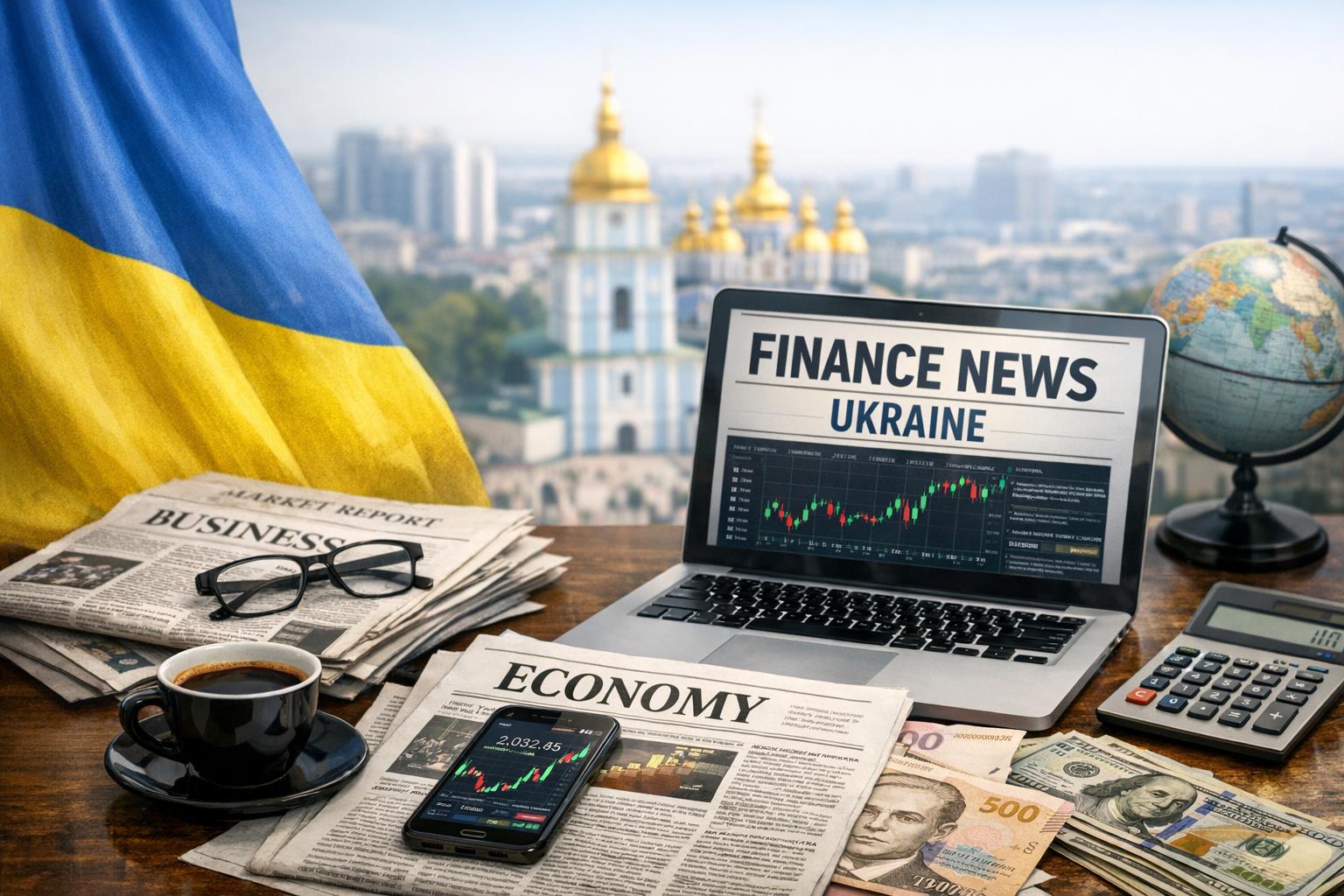
Finance media in Ukraine has developed in close connection with the country’s political transitions, economic reforms, and integration into global markets. Since independence in 1991, Ukraine has moved from a centrally planned system to a market-oriented economy, creating demand for specialized information about banking, investment, taxation, public finance, and corporate governance. Over time, financial journalism in Ukraine has evolved from limited print publications to a diverse ecosystem of online media platforms, television programs, analytical portals, and professional newsletters. This sector reflects broader trends in Ukrainian media, including digital transformation, ownership concentration, regulatory change, and adaptation to wartime conditions after 2014 and especially after 2022.
Early Development of Financial Journalism
In the 1990s, Ukraine’s financial media sector was small and highly specialized. The early post-Soviet period was marked by hyperinflation, wide-scale privatization campaigns, and the rapid formation of commercial banking institutions. Economic reporting during this time was typically general in scope, with relatively few journalists possessing formal training in finance or economics. Nonetheless, the scale of economic reform created strong demand for reporting that could interpret legislative changes, currency fluctuations, and business regulations for a newly emerging private sector.
Print publications were the primary platform for finance-related coverage. Newspapers and magazines published periodic analyses of macroeconomic indicators, tax reforms, privatization tenders, and developments in the energy and industrial sectors. Among prominent publications was Biznes, a magazine that focused on corporate activity and entrepreneurship. Another significant outlet, Ekonomichna Pravda, which would later become one of the most influential online financial platforms, played a role in shaping public discussion of fiscal policy and state-owned enterprise reform.
Journalists relied extensively on data released by the National Bank of Ukraine (NBU), the Ministry of Finance, and the State Statistics Service. Access to corporate financial disclosures was inconsistent, and accounting standards were in transition from Soviet-era methodologies to systems more aligned with international practice. As a result, early financial journalism often centered on commentary, interviews with officials, and descriptive reporting rather than detailed balance sheet analysis.
The introduction of the hryvnia in 1996 became a pivotal topic for financial media. Coverage included explanations of exchange rate mechanisms, inflation control strategies, and central bank independence. Through this process, economic journalism gradually began developing specialized expertise, with certain reporters focusing exclusively on monetary and fiscal policy.
Expansion in the 2000s
The early 2000s brought relative macroeconomic stabilization and stronger GDP growth, which in turn expanded the audience for financial media. Accelerated banking expansion, increasing foreign direct investment, and the growth of retail lending broadened public interest in personal finance. Mortgage products, credit cards, and deposit insurance became subjects of routine reporting.
Specialized business publications multiplied during this period. In addition to established outlets, new magazines and weekly supplements were launched within general-interest newspapers. Corporate rating tables, investment project reviews, and market forecasts became standard features. The stock market, although relatively shallow compared to larger European exchanges, received more consistent coverage, especially as Ukrainian companies issued eurobonds or listed shares abroad.
Television networks expanded economic segments within evening news broadcasts. Business-oriented talk shows invited representatives of industrial conglomerates, agricultural exporters, and policymakers to discuss reform agendas. These programs, while broader in audience, helped familiarize viewers with boardroom governance issues, banking consolidation, and international trade negotiations.
Ownership structures became more visible in this era. Major media holdings were frequently affiliated with large industrial or financial groups. This arrangement mirrored patterns across Ukrainian media as a whole, where oligarchic influence shaped strategic decisions. In financial journalism, such ownership links occasionally complicated coverage of regulatory enforcement actions or corporate disputes. Despite this, a competitive environment among outlets often led to investigative reporting when interests clashed.
Digital Transformation and Online Platforms
By the 2010s, online platforms over took print as the primary channel for financial information. Websites such as Ekonomichna Pravda, part of the broader Ukrainska Pravda media group, gained prominence for investigative business reporting and analysis of public procurement. Portals such as Minfin (minfin.com.ua) and Finance.ua (finance.ua) developed strong readership bases by combining breaking news with practical financial tools.
Minfin in particular integrated user reviews of banks, comparison tools for deposits and loans, and analytical articles on monetary policy decisions of the National Bank of Ukraine. Interactive dashboards displaying exchange rates and inflation figures became widely used references for households and small businesses. Finance.ua provided similar services, frequently publishing explanatory articles on investment instruments and regulatory updates.
News agencies such as Interfax-Ukraine (interfax.com.ua) strengthened their role as primary sources for corporate disclosures and official statements. Their structured wire format facilitated rapid dissemination of market-sensitive information. As digital distribution expanded, social media channels, including Telegram and YouTube, became common platforms for instant updates on currency movements and government borrowing results.
The integration of Ukrainian media into global information flows also intensified. Coverage routinely cited reports from the International Monetary Fund, the World Bank, and international rating agencies such as Moody’s and Fitch. Ukrainian outlets contextualized sovereign bond placements and IMF review missions within domestic political debates. English-language articles increasingly targeted foreign investors monitoring reform progress.
Investigative and Data-Driven Journalism
The development of open data infrastructure significantly influenced financial reporting quality. After 2014, Ukraine expanded public access to procurement data through systems such as ProZorro. Journalists gained the ability to review tender outcomes, compare budget allocations, and examine beneficial ownership structures through corporate registries.
Investigative projects by outlets affiliated with Radio Free Europe/Radio Liberty and collaborations with international investigative networks contributed to the analysis of offshore holdings, state enterprise management, and tax avoidance practices. Although investigative journalism extends beyond finance, its financial dimension has been central in examining corruption risks and public asset management.
This transition toward data-driven methodologies required reporters to acquire technical skills in spreadsheet analysis and interpretation of financial statements. International donor-supported training programs provided instruction in forensic accounting and valuation techniques. Over time, audiences became accustomed to in-depth, evidence-based reporting rather than opinion-focused commentary.
Role of Television and Broadcast Media
Television continues to play a role in shaping economic narratives, even as online readership has grown. Major broadcasters frequently include segments devoted to inflation updates, energy pricing, and budget debates. Channels such as 1+1 and ICTV incorporate expert interviews within general news programs.
The public broadcaster Suspilne (suspilne.media) dedicates airtime to discussions of fiscal transparency and reform legislation. Although not exclusively focused on finance, its programming contributes to financial literacy by explaining budget expenditures and taxation reforms in accessible terms.
Radio and podcasting have expanded gradually. Independent journalists and analysts produce podcasts examining investment strategies, venture capital activity within Ukraine’s IT sector, and macroeconomic outlooks. These formats allow more detailed explanation than short televised segments.
Impact of Political and Economic Crises
Ukraine’s financial media environment has repeatedly adapted to crisis conditions. During the global financial crisis of 2008–2009, domestic banks faced liquidity shortages and currency depreciation pressures. Financial outlets published frequent updates on hryvnia exchange rates, central bank refinancing measures, and negotiations with the IMF. Public demand for reliable banking information increased significantly as depositors monitored institutional stability.
The 2014 annexation of Crimea by Russia and the onset of armed conflict in eastern Ukraine resulted in a further economic contraction. Reporting concentrated on sovereign debt restructuring, reductions in foreign currency reserves, and structural reforms implemented by the National Bank of Ukraine. The closure of numerous commercial banks during the subsequent cleanup of the sector received extensive coverage, including analysis of deposit guarantee mechanisms.
After the full-scale invasion in 2022, wartime conditions affected both journalistic operations and content priorities. Certain macroeconomic indicators were temporarily withheld for security reasons. Nevertheless, outlets continued reporting on emergency budget financing, domestic war bond placements, and foreign financial assistance. Coverage of aid from the European Union, the United States, and multilateral institutions became central to economic journalism.
International partners such as the Reuters news agency and Bloomberg closely monitored Ukraine’s fiscal resilience, and Ukrainian media frequently referenced or translated their assessments. Reconstruction financing, insurance for wartime investment risk, and donor coordination platforms emerged as new areas of specialization.
Regulatory Environment and Professional Standards
Financial journalism operates within Ukraine’s broader legal framework governing media. Licensing and broadcast oversight fall under the National Council on Television and Radio Broadcasting. Legal reforms have required disclosure of ultimate beneficial owners of media assets, increasing transparency in ownership structures.
Professional standards have evolved in parallel with regulatory reform. Training initiatives supported by the European Union and international foundations have strengthened investigative capacity. Many outlets have adopted internal editorial codes aligned with European journalistic practices, emphasizing source verification and separation between advertising and editorial content.
Fact-checking has become particularly relevant in the financial domain. False information concerning bank insolvency or currency controls can influence depositor behavior. Media outlets therefore coordinate closely with official communications from the National Bank of Ukraine to reduce the spread of inaccurate market rumors.
Audience and Market Structure
The audience for financial media encompasses corporate executives, small business owners, institutional investors, civil servants, and private households. Growing participation in digital banking and online brokerage platforms has expanded interest in capital market developments. Retail investors monitor exchange rate policies, government bond yields, and regulatory updates through mobile applications connected to financial news feeds.
Revenue models have diversified. Advertising, once dominant, has fluctuated with economic cycles and was significantly reduced after 2022. Subscription-based access to premium analysis has grown modestly. Investigative projects frequently rely on grant funding from international donors, particularly when addressing public finance transparency and anti-corruption issues.
Although market concentration remains a feature of Ukrainian media more broadly, digitalization has lowered entry barriers. Smaller analytical blogs, newsletters, and sector-specific platforms focus on niches such as agricultural commodities, energy markets, or technology startups. This specialization has increased the granularity of financial discourse.
Integration with Global Financial Information
Ukrainian financial journalism increasingly interacts with international counterparts. Cooperation agreements and content-sharing arrangements enable domestic outlets to cite and reference reporting from Financial Times, The Wall Street Journal, and other established business publications. At the same time, Ukrainian correspondents contribute local expertise that informs global audiences about regional market conditions.
Topics drawing international coverage include agricultural export corridors, natural gas transit infrastructure, sovereign risk assessments, and the resilience of Ukraine’s IT outsourcing sector. English-language reporting produced in Kyiv is widely referenced by policy institutions and investment funds assessing macroeconomic stability.
The use of open data portals has strengthened investigative depth. Public access to budget expenditure records and procurement systems enhances accountability reporting. Analytical methodologies applied by Ukrainian journalists increasingly resemble European standards, contributing to professional convergence.
Current Trends and Structural Challenges
Mobile-first publishing models predominate, reflecting broader shifts in media consumption. Instant messaging channels distribute real-time updates on central bank decisions and government bond auctions. Video explainers and long-form analytical articles coexist within digital platforms designed for cross-device access.
Reconstruction planning and European integration form central themes in contemporary financial coverage. Journalists analyze harmonization of banking supervision rules with EU directives, privatization strategies for state-owned enterprises, and mechanisms for attracting long-term infrastructure investment.
Structural challenges persist. Wartime operational risks affect newsroom stability. Advertising markets remain constrained, requiring diversified funding strategies. Ownership concentration raises ongoing questions regarding editorial independence in coverage of large conglomerates or politically connected enterprises.
Conclusion
Finance media in Ukraine reflects the country’s economic transformation and institutional reform trajectory. From limited print reporting in the 1990s to a digitally integrated and data-driven ecosystem, financial journalism has expanded in scope and technical capacity. It has adapted to repeated crises, incorporated international analytical standards, and developed investigative depth grounded in open data resources.
Today, Ukrainian financial outlets provide comprehensive reporting on monetary policy, fiscal strategy, investment regulation, and reconstruction financing. They serve domestic readers seeking practical guidance as well as international stakeholders assessing market developments. Although structural and wartime constraints remain, the sector continues to modernize and align with global norms, reinforcing transparency and informed economic decision-making within Ukraine’s evolving market environment.