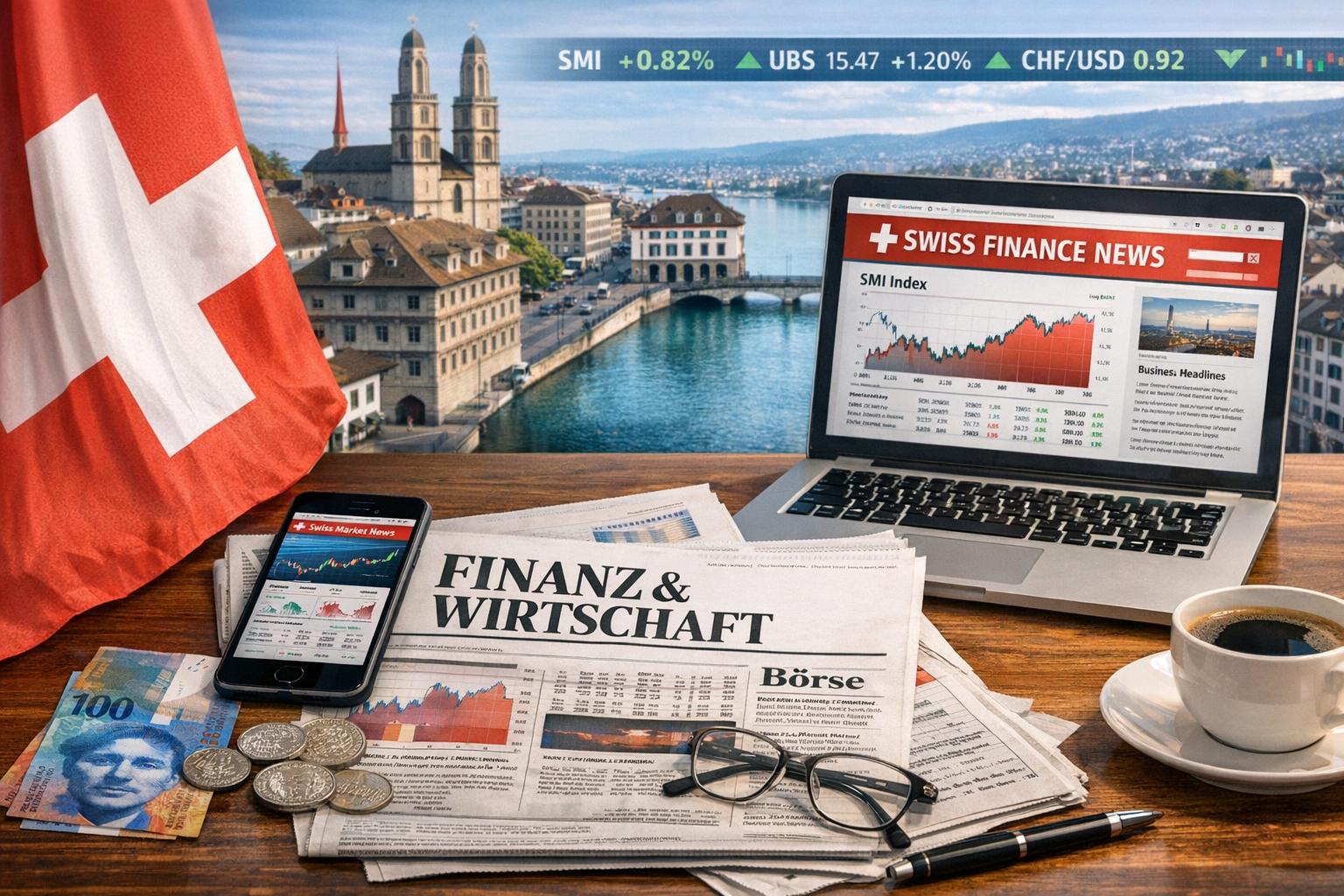
Finance media in Switzerland operates within a distinctive economic, political, and linguistic environment. The country’s role as an international financial center, combined with its federal structure and multilingual population, has shaped a diverse media landscape that covers banking, asset management, insurance, commodities trading, fintech, and macroeconomic policy. Swiss finance journalism serves domestic retail investors, institutional professionals, policymakers, and an international audience interested in the stability and innovation of the Swiss financial system. This article outlines the structure, actors, regulatory framework, and current trends of finance media in Switzerland with a focus on factual developments and institutional context.
Economic and Institutional Context
Switzerland hosts one of the largest financial sectors relative to GDP among advanced economies. Zurich and Geneva function as major hubs for private banking, wealth management, insurance, and commodity trading. A dense network of globally active banks, cantonal institutions, private banking partnerships, pension funds, and specialized asset managers generates consistent demand for timely and technically accurate reporting. Financial decisions taken in Switzerland often have cross-border implications, particularly in areas such as cross-border wealth management and commodity financing.
The regulatory framework is shaped by institutions such as the Swiss Financial Market Supervisory Authority (FINMA), the Swiss National Bank (SNB), and federal and cantonal authorities. SNB monetary policy decisions, including adjustments to the policy rate or interventions in foreign exchange markets, are closely analyzed by domestic and international outlets. The SNB’s long-standing management of the Swiss franc, including periods of minimum exchange rate policy against the euro, created recurring demand for specialized monetary coverage. FINMA’s supervisory guidance, enforcement proceedings, and licensing decisions similarly form a significant part of financial reporting.
Switzerland’s political system further shapes finance journalism. The use of referenda at federal and cantonal level frequently places tax reform, pension policy, corporate governance standards, and sustainability legislation before voters. Financial journalists therefore integrate parliamentary coverage with market analysis, linking public policy debates to asset prices, capital flows, and regulatory compliance costs. Compared to some larger markets, there is a relatively close connection between political reporting and financial desk coverage.
Multilingual Media Structure
Switzerland recognizes four national languages: German, French, Italian, and Romansh. The majority of financial media output is produced in German, reflecting demographic patterns and the concentration of banking and insurance groups in Zurich and surrounding cantons. However, French-speaking Switzerland maintains a distinct and influential media ecosystem, particularly in Geneva and Lausanne, where private banking and commodity trading firms are prominent.
This linguistic diversity results in partially segmented information spaces. Editorial priorities may differ across linguistic regions depending on local economic structures. A Geneva-based publication may focus more extensively on commodity markets and cross-border wealth management, while German-language outlets emphasize corporate developments in listed industrial and technology companies. Some major publishers operate multilingual digital portals, but direct translation of content is not always consistent, leading to variations in framing and depth.
Italian-speaking Ticino supports smaller but relevant financial coverage, especially concerning cross-border labor mobility and banking relationships with neighboring Italy. Although Romansh-language finance journalism is limited due to the size of the linguistic community, key public service announcements and macroeconomic developments are translated by national broadcasters to support inclusive communication.
Major Print and Digital Publications
Swiss finance media includes specialized business newspapers, general-interest dailies with dedicated financial sections, and digital-first platforms. Among the leading German-language business newspapers is Handelszeitung, available at https://www.handelszeitung.ch. It covers corporate strategy, capital markets, private banking developments, and regulatory debates. The publication frequently features interviews with executives and policymakers and provides rankings of Swiss wealth managers and corporate leaders.
Finanz und Wirtschaft (FuW), accessible via https://www.fuw.ch, concentrates on equities, bonds, collective investment schemes, and macroeconomic indicators. Its analytical style often includes earnings breakdowns of Swiss-listed companies and commentary on global indices. FuW’s readership includes professional investors, portfolio managers, and financially engaged private individuals who require detailed performance analysis rather than brief summaries.
General-interest newspapers also play a central role. The Neue Zürcher Zeitung (NZZ), available at https://www.nzz.ch, maintains a strong reputation for in-depth economic and financial analysis. Its reporting frequently examines fiscal policy, trade relations, European Union regulatory initiatives, and systemic banking questions. The Tages-Anzeiger, accessible at https://www.tagesanzeiger.ch, combines market updates with broader business coverage relevant to households and small enterprises.
In French-speaking Switzerland, Le Temps at https://www.letemps.ch provides comprehensive economic and financial reporting. It addresses banking compliance, commodity price cycles, sustainability initiatives, and corporate governance. The publication often features investigative pieces examining regulatory shortcomings or corporate restructurings in francophone regions.
Digital-only platforms and financial portals complement traditional newspapers. Some provide real-time market dashboards, while others focus on investment education, retirement planning, or thematic research. Monetization models typically combine subscriptions with advertising and sponsored research content, reflecting broader shifts in European media markets.
Broadcast and Public Media
The Swiss Broadcasting Corporation SRG SSR, accessible at https://www.srgssr.ch, operates public-service radio and television networks in German, French, Italian, and Romansh. While its mandate covers all aspects of public information, economic and financial segments are embedded in regular news bulletins and specialized programs. Coverage tends to emphasize macroeconomic indicators, employment data, inflation developments, and major corporate announcements.
German-language television under SRF, French-language RTS, and Italian-language RSI each maintain economic correspondents. Their reporting style prioritizes clarity and policy explanation rather than rapid market commentary. During periods of financial stress or significant corporate events, extended discussions with economists and regulatory specialists are broadcast, ensuring accessibility for general audiences.
Private broadcasters and online streaming platforms provide complementary content, including interviews with fund managers and economic think tank representatives. Compared to larger media markets such as the United Kingdom or the United States, however, Switzerland’s dedicated financial television programming remains relatively limited in scale.
Coverage of Banking and Wealth Management
Banking forms the backbone of Swiss financial journalism. Reporting frequently addresses capital adequacy, restructuring efforts, litigation provisions, and cross-border compliance. Structural changes within major banking groups generate sustained media attention because of their employment impact and systemic importance. Journalists typically analyze balance sheet adjustments, cost-reduction programs, and strategic shifts toward asset-light business models.
The gradual erosion of traditional banking secrecy and the implementation of the Automatic Exchange of Information (AEOI) with numerous partner countries transformed coverage priorities during the 2010s. Media discussions shifted from confidentiality issues to transparency standards, international cooperation, and reputational risk management. This evolution required reporters to understand OECD frameworks and bilateral tax agreements.
Cantonal banks, which operate under varying degrees of state guarantee, also receive regular coverage. Their mortgage lending volumes, exposure to residential property markets, and dividend contributions to cantonal budgets are closely monitored. As housing affordability and interest rate cycles fluctuate, regional publications place particular emphasis on mortgage rates and real estate valuations.
Insurance and Pension Reporting
Insurance groups headquartered in Switzerland, including global reinsurers and life insurance companies, form another pillar of financial media coverage. Journalists review solvency ratios, catastrophe exposure, premium growth, and regulatory capital requirements under Swiss Solvency Test frameworks. Reinsurance renewals and natural disaster events often trigger analytical reports regarding potential claims development.
The Swiss three-pillar pension system—comprising the state pension (AHV/AVS), occupational pensions, and voluntary private savings—generates extensive reporting. Debates over conversion rates, demographic pressure, and funding ratios of occupational pension funds are recurring topics. Because pension reform proposals frequently proceed to referendum, financial desks collaborate with political correspondents to assess fiscal sustainability and intergenerational equity.
Asset Management and Sustainable Finance
Switzerland is a significant center for asset management, with extensive cross-border distribution of collective investment schemes. Financial journalists analyze fund flows, benchmark comparisons, and regulatory alignment with European standards such as UCITS and AIFMD frameworks where relevant for cross-border operations. Exchange-traded funds, structured products, and alternative investment vehicles receive specialized treatment in dedicated columns.
Sustainable finance has gained prominence as asset managers integrate environmental, social, and governance criteria into portfolio construction. Media coverage evaluates methodological transparency, climate reporting standards, and alignment with international disclosure initiatives. Swiss-based products are often assessed in light of European Union taxonomy regulations due to the interconnected nature of financial markets. Journalists examine whether sustainability claims are supported by measurable portfolio adjustments and robust reporting metrics.
Academic institutions and think tanks contribute research that is frequently cited in financial sections. Collaboration between environmental correspondents and finance journalists has increased, particularly in evaluating climate transition risks for long-term institutional investors.
Fintech and Innovation Reporting
Switzerland has cultivated a reputation as a fintech and blockchain hub, particularly in the canton of Zug, commonly referred to as Crypto Valley. Media coverage addresses company formation statistics, venture capital investment rounds, and licensing procedures. FINMA guidelines on digital asset custody, token issuance, and anti-money-laundering compliance form a technical foundation for such reporting.
Journalists increasingly engage with topics such as distributed ledger technology, tokenized securities, and digital payment infrastructures. Partnerships between established banks and fintech startups are scrutinized for strategic coherence and regulatory soundness. When volatility affects digital asset markets, Swiss outlets evaluate exposure levels among domestic financial institutions and retail investors.
Innovation policy also receives attention. Federal and cantonal initiatives aimed at attracting technology firms are discussed within the broader context of competitiveness and regulatory predictability. This reflects the link between economic policy and financial sector reporting.
International Orientation
Swiss finance journalism operates within a global information network. Developments at the Federal Reserve, the European Central Bank, and other major central banks are covered due to their direct impact on currency valuations and capital flows affecting Swiss institutions. International publications such as the Financial Times at https://www.ft.com, Bloomberg at https://www.bloomberg.com, and Reuters at https://www.reuters.com maintain correspondents in Switzerland to report on major banking and commodity developments.
Domestic outlets frequently reference and respond to reporting by these international organizations. Cross-border investigative collaborations occur when financial misconduct allegations involve multiple jurisdictions. This interconnected reporting environment increases both transparency and reputational sensitivity.
Regulation, Ethics, and Market Sensitivity
Swiss media law and professional codes of conduct guide journalistic standards. Financial reporting requires particular caution because of the potential market impact of published information. Premature disclosure of sensitive corporate developments can affect share prices and investor confidence. As a result, editorial processes often involve legal review when allegations of misconduct or solvency concerns arise.
Press conferences, earnings releases, and regulatory briefings provide structured access to information. However, investigative reporting remains part of the landscape, especially in cases of governance failures or compliance breaches. Balancing critical scrutiny with factual precision remains an essential principle in maintaining credibility within financial markets.
Digital Transformation and Business Models
Declining print circulation has accelerated digital transformation across Swiss finance media. Subscription-based digital access is common, particularly for specialized analysis and proprietary research. Revenue diversification includes newsletters, podcasts, and sponsored conferences addressing topics such as pension planning, tax structuring, and sustainable investing.
Interactive data visualization has become increasingly integrated into online reporting. Charts illustrating inflation trends, mortgage rates, or equity index performance enhance reader engagement and support analytical transparency. Webinars and panel discussions hosted by established media brands connect journalists with financial professionals, creating hybrid formats that blend reporting and professional education.
Despite technological adaptation, resource allocation remains a structural challenge. Smaller newsrooms must balance the demand for real-time updates with the need for investigative depth. Investment in data journalism and specialist expertise is therefore a central strategic priority.
Audience Segmentation and Information Demand
The audience for Swiss finance media spans retail savers, pension beneficiaries, institutional portfolio managers, corporate executives, and policymakers. High household wealth and substantial retirement assets contribute to ongoing interest in investment products, tax optimization, and property financing. When interest rates shift or pension parameters change, readership engagement typically increases.
Institutional audiences require detailed insights into capital regulation, accounting standards, and cross-border compliance. Consequently, specialized commentary often assumes technical familiarity with international reporting norms and prudential ratios. Media outlets differentiate content depth according to target readership, offering both introductory explanations and advanced analysis.
Challenges and Outlook
Swiss finance media operates within a stable but evolving ecosystem. Revenue pressures, technological disruption, and competition from global real-time data providers continue to reshape newsroom structures. At the same time, the increasing complexity of financial instruments and regulatory frameworks requires high levels of subject-matter expertise.
Future editorial priorities are likely to include central bank digital currencies, cybersecurity resilience in banking infrastructure, demographic shifts affecting pension solvency, and international tax coordination. Sustainable finance disclosures and transition risk measurement are expected to remain important. As regulatory convergence between Switzerland and the European Union develops incrementally, comparative policy reporting will continue to gain relevance.
Overall, finance media in Switzerland reflects the structure of the national financial system: internationally integrated, multilingual, and institutionally anchored. Although modest in scale compared to larger markets, it performs a substantive function in supporting transparency, informing investment decisions, and facilitating public debate on economic strategy. Its future trajectory will depend on the capacity of publishers to sustain analytical rigor while adapting to digital consumption patterns and maintaining independence in a highly interconnected financial environment.