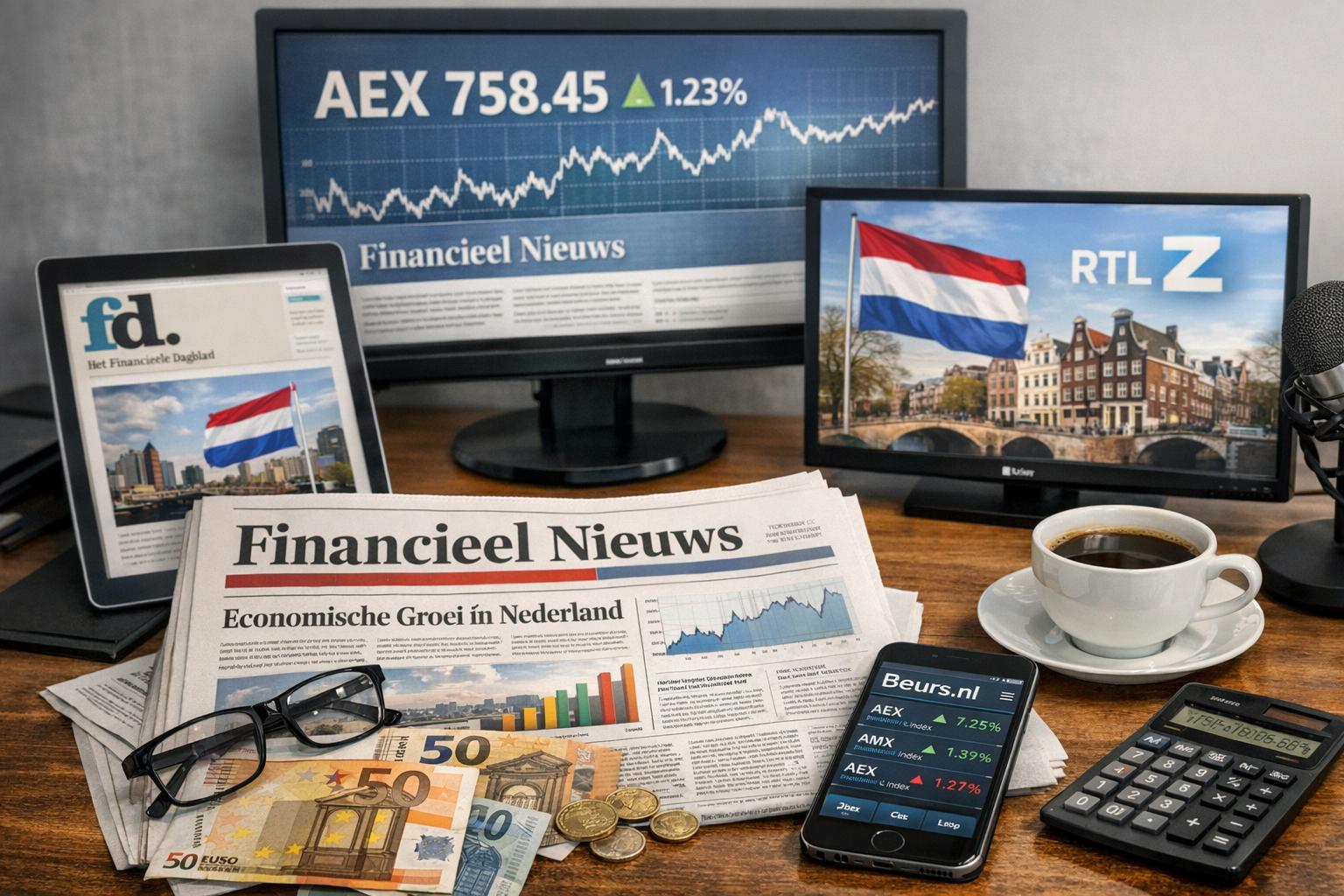
Overview of Finance Media in the Netherlands
The Netherlands has a well-developed and diverse financial media landscape that reflects the country’s role as an international trading nation and financial hub. With a strong banking sector, an advanced pension system, an active stock exchange, and a high level of household investment participation, financial journalism plays a meaningful role in informing businesses, investors, policymakers, and the broader public. Finance media in the Netherlands operates across print, digital platforms, television, radio, podcasts, data services, and specialized professional outlets.
Dutch financial journalism is characterized by a dual orientation. On the one hand, it maintains a close focus on domestic institutions such as ING, Rabobank, and ABN AMRO. On the other, it consistently situates Dutch developments within broader European and global frameworks. Reporting routinely analyzes policy decisions from the European Central Bank (ECB), rulings from EU regulatory bodies, and macroeconomic data from major economies. Given the Netherlands’ export-driven economic structure and the international operations of its corporations, purely domestic reporting would not provide sufficient context.
Financial journalism also reflects the Netherlands’ structural features: a large pension sector relative to GDP, a historically significant stock exchange now part of Euronext Amsterdam, and a regulatory regime shaped by both national authorities and European directives. As a result, financial media output spans corporate earnings, bond market dynamics, energy transition finance, private equity, fintech innovation, taxation policy, and public spending.
Historical Development of Financial Journalism
Financial reporting in the Netherlands evolved alongside the country’s commercial expansion. The Amsterdam Stock Exchange, established in 1602 to facilitate trading in shares of the Dutch East India Company, is widely regarded as one of the world’s earliest organized securities markets. Market participants relied on bulletins, merchant correspondences, port records, and early gazettes for information about shipping, commodity prices, and sovereign debt instruments.
During the 19th and early 20th centuries, newspapers began systematically covering banking, trade flows, colonial commerce, and industrial development. As the Dutch economy industrialized and integrated more deeply with European capital markets, financial columns became permanent fixtures in major publications. Editorial specialization increased as financial instruments and corporate structures became more complex.
After World War II, the reconstruction of the Dutch economy and the gradual expansion of the welfare state increased the relevance of economic reporting. Banking regulation, monetary policy, and corporate governance became recurring themes. The introduction of new financial instruments in the late 20th century, combined with pension fund growth, further intensified the need for professionalized financial journalism.
The creation of the euro and the establishment of the ECB shifted monetary analysis toward supranational institutions. Dutch journalists adapted by building expertise in European fiscal governance and banking supervision. The global financial crisis of 2008 marked another turning point, as widespread interventions in the banking sector elevated financial reporting to the forefront of public debate.
Major Financial Newspapers
Het Financieele Dagblad (FD)
The most prominent and specialized financial newspaper in the Netherlands is Het Financieele Dagblad (FD), available at https://fd.nl. Founded in 1943, it has developed into the leading source of business, economic, and market news in the country. Its coverage includes corporate earnings, mergers and acquisitions, macroeconomic indicators, regulatory changes, and sector-specific developments such as energy, logistics, and technology.
The FD distinguishes itself through detailed reporting and analytical commentary. Its audience consists largely of executives, institutional investors, policymakers, legal professionals, and academics. Due to this specialized readership, articles often provide technical detail on balance sheet structures, capital ratios, bond issuance programs, and pension fund funding ratios.
The transition from print to digital formats has been central to FD’s strategy. The publication operates behind a subscription model that includes digital-first reporting, newsletters, data-driven graphics, and sector-specific briefings. Its parent company, FD Media Group, has expanded into adjacent services, reflecting a broader industry shift toward integrated information platforms rather than purely print journalism.
NRC
NRC, accessible at https://www.nrc.nl, is a general newspaper with a strong economics and business desk. While its editorial focus extends to politics, culture, and international affairs, its analysis of fiscal policy, labor markets, climate finance, and corporate governance is influential within policy circles.
NRC regularly publishes investigative reports on financial misconduct, tax structures, and regulatory oversight. Its economic coverage frequently connects business developments to societal debates, including housing affordability, pension reform, and sustainability regulation. Rather than focusing exclusively on market performance, it often analyzes structural economic challenges and long-term policy effects.
de Volkskrant
de Volkskrant, available at https://www.volkskrant.nl, also maintains a substantial economics section. Similar to NRC, it addresses finance within a broader social and political context. Corporate reporting, European fiscal rules, public budgeting, and labor negotiations are recurring themes.
Its coverage tends to emphasize how financial policy affects households. For example, mortgage regulation, inflation trends, energy prices, and pension adjustments are frequently discussed in relation to disposable income and social equity. This framing mirrors the Netherlands’ political culture, which integrates economic deliberation within wider consensus-building processes.
Business Magazines and Professional Publications
Beyond daily newspapers, the Dutch financial media landscape includes weekly magazines and industry-specific publications that serve both general and professional audiences.
Elsevier Weekblad
Elsevier Weekblad, available at https://www.ewmagazine.nl, covers politics, economics, and business from a weekly perspective. Its financial content ranges from macroeconomic commentary to profiles of companies and sector studies. Because it is not tied to daily reporting cycles, it often publishes longer analytical pieces examining taxation reform, regulatory transitions, and demographic trends affecting the pension system.
Quote
Quote, at https://www.quotenet.nl, focuses on entrepreneurship, private wealth, and high-net-worth individuals. It is known for its annual lists of wealthy Dutch residents and reporting on private investments, venture capital transactions, and family-owned businesses. Although stylistically distinct from formal financial newspapers, it contributes to public knowledge about capital concentration and business leadership.
Specialized Pension and Accountancy Publications
The Netherlands’ substantial pension sector supports a network of trade publications covering actuarial science, asset allocation, regulatory reform, and compliance. These outlets often require subscriptions and are aimed at professionals in pension administration, consulting, and risk management.
Given that Dutch pension funds such as ABP and PFZW manage globally diversified portfolios, media attention to their investment policies includes detailed analysis of sovereign bonds, private equity allocations, infrastructure funds, and sustainability benchmarks. This level of specialization reflects the institutional scale of retirement savings in the Netherlands.
Television and Radio Financial Media
Broadcast platforms contribute to real-time financial communication and investor awareness.
RTL Z
RTL Z, accessible at https://www.rtlz.nl, is the primary Dutch television channel dedicated to business and financial news. It provides market updates during trading hours, interviews with CEOs and policymakers, and summaries of quarterly earnings reports. Coverage includes developments on Euronext Amsterdam as well as major international indices.
In addition to real-time reporting, RTL Z broadcasts analytical programs exploring entrepreneurship, innovation, and changes in regulatory policy. It aims to serve both professional viewers and informed retail investors.
BNR Nieuwsradio
BNR Nieuwsradio, available at https://www.bnr.nl, is a radio station with a strong emphasis on business and economic topics. It provides continuous updates throughout the workday, making it particularly relevant for professionals seeking market information during trading hours. Interviews with economists, corporate executives, and regulators offer contextual analysis beyond headline figures.
Podcasts have become increasingly integrated into broadcast operations. Both RTL Z and BNR produce thematic series addressing monetary policy, startup financing, energy markets, and European regulation.
Digital Platforms and Online Transformation
The Netherlands has one of Europe’s highest internet penetration rates, facilitating rapid digital transformation within media organizations. Most major publications operate subscription-based digital platforms. Paid access models are generally accepted among Dutch readers, contributing to relatively stable revenue streams compared to some international markets.
Online financial journalism includes real-time dashboards, interactive infographics, and email newsletters segmented by sector. Readers can follow curated updates on specific industries such as shipping, agriculture, fintech, or renewable energy.
International services like Bloomberg and Reuters maintain influence among Dutch professionals, especially in investment banking and asset management. Domestic outlets compete by providing localized analysis, Dutch-language accessibility, and coverage of national regulatory developments.
Independent blogs and commentary platforms contribute additional viewpoints. Some concentrate on retail trading strategies, dividend investing, and Dutch mid-cap stocks. Others focus on macroeconomic policy, central bank communication, and housing data.
Coverage of the Dutch Banking Sector
The Dutch banking system occupies a central position in financial media coverage. The nationalization of ABN AMRO during the 2008 financial crisis generated sustained reporting on state intervention, capital restructuring, and governance reform. Media outlets analyzed recapitalization plans, European stress tests, anti-money laundering enforcement actions, and executive remuneration restrictions.
Coverage frequently references guidance and reports from De Nederlandsche Bank (DNB), accessible at https://www.dnb.nl, and the Authority for the Financial Markets (AFM), at https://www.afm.nl. Regulatory fines, compliance directives, and supervisory reviews are reported in detail due to their potential market impact.
Media analysis also addresses competition within the Dutch mortgage market, interest margin pressures, digital banking initiatives, and cybersecurity risks. Given the sector’s concentration, performance of major institutions significantly influences investor sentiment and stock index movements.
Pension Funds and Institutional Investment
The Dutch pension system is among the largest in the world relative to national output. Pension fund investment policy frequently generates media debate, particularly regarding funding ratios, discount rate assumptions, and intergenerational risk sharing.
Recent reforms aimed at transitioning toward revised pension contract structures have required extensive public explanation. Financial journalists translate technical actuarial concepts into accessible language, explaining how changes in interest rates or inflation influence projected pension payouts.
Dutch pension funds are active in global equity, fixed income, private markets, and sustainable investments. Media reports regularly examine divestment decisions linked to fossil fuel exposure, governance disputes at multinational corporations, and shareholder voting patterns at annual general meetings.
Startups, Venture Capital, and Innovation
Amsterdam has developed a reputation as a European technology hub. Financial media increasingly covers venture capital funding rounds, cross-border acquisitions, and regulatory frameworks affecting fintech startups. Developments in digital payments, blockchain infrastructures, and open banking policies receive attention due to the Netherlands’ digital maturity.
Authorities such as DNB and the AFM supervise licensing processes for financial technology firms. Regulatory sandbox initiatives and compliance requirements are important reporting topics. Media also tracks European Union digital finance legislation and its impact on Dutch startups.
Innovation policy intersects with sustainability objectives. Reporting examines public-private investment programs in renewable energy, infrastructure modernization, and climate adaptation technologies.
Sustainability and ESG Reporting
Sustainable finance is a structural theme across Dutch financial media. Coverage frequently references European frameworks such as the Sustainable Finance Disclosure Regulation and taxonomy classifications. Corporate reporting increasingly includes analysis of environmental metrics, carbon reduction targets, and green bond issuances.
Institutional investors based in the Netherlands are often cited as influential proponents of responsible investing. Media attention extends to shareholder activism, board diversity statistics, and transparency in supply chains. Sustainability reporting tends to integrate regulatory, financial, and governance dimensions rather than presenting environmental considerations in isolation.
Challenges Facing Financial Media
Despite its institutional depth, Dutch financial journalism faces structural constraints. Maintaining investigative teams requires sustained financial investment, while advertising revenues have shifted toward digital platforms dominated by global technology companies. Subscription models mitigate some pressure, yet competition remains significant.
International outlets such as Financial Times, The Wall Street Journal, Bloomberg, and Reuters provide comprehensive global coverage that is easily accessible online. Dutch media organizations respond by emphasizing local institutional knowledge, regulatory proximity, and Dutch-language analysis.
Audience segmentation presents another complexity. Professional traders, retail investors, policymakers, and students consume information differently. Publications must balance technical accuracy with accessibility without oversimplifying regulatory or accounting nuances.
Maintaining credibility is central. In a market where financial information can influence asset prices, rigorous editorial procedures and fact-checking standards are vital. Dutch media traditions emphasize accuracy, source verification, and transparent corrections.
Conclusion
Finance media in the Netherlands reflects the country’s historical identity as a commercial and financial center integrated into international markets. From Het Financieele Dagblad and leading national newspapers to specialized broadcast outlets like RTL Z and BNR Nieuwsradio, the ecosystem provides structured and detailed coverage of banking, pensions, equity markets, sustainability, and regulatory reform.
Digital transformation, pension restructuring, and sustainable finance initiatives shape the contemporary agenda. While media organizations face competitive and economic pressures, the Netherlands retains a professional and analytically rigorous financial journalism sector. Its combination of domestic focus and international awareness ensures that businesses, investors, and citizens have access to comprehensive financial reporting within a transparent institutional framework.