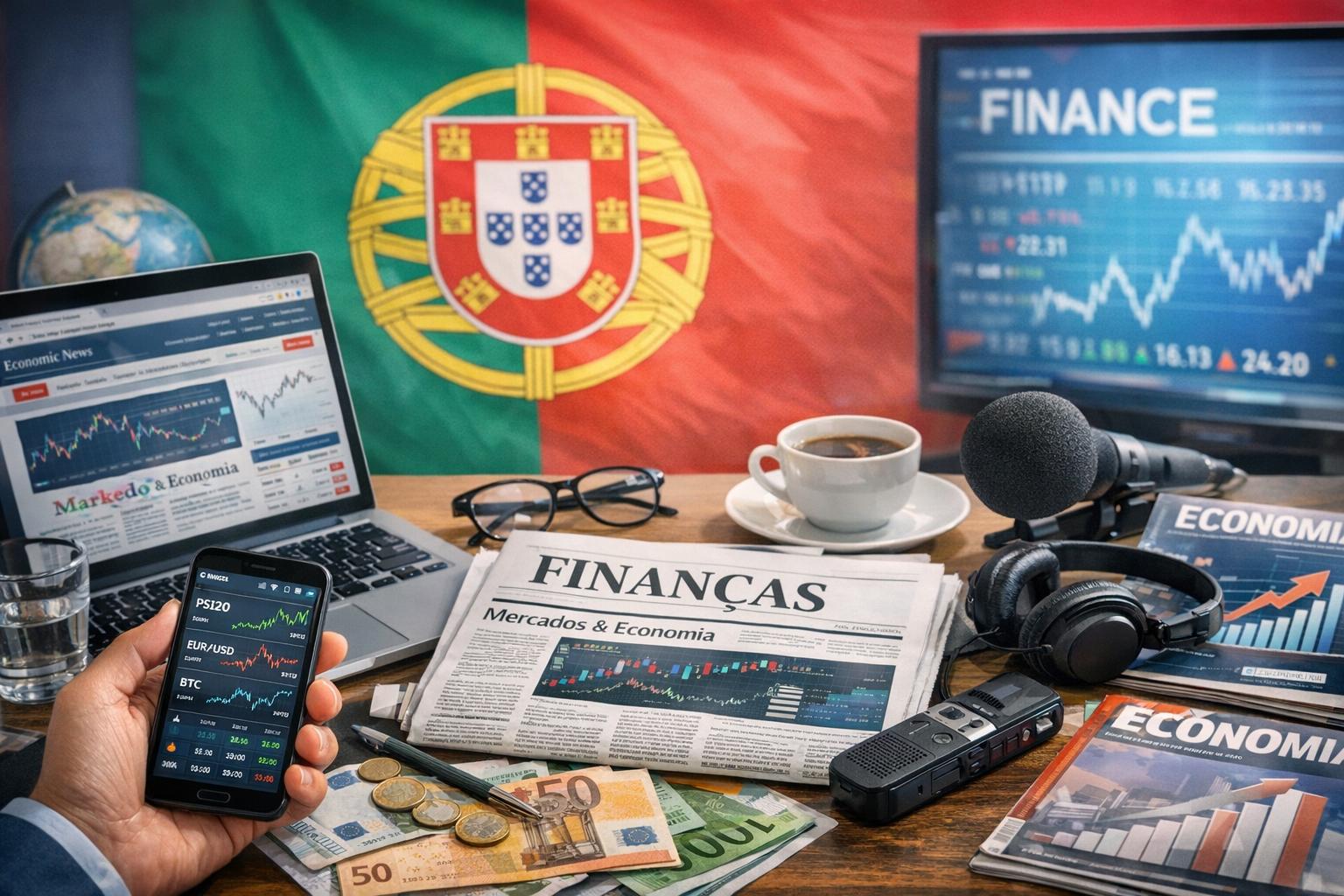
Finance media in Portugal has developed in parallel with the country’s economic modernization, integration into the European Union, and the expansion of digital communication. From traditional print newspapers to online platforms and broadcast networks, financial journalism in Portugal plays a central role in informing businesses, investors, policymakers, and the general public. Over the past decades, the sector has adapted to regulatory changes, technological innovation, and shifts in audience behavior. The result is a diverse ecosystem that combines legacy media organizations with specialized digital publications and international partnerships.
Historical Development of Financial Journalism in Portugal
The development of financial media in Portugal can be traced back to the broader evolution of the Portuguese press during the 19th and early 20th centuries. Early economic reporting focused primarily on trade flows, maritime activity, agricultural production, and colonial commerce. Lisbon and Porto, as commercial hubs, supported newspapers that included regular columns on commodity prices, shipping activity, and banking notices. These publications provided practical information for merchants and exporters, reflecting Portugal’s outward-facing economic profile.
During the Estado Novo regime (1933–1974), the press operated under censorship and state supervision. Economic coverage, while permitted, was generally framed within official policy perspectives. Reporting on public finance, monetary conditions, and state-backed industrial initiatives remained subject to oversight. Independent investigative reporting on corporate governance or banking structures was limited. Nevertheless, newspapers continued to publish statistical updates, summaries of government economic plans, and notices affecting commercial activity.
The Carnation Revolution in 1974 marked a decisive turning point. Democratic reforms introduced constitutional protections for freedom of expression and press independence. The nationalization of major industries in the mid-1970s initially shifted media attention toward political economy debates, labor rights, and structural reforms. However, the subsequent wave of privatizations in the 1980s and 1990s transformed the economic landscape and renewed attention to corporate and capital market reporting.
Portugal’s accession to the European Economic Community in 1986 accelerated structural convergence with European markets. Increased foreign investment, financial deregulation, and integration into European supply chains created a more complex economic environment. Financial journalism expanded both in scope and specialization, responding to the needs of corporate managers, investors, regulators, and European institutions operating within Portugal.
The introduction of the euro in 1999, followed by the circulation of euro banknotes and coins in 2002, further reinforced the importance of economic reporting. Monetary integration shifted attention to the European Central Bank, fiscal coordination mechanisms, and cross-border financial regulation. Portuguese audiences required accessible explanations of supranational policy decisions, deepening the analytical dimension of domestic financial journalism.
Major Financial Newspapers and Print Publications
A significant milestone in specialized financial journalism was the launch of Jornal de Negócios in 1997. Commonly referred to as Negócios, the publication established itself as the leading Portuguese daily dedicated to business and finance. It covers corporate earnings, mergers and acquisitions, capital markets, taxation, banking regulation, and macroeconomic trends. Over time, Negócios expanded into digital subscription services, conferences, and data-driven reporting. Its website, available at jornaldenegocios.pt, functions as a real-time news platform integrated with multimedia and subscriber-only analysis.
Vida Económica, founded in 1933, remains one of Portugal’s longest-running economic publications. Its historical continuity reflects sustained demand for specialized reporting on taxation, public procurement, accounting standards, and regulatory developments. The newspaper, accessible through vidaeconomica.pt, maintains a weekly publication model focused on detailed professional analysis rather than daily headline coverage.
General-interest newspapers also contribute substantially to financial discourse. Público, available at publico.pt, maintains a dedicated economy section addressing fiscal policy, European negotiations, and social security reform. Diário de Notícias (dn.pt) and the weekly Expresso (expresso.pt) publish investigative work on corporate governance, banking oversight, and public spending. Expresso, in particular, has built a reputation for long-form reporting and in-depth political economy analysis.
While print circulation has declined, subscription-based financial publications have shown comparatively higher resilience than general newspapers. Business readers often rely on paid services that offer data, sector-specific coverage, and early access to policy updates. As a result, hybrid print-digital models have remained viable for selected outlets.
Broadcast Media and Financial Coverage
Television and radio continue to shape public understanding of financial developments. The public broadcaster RTP (rtp.pt) integrates economic reporting across its news bulletins and provides extended analytical segments on its news channel RTP3. Coverage includes budget announcements, inflation data releases, European Central Bank decisions, and domestic regulatory changes.
Private broadcasters SIC (sicnoticias.pt) and TVI (tvi.iol.pt) regularly feature economic correspondents and invite academic economists or market analysts to comment on developments affecting households and businesses. Although Portugal does not maintain a dedicated 24-hour financial television channel equivalent to Bloomberg Television, financial topics are integrated into mainstream news programming.
In radio, TSF (tsf.pt) provides regular economic updates throughout the day. Short bulletins summarize stock index movements, employment statistics, and fiscal policy statements. Radio commentary remains particularly relevant during national budget debates and periods of macroeconomic volatility.
Digital Transformation and Online Platforms
The digital transformation of Portuguese media has altered newsroom workflows, distribution strategies, and revenue models. Online platforms now prioritize immediacy, continuous updates, and multimedia integration. Subscription paywalls have become common among financial publications seeking predictable revenue streams.
Negócios operates a metered paywall model that combines free access to selected articles with premium analytical content for subscribers. Digital subscriptions include newsletters, mobile applications, and access to archived data. Other outlets, including Público and Expresso, have implemented similar tiered subscription systems.
The closure of the print edition of Económico in 2014 illustrated structural pressures on advertising revenue and distribution. Its digital evolution under new ownership highlighted the capacity of Portuguese financial journalism to adapt to online-only formats. Digital-native outlet Observador (observador.pt) maintains a strong economy section that combines opinion columns with breaking financial news.
Social media platforms such as LinkedIn and X function as supplementary distribution channels. Journalists publish article links, provide contextual commentary, and engage directly with readers. This dynamic enhances immediacy while requiring consistent editorial oversight to ensure factual accuracy and to counter misinformation.
Coverage of Banking and Financial Crises
The global financial crisis in 2008 and the subsequent European sovereign debt crisis marked defining moments for Portuguese financial journalism. As bond yields increased and fiscal imbalances intensified, financial reporters assumed greater public visibility. Portugal’s 2011 financial assistance program with the European Commission, European Central Bank, and International Monetary Fund required continuous explanation of adjustment measures and macroeconomic targets.
The collapse of Banco Espírito Santo in 2014 generated extensive investigative coverage. Media outlets examined supervisory oversight, balance sheet irregularities, and the creation of Novo Banco. Reporting frequently referenced international coverage from organizations such as Reuters and Bloomberg, reflecting the cross-border implications of banking instability.
Financial crises increased demand for explanatory journalism. Technical terms such as “capital adequacy ratio,” “sovereign spread,” and “non-performing loans” entered mainstream discourse. Newsrooms expanded their use of infographics, expert interviews, and analytical columns to clarify complex financial mechanisms.
Regulatory Environment and Media Ownership
Financial media in Portugal operates under the supervision of the Entidade Reguladora para a Comunicação Social (ERC), accessible at erc.pt. The ERC oversees licensing, media pluralism, and compliance with ethical and legal standards. Outlets also comply with European Union data protection requirements and competition law frameworks.
Ownership consolidation has shaped the sector. Groups such as Medialivre and Impresa (impresa.pt) control multiple titles across print, digital, and broadcast segments. Consolidation can facilitate investment in digital infrastructure but may raise concerns regarding editorial independence and concentration of influence.
Foreign investment has intermittently entered the Portuguese media market, reflecting integration within European capital markets. As a relatively small media environment, Portugal faces structural limitations in advertising scale and subscription volumes. Financial sustainability remains closely linked to digital innovation and diversified revenue streams.
Professional Standards and Education
Financial journalism requires subject-matter expertise that extends beyond general reporting. Portuguese universities offer journalism and communications degrees with modules dedicated to economic reporting, media law, and data analysis. Reporters frequently collaborate with economists, central bank officials, and academic researchers to ensure analytical rigor.
Professional conferences hosted by leading outlets provide forums for dialogue between regulators, financial executives, and policymakers. These events contribute to knowledge exchange while serving as supplementary revenue channels. Editorial guidelines emphasize transparency, source verification, and the separation of advertising from news content.
International Integration and Media Partnerships
Portugal’s membership in the European Union shapes news priorities within financial journalism. Regular coverage addresses developments at the European Central Bank, the European Commission, and the European Parliament. Portuguese outlets incorporate dispatches from international agencies including Reuters and Bloomberg, as well as analysis from the Financial Times.
International competition also influences editorial strategy. Domestic publications differentiate themselves through specialized local reporting on Portuguese listed companies, fiscal policy evolution, and sector-specific reforms such as renewable energy expansion and tourism development.
Current Challenges and Prospects
Portuguese financial media operates within structural constraints typical of smaller European markets. Advertising revenues fluctuate with economic cycles, and digital subscription growth requires continuous investment in content quality and technological infrastructure. Audience fragmentation poses additional complexity, particularly as younger readers consume financial information through mobile platforms and aggregated news feeds.
Emerging technologies, including automated data reporting tools and artificial intelligence systems, offer efficiency gains in processing earnings releases and macroeconomic statistics. Responsible integration of such technologies requires editorial oversight to preserve accuracy and accountability.
Looking forward, financial journalism in Portugal is expected to maintain a hybrid revenue structure based on subscriptions, events, data services, and targeted advertising. As the Portuguese economy evolves in response to digital transformation, demographic change, and European regulatory reform, sustained demand for reliable financial information is likely to continue.
Overall, the Portuguese financial media landscape reflects the country’s political transition, European integration, and market development. From historical print publications to digital subscription platforms, the sector supports informed public debate and contributes to the transparency of financial markets. Its continued relevance will depend on professional expertise, regulatory compliance, and adaptive capacity within a competitive European media environment.